
Refusing to Use Parents' Names: The Child of an Important Figure Who Lived in Poverty
Jakarta, CNBC Indonesia — The phenomenon of children of officials utilising their parents’ influence and popularity to pave the way towards positions, jobs, or important roles has recently come under public scrutiny. A family’s big name is often considered capable of attracting attention, support, and respect from others.
However, such an approach is the complete opposite of the attitude shown by Soeslarit. This figure is often viewed as an example that one does not always have to depend on parental reputation to earn recognition from society.
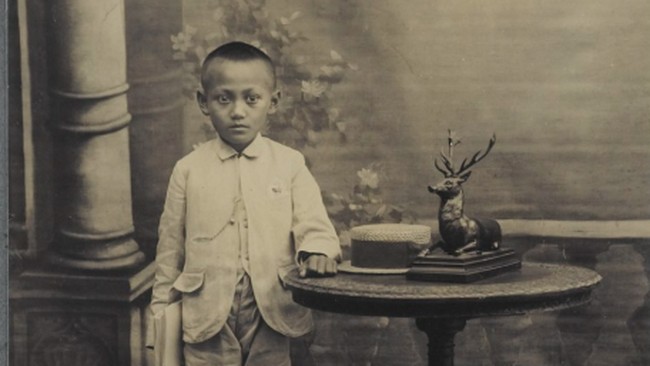
His name is not as widely known as that of his biological mother, R.A. Kartini. However, the obscurity of Soesalit’s name was due to his own decision not to climb the ladder of success using his mother Kartini’s great name.
How did this story unfold?
In his time, Soesalit was quite a fortunate child. He was born into a family of officials as his father, Raden Mas Adipati Ario Djojoadiningrat, served as the Regent of Rembang. Later, history would record his mother, Kartini, as a great figure due to her visionary thoughts that transcended her era.
Nevertheless, Soesalit did not want to rely on the great names of both parents to navigate life. Wardiman Djojonegoro, in ‘Kartini’ (2024), recounts that Soesalit was actually entitled to succeed his father as regent. However, he firmly refused. Many relatives repeatedly asked Soesalit to take the position, but his response always ended in rejection.
Instead, he chose to join the army in 1943. He was trained by the Japanese military and subsequently joined the Defenders of the Homeland (PETA). Following Indonesia’s independence, Soesalit became part of the People’s Security Army of the Republic of Indonesia. From this point, his career gradually flourished.
According to Sitisoemandari Soeroto in ‘Kartini: A Biography’ (1979), Soesalit was constantly involved in several battles against the Dutch, which led to his rapid promotion. Consequently, his name became increasingly well-known.
The pinnacle of his success as a soldier occurred in 1946, when he was appointed Commander of Division II Diponegoro, leading a vital force tasked with guarding the national capital in Yogyakarta.
He also held several civilian positions on various occasions, including serving as an advisor to the Minister of Defence in the Ali Sastro Cabinet in 1953.
Today, few people are aware that Soesalit was the son of the great Indonesian figure R.A. Kartini. He deliberately chose not to exploit his mother’s famous name.
This was despite the fact that throughout his life, Kartini’s stories repeatedly served as inspiration and were shared across generations regarding women’s struggle for equality through her letters. Furthermore, even at that time, the song about his mother, ‘Ibu Kita Kartini’ by W.R. Soepratman, was already popular and continues to be sung by many.
Soesalit’s superior, General Nasution, witnessed how he did not flaunt his parents’ names. Nasution observed that when he was no longer on duty, Soesalit chose to live in poverty as a veteran, even refusing to claim his veteran rights.
According to Nasution, as cited in ‘Kartini: A Biography’ (1971), he could have avoided poverty by stating he was the only son of Kartini. By doing so, many would have felt sympathy, which could have transformed the lives of the two-star general.
However, Soesalit maintained the principle he had instilled from the beginning: he refused to reveal that he was a descendant of Kartini. Due to this principle, the man born in Rembang remained in poverty until his death on 17 March 1962.