
Reducing the State Budget Burden with Mandatory Disaster Insurance
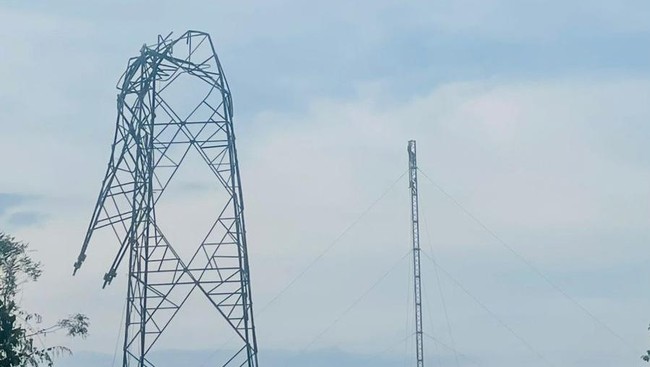
Four months have passed since the major floods in Sumatra and Aceh (November-December 2025). Although the main emergency response has concluded, the remnants of damage and recovery needs remain the primary focus on the ground. Leaving a serious impact with 1,200 fatalities up to January 2026 and hundreds of thousands of displaced people in Aceh, North Sumatra, and West Sumatra.
Currently, the recovery process is underway, focusing on infrastructure repairs, social assistance, and restoring access to clean water, particularly in Central Tapanuli. The government continues to provide livelihood guarantees for affected residents post-disaster. Infrastructure Repairs: In Central Tapanuli, North Sumatra, access to clean water is beginning to return to normal after repairs.
Local flooding still occurs due to high rainfall intensity, for example, in Palembang on 21 April 2026, which caused traffic congestion. A total of 778,922 livestock were recorded as affected by floods and landslides in Sumatra. The National Disaster Management Agency (BNPB) estimates the recovery budget for the Sumatra floods at Rp51.82 trillion. The breakdown includes rehabilitation and reconstruction in Aceh at Rp25.41 trillion, North Sumatra at Rp12.88 trillion, and the remainder for West Sumatra.
Amid the increasingly limited fiscal space of the government due to global uncertainties, it is worth promoting mandatory disaster insurance to reduce the burden on the state budget.
The implementation of mandatory disaster insurance in Indonesia is already urgent, given the high level of disaster vulnerability and the legal umbrella through the Law on the Development and Strengthening of the Financial Sector (UU P2SK). Indonesia is a disaster-prone region and ranks second among the most disaster-vulnerable countries in the world according to the World Risk Report 2024.
Article 39A of Law No. 4 of 2023 on the Development and Strengthening of the Financial Sector (UU P2SK) regulates Mandatory Insurance. The government may establish mandatory insurance programmes according to needs. This mandatory insurance programme includes, but is not limited to, vehicle insurance (third-party legal liability/TPL), fire insurance, and residential insurance.
The main objective of mandatory insurance is to enhance protection for society and ensure more equitable risk coverage. This article provides the legal basis for the government (including OJK and the insurance industry) to mandate certain types of insurance for specific groups of society or vehicle users.
Types of Mandatory Insurance include Third-Party Liability (TPL) related to traffic accident risks. Fire Insurance provides protection against fire risks. Residential Insurance relates to disaster risks. The government prioritises mandatory insurance for motor vehicles (TPL), targeted to take effect after the derivative Government Regulation (PP) is enacted.
Mandatory insurance for motor vehicles aims to provide better financial protection, reduce the burden on vehicle owners in accidents, and follow international practices (ASEAN/G20). Unlike Jasa Raharja (which covers life/injury compensation), this mandatory insurance focuses on compensating property or vehicle losses of third parties affected by accidents.
Citing World Bank data, Indonesia ranks 12th out of 35 countries worldwide with high risks to fatalities and economic losses from various types of natural disasters. Almost all regions in Indonesia are exposed to risks from more than 10 types of natural disasters, namely earthquakes, tsunamis, floods, landslides, volcanic eruptions, fires, extreme weather, extreme waves, droughts, and liquefaction. Indonesia’s geographical position in the Ring of Fire area, located between two continents surrounded by volcanoes. Therefore, literacy and education for society and government in disaster management become major challenges that must be addressed immediately.
Role of MAIPARK
The insurance industry’s readiness to implement the mandatory disaster insurance scheme is relatively adequate. The role of PT Asuransi MAIPARK Indonesia, owned by all national general insurance companies, demonstrates high readiness in executing disaster insurance. The company is optimistic that business will grow in 2026, focusing on supporting national resilience, and has experience in managing disaster claims, such as the 2025 Sumatra floods.
MAIPARK’s disaster insurance model is based on earthquake reinsurance and catastrophe risk modelling (MCM), enabling accurate measurement of potential losses and distribution of risks to local and international reinsurance markets. The potential performance of the disaster insurance business will continue to increase along with the high frequency and impact of natural disasters in Indonesia. Equally important are product innovations and strict risk management. A surge in claims due to major disasters, such as those in Sumatra in 2025, demands that the industry continuously adapt through collaboration with the government and global reinsurance to expand disaster insurance penetration.
Nevertheless, there are still several major challenges. Among them are high premium prices due to increased risks from climate change, low public literacy, difficult claim verification, and the potential for moral hazard. Society often hesitates due to lack of understanding and concerns about difficult claims, while the industry struggles to balance prices and rising risks.
However, behind these challenges, there are significant opportunities, particularly through schemes of cooperation between the government and the private sector, known as Public-Private Partnership (PPP).
Public-Private Partnership (PPP)
The implementation of PPP benefits the insurance industry by increasing low insurance inclusion, the government by reducing fiscal burdens in facing frequent disasters, and society by alleviating financial burdens in the face of disasters.
Several countries provide premium subsidies