
Red and White Village Cooperatives Can Now Receive Funding from the State Budget, Airlangga Prepares Oversight
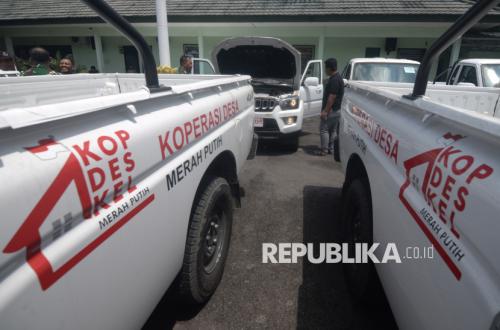
Coordinating Minister for the Economy Airlangga Hartarto stated that the government will continue to monitor the implementation of funding for Red and White Village Cooperatives (KDMP) sourced from the State Revenue and Expenditure Budget (APBN). He also assured that the government has prepared a special budget allocation in the APBN to support this priority programme.
“Yes, we will monitor it because the funding will come from the APBN budget,” he said when met at his office in Jakarta on Monday (13/4/2026).
Regarding the funding scheme, Airlangga explained that there has been a policy change compared to previous regulations. The changes were made both in terms of funding and activities, with the main objective of encouraging economic activities at the village level.
“The most important thing is to encourage activities at the lowest level,” he said.
As is known, Finance Minister Purbaya Yudhi Sadewa has issued Minister of Finance Regulation (PMK) No. 15 of 2026, which regulates the new KDMP funding scheme. This regulation allows the government to finance the physical development needs of outlets up to the completeness of other cooperative facilities through the APBN.
In the latest policy, the government can place funds as a source of liquidity for state-owned banks gradually, taking into account the state’s financial condition. Funding is provided with a maximum limit of Rp 3 billion per KDMP outlet unit, with an interest rate, margin, or profit-sharing of 6 percent per year.
In addition, the PMK regulation also stipulates the tenor of cooperative funding for 72 months, with a grace period for principal and interest payments of 6 months up to a maximum of 12 months.
“Instalment payments including interest for funding are made with the following provisions: first, monthly for instalments through DAU/DBH (General Allocation Fund/Revenue Sharing Fund) channelling. Second, lump sum for the relevant annual instalment for payments through village fund channelling,” as stated in the regulation.
With this scheme, the cooperative’s instalment payment obligations will in practice be supported by the regional fund transfer mechanism (TKD), both through general allocation funds/revenue sharing funds and village funds, thereby easing the burden on local-level cooperative managers.