
Red and White Village Co-ops: Big Ambition, Bigger Execution Challenge
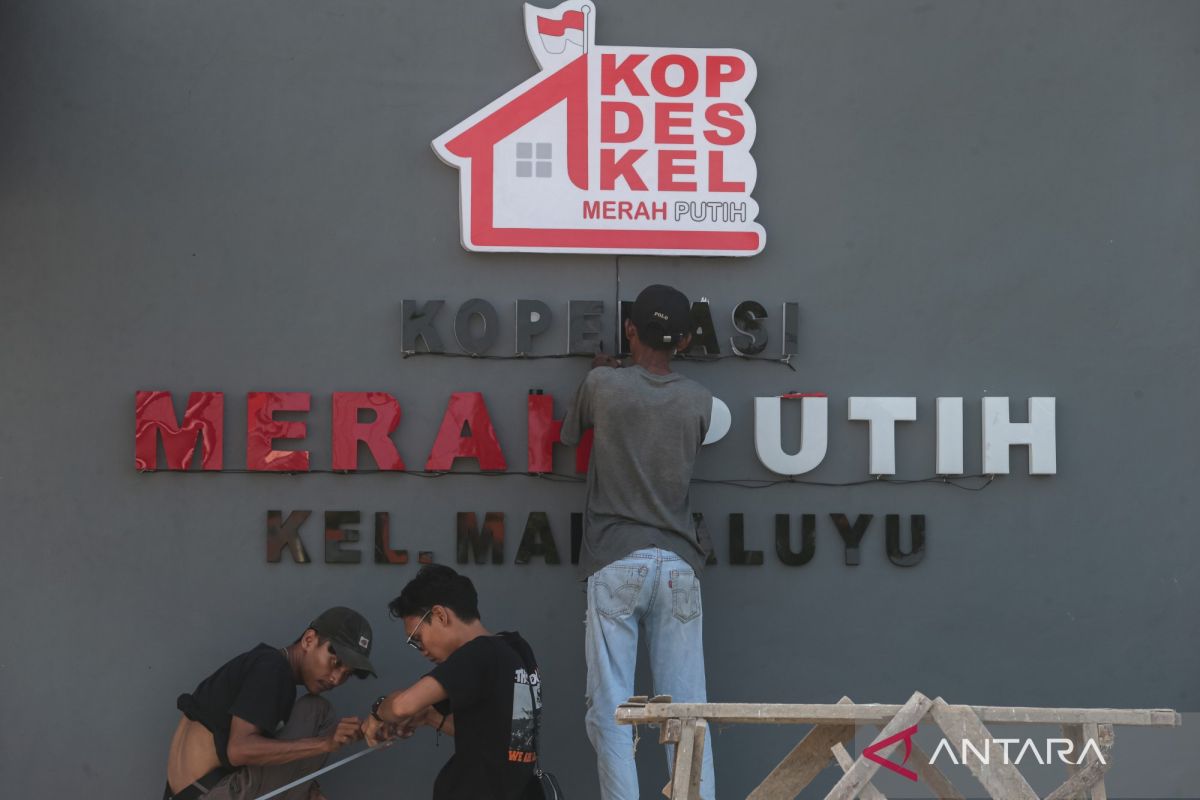
The goal is not only to strengthen the grassroots economy through cooperatives but also to integrate various policy instruments into a single program.
These instruments include job creation through the recruitment of 30,000 cooperative managers, financial support from the state budget, and the empowerment of impoverished families within the Family Hope Program (PKH) by involving them as cooperative members or even employees.
For the 30,000 cooperative manager positions, the government has opened the recruitment registration on April 15–24, 2026.
The selected candidates will be employed by the state-owned enterprise PT Agrinas Pangan Nusantara under a two-year fixed-term contract.
Under this arrangement, during the first two years of operations, the village cooperatives will be managed by these Agrinas-recruited professionals. This approach is intended to ensure the cooperatives operate with modern and professional standards before full management is eventually handed over to the cooperative boards.
In addition, the government has confirmed it will involve PKH beneficiaries, encouraging them to join as cooperative members or employees. The hope is that they can get additional income and escape poverty.
This approach reflects the government’s efforts to drive integrated economic transformation in villages through cooperatives.
However, as more functions are bundled into a single program, the demands on the supporting ecosystem grow significantly.
Consequently, the primary challenge shifted from policy design to the actual execution at the village level.
Job creation
One of the aspects that receives public attention in the village cooperative program is job creation.
The recruitment of 30,000 cooperative managers creates significant opportunities for educated workers, including fresh graduates who have long faced challenges in securing formal employment.
A researcher at the Center of Reform on Economics (CORE) Indonesia, Yusuf Rendy Manilet, noted that in the short term, this job creation could yield positive results by boosting income and consumption in villages.
However, cooperative management—which includes business operations, financial management, and market expansion—demands a high level of expertise.
Given the relatively general recruitment criteria, there is a potential gap between the skill sets of those recruited and the complexity of the tasks they will face.
The successful placement of managers also highly depends on the clarity of the standard operating procedure (SOP) and measurable work indicators.
Deputy Chair of the Indonesian Chamber of Commerce and Industry (Kadin) for Cooperatives, Agung Sujatmiko, added that the government needs to ensure detailed guidelines on the tasks, functions, and roles of managers in every cooperative, including their status and position within the institutional structure.
This clarity is essential because these managers do more than handle daily operations; they carry a government mandate to strengthen cooperative institutions at the village level.
Without clear boundaries, there is a risk of overlapping functions and weakened accountability.
Furthermore, performance indicators must be designed to measure their actual contribution to cooperative development.
The manager’s role goes beyond administration; they must also turn the cooperative into an aggregator and consolidator of the village economy. This requires them to have the capacity to innovate in developing local potential, including processing commodities into value-added products, and building distribution systems that reach broader markets.
Additionally, transparency in recruitment and placement schemes is a critical factor in minimizing the potential for conflict at the village level.
One of the fundamental issues is the source of the workforce: specifically, whether positions will be filled by local residents or outside hires.
In the case of the latter, disparities in backgrounds may hinder work effectiveness, particularly regarding the understanding of local sociocultural dynamics.
The placement of workers from outside the village may face adaptation challenges and require time to gain social acceptance. A lack of understanding regarding the local context could also hinder coordination with village stakeholders, including the village government, thereby affecting the overall harmony of the program’s implementation.
Furthermore, this situation could spark tensions, particularly if there are unemployed residents in the area. The government must avoid any perception of unfairness in the recruitment process, as this could negatively impact community participation in the cooperatives.
However, recruiting local residents is not without its own challenges.
Sujatmiko noted that social proximity does not always translate to better performance, innovation, or professionalism in managing a cooperative.
Without capacity building and a clear evaluation system, the manager’s role will be at risk of not being optimal. As a result, the program risks shifting from a rural economic development initiative into a mere short-term labor absorption scheme.
On the other hand, integrating PKH beneficiaries as cooperative members opens new avenues for community empowerment. This scheme is expected to transform their role from passive aid recipients into active participants in the village economy.
The government targets the Red and White Village Cooperatives to employ up to 1.4 million workers from the pool of PKH beneficiaries.
While the target creates new hope for villages, the success not only depends on the number of recruited workers but also on the readiness of the ecosystems in villages to support the cooperatives’ operations.
Safeguarding the cooperative principles
Another challenge emerges from the institutional aspect, namely, how to ensure the cooperatives can be integrated with the existing ecosystems in villages.
Economic activity in villages has long been driven by local players, such as traders,