
Recovery in East Bekasi Continues, On-Time Performance of Cikarang Commuter Line Keeps Improving
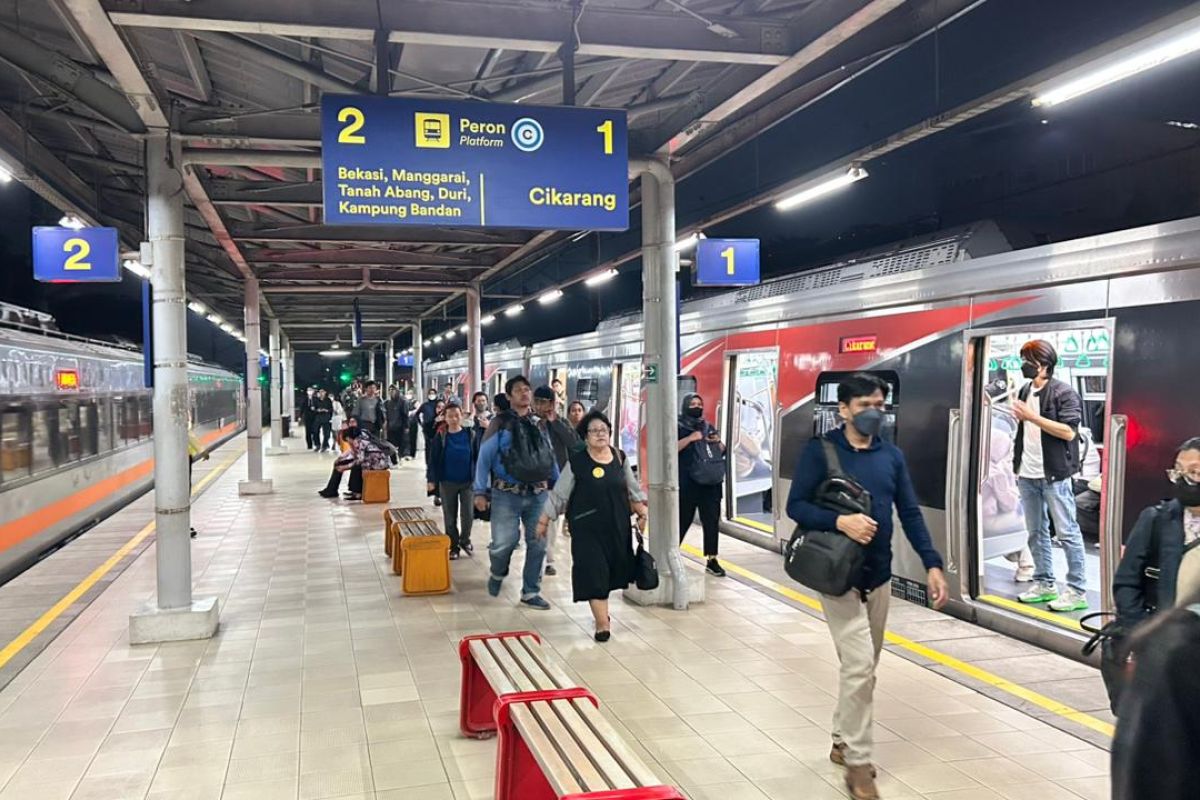
PT Kereta Api Indonesia (Persero) has stated that the recovery process for services in the East Bekasi station area continues gradually with an increasingly stable trend. Commuter Line journeys on the Cikarang route are now serving the public again with reliability that is continuously maintained.
Since operations resumed on 28 April until 3 May 2026, the passenger volume on the Cikarang Commuter Line reached 688,610 customers. This figure demonstrates the resurgence of public mobility and sustained user confidence in the service.
At East Bekasi station, during the recovery period from 28 April to 3 May 2026, 61,723 passengers recorded gate-ins and 61,942 gate-outs. On 3 May 2026, the daily volume was the highest, with 23,063 gate-ins and 19,207 gate-outs in one day.
Operational performance also shows consistent improvement, particularly on the Cikarang route. The on-time departure rate increased from 50% on 30 April to 80% on 3 May 2026, while on-time arrival improved from 44% to 75%. The average delay also dropped significantly from around 25.7 minutes to 4.7 minutes.
Overall, the performance of Jabodetabek Commuter Line journeys has seen an increase. On-time departure rose from 71.54% on 30 April to 93.52% on 3 May 2026, while on-time arrival increased from 68.46% to 91.63% over the same period.
KAI Vice President of Corporate Communication, Anne Purba, stated that this improvement is the result of intensive efforts by all teams to maintain operational quality during the recovery period.
“Commuter Line journeys on the Cikarang route are gradually returning to normal with significant improvements in on-time performance. We ensure every journey runs more reliably, so customers can resume activities with a sense of safety and time certainty,” said Anne.
KAI continues to strengthen operational control through real-time journey monitoring, operational pattern adjustments, and readiness of facilities and infrastructure to ensure services run optimally and provide increasing benefits to the public.