
Record-Breaking! Government Rice Reserves at Bulog Reach 4.7 Million Tonnes
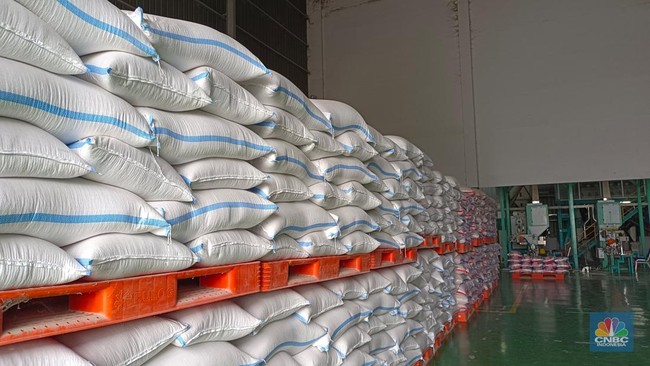
Global geopolitical tensions triggered by conflicts in the Middle East continue to heighten worldwide concerns over food stability. Escalating conflicts, disruptions to logistics routes, and uncertainties in international trade are seen as potential pressures on supplies and drivers of global food price surges.
Amid this situation, Indonesia has recorded significant progress in national food resilience. The Government Rice Reserves (CBP) managed by Perum Bulog have reached 4.7 million tonnes, the highest record in the history of Bulog since its establishment, and are steadily moving towards the 5 million tonne mark.
This achievement is just one layer of the complete picture of Indonesia’s food resilience. In the domestic market and HoReCa sector (Hotels, Restaurants, and Catering), rice availability stands at 12 million tonnes. Additionally, the potential standing crop is projected to continue contributing to production until the end of the year.
These three layers of availability form the main foundation ensuring Indonesia’s food needs are met for the next 11 months. This accomplishment is the result of the vision and policies laid out since the beginning of the administration.
Agriculture Minister Andi Amran Sulaiman emphasised that Indonesia has taken anticipatory steps well before global pressures intensified, in line with direct instructions from the President of the Republic of Indonesia.
“From the start, the President has stressed the importance of self-sufficiency and strengthening food reserves. This is a strategic step to address the uncertain global situation,” Amran stated in a written release on Wednesday (15/4/2026).
Amran further conveyed that the current food reserve position reflects Indonesia’s readiness to face various global crisis scenarios.
“Our reserves are currently at 4.7 million tonnes and continuing towards 5 million tonnes. With this position, our food needs are sufficient for the next 11 months. This is a form of Indonesia’s preparedness in facing potential global food crises,” he asserted.
The Ministry of Agriculture (Kementan) assesses that the current global geopolitical dynamics increasingly underscore the importance of every country having strong, independent, and sustainable food reserves.
Dependence on vulnerable global supply chains is viewed as a structural weakness that must be addressed seriously and systematically.
“The world today faces uncertainty. It could be due to conflicts or policies from other countries restricting exports. Therefore, we must ensure strong domestic production and adequate reserves,” said Amran.
Regarding Russia’s call for BRICS countries to build joint food reserves, Kementan views this initiative as a strategic step aligned with efforts to strengthen global food resilience. International cooperation is seen as a key instrument in mitigating increasingly complex food crises. Indonesia, as one of the developing countries in the group, is in a strategic position not only to safeguard national food resilience but also to actively contribute to regional and global food stability.
With three solid layers of food availability—namely government reserves that have set the highest record in history, rice availability in the domestic market and HoReCa, and projections for standing crop production until year-end—Indonesia is in a strong position for food resilience to face various global challenges and uncertainties.