
Reconstructing May Day: The Labour Movement
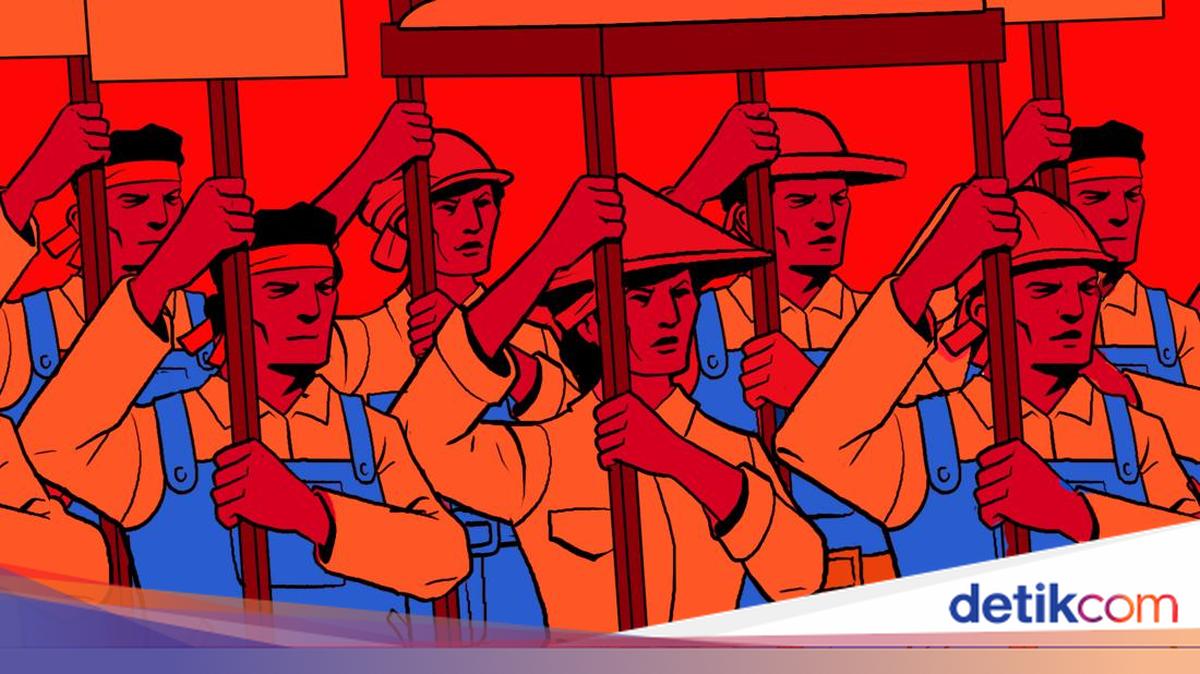
That is why on the day known as May Day, the international working class commemorates the revolutionary labour leaders who were arrested and sentenced to death for causing chaos in society. Although there was no evidence to implicate their involvement, 200 people were injured by police gunfire, which ultimately revealed that it was the police agents themselves who had thrown the bomb into the midst of the police forces guarding the peaceful labour demonstration. Ironic, isn’t it? For the workers who were sacrificed in the name of security and order were exploited as the ones to be blamed and punished, even while disregarding the applicable laws. In this context, the engineered riot to disperse the labour demonstration was simultaneously used to mark the danger posed by anarchists. The group that had previously escaped the attention of security forces began to be viewed on par with rebels or terrorists. In other words, as stated by the New York City police in the United States during their duty to guard the 2004 Republican National Convention, “The threat does not come from communists, nor from Muslim fanatics, but from anarchists.” In other words, anarchists have received a stigma they never imagined before. The question is, who exactly are these anarchists? What is the historical trajectory of their steps on the map of social movements to date? Are there lessons that can be reconstructed, or even deconstructed, from the history of anarchists for our society today? In his book titled Under Three Flags: Anarchism and the Anti-Colonial Imagination (Serpong, South Tangerang: Marjin Kiri, 2015), Benedict Anderson explains that anarchism is not merely acts of destruction, arson, or even murder. Rather, it is militant nationalist action as fierce as that of radical left groups (Marxists) against imperialism and colonialism. Thus, anarchism grew and developed after Karl Marx’s death in 1883 through local nationalist figures in Cuba (1895), the Philippines (1896), and South Africa. What and who did they fight against? Of course, the imperialist and colonial rulers such as Britain, France, and Russia, plus Germany, the United States, Italy, and Japan. How did they fight? During the era known as the “first globalisation” at the end of the 19th century, anarchists utilised various cross-continental communication media such as telegrams, letters, magazines, newspapers, photographs, and books. Moreover, supported by railway networks that penetrated national and imperial borders, they could move more freely and quickly without much time and effort. That is why anarchists are true polyglots (mastering many languages) since there was no “international language” yet. Only in that way could the struggle against colonialism be disseminated widely, although it was not easy to carry out and often failed. Up to this point, anarchists appear more as activists in social movements behind the scenes. In other words, they are often called “think tanks” in social movements but can take the stage if truly needed. Jose Rizal is one example of such an activist who was eventually sentenced to death on 30 December 1896 and elevated as the “Father of Nationalism” in the Philippines. In Indonesia, nationalist figures like Soekarno, Hatta, Sjahrir, and Amir Sjarifuddin actually belonged to this group as well. The same goes for Soe Hok Gie, who became one of the key figures in the 1966 student movement. Their struggles initially were not to urge the masses to “take up arms,” but rather to ignite the spirit of resistance through people’s organisations or movements. For example, through trading associations, education, or health groups that helped society meet daily needs independently and selflessly. This is essentially what the anarchists did from one end of the world to the other. Therefore, at its core, anarchists do not pretend, let alone intend, to change the world. In this context, it is not a “classless society,” as formulated by Marx, that anarchists aspire to, but merely “class consciousness,” that is, being alert and vigilant to always be sensitive and caring about the fate of fellow human beings. This is the essence of the critique that Marx originally directed at philosophers for being adept only at interpreting the world without changing anything. Thus, it is no coincidence that Rizal, who was initially a novelist with his famous works Noli Me Tangere (Touch Me Not) and El Filibusterismo (The Reign of Greed), was tempted to become a political activist and failed to complete his third novel. Historically, anarchists at their core are merely a “nameless movement.” However, that movement is still capable of echoing global resistance. That means they are not a movement that produces chaos, but rather invites and helps anyone to always be radical and nationalist. That is why, as a movement, anarchists fundamentally always stand on the guideline of “organise without leaders.” With that guideline, it is clear enough that the demands and guidance of the anarchist movement are to become a leader for and of oneself. In other words, becoming an anarchist is not about changing anything or anyone. But it is oneself that must first and foremost be reconstructed and deconstructed so as not to act without control.