
Reconsidering Cash Petty Cash in State Budget Payments
Reconsidering Cash Petty Cash in State Budget Payments
Today, payment via QRIS is no longer a special occurrence. In shopping centres, coffee shops, vegetable stalls in traditional markets, and street vendors alike, the black-and-white QR code has become a common language.
Even abroad, this payment method is beginning to gain acceptance. Transactions take place quickly, without the need to count banknotes one by one. There is also no need to worry about providing and counting change.
In state budget management, the shift towards non-cash methods is also tangible. Tax payments can now be made through mobile devices. Payments to the state treasury are largely transfer-based. Physical cash is gradually diminishing its role in the state’s financial traffic.
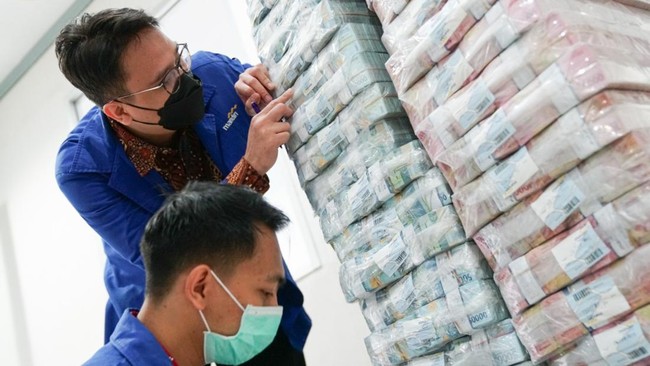
However, there remains one area that remains familiar with physical money: the Spending Treasurer in government work units.
Regulatory framework explicitly permits the management of Uang Persediaan (UP) in cash form. The basis is clear, including that set out in the Ministry of Finance Regulation Number 62 of 2023 on Budget Planning, Budget Implementation, and Accounting and Financial Reporting, together with its implementing regulations.
In practice, the state budget payment mechanism recognises two main channels. First, direct payment (LS), where the state pays directly to the entitled party—employees, goods and service providers, or others—without the funds passing through the spending treasurer. Salaries, honorariums, contractual expenditure, and capital expenditure generally use this mechanism. This system is relatively safer as it minimises intermediaries.
Second, payment through Uang Persediaan (UP) managed by the Spending Treasurer. UP is intended to finance daily operational needs of relatively small value, urgent, or not feasible if paid through the LS mechanism.
UP itself comes in two forms. First, cash UP—funds that can be withdrawn and physically held by the treasurer. Second, UP through the Government Credit Card (KKP), which is paid non-cash using an official government card, as regulated in Ministry of Finance Regulation Number 196/PMK.05/2018.
Looking back, the dominance of physical cash was once unavoidable. Access to banking was limited, technological infrastructure was uneven, and Indonesia’s vast geography made physical payment the most reasonable option.
State Cash Offices—the extension of the Finance Minister’s hand in the regions—even kept money in large safes like cabinets. These funds were then distributed to payment recipients or work units through treasurers. At this point, the treasurer served as the state’s “petty cash”.
However, that landscape has changed. Banking services now reach almost all parts of Indonesia. Transfers between banks occur within seconds. Even small traders have become increasingly accustomed to accepting digital payments.
Ironically, whilst society is rapidly abandoning cash, some mechanisms of state financial management still provide considerable space for physical transactions through cash UP. Yet, the use of cash UP harbours a number of significant risks.
First, there is the issue of traceability. Cash transactions do not leave a strong digital footprint. Evidence often comes in the form of manual receipts, which are prone to error and even manipulation.
Second, there is the security aspect. Cash is always exposed to risks of loss, theft, and disaster such as fire. In such circumstances, the treasurer bears full responsibility for funds that are physically in their hands.
Third, there is the matter of administration and accountability. Poor bookkeeping, delays in depositing remaining UP funds, and cash shortfalls are classic problems that continue to emerge year after year.
The State Audit Board’s (BPK) audit reports demonstrate that these risks are not merely assumptions. In the Audit Reports on the Central Government Financial Statements (LKPP) for 2021 through 2023, the management of Uang Persediaan has repeatedly been highlighted.
The findings that emerge are relatively similar: improper use contrary to purpose, disorderly accountability, and delays in depositing remaining funds to the state treasury. The amounts are not insignificant. In the 2023 LKPP audit report, for instance, there were findings valued at Rp56.7 billion related to cash management at spending treasurers. The BPK also assessed that internal controls over cash transactions remain weak.
When the same findings repeat, the problem can no longer be viewed as an individual incident. There is a systemic problem that needs to be reconsidered. As long as cash remains a significant part of the UP mechanism, the potential for similar findings will persist.
Within the framework of modern governance, cash is indeed in an unfavourable position. The principles of transparency and accountability demand a system that can be traced, audited, and monitored in real time.
The government has actually been moving in that direction: implementation of the Government Credit Card, strengthening of cashless government concepts, and utilisation of government marketplaces through Inaproc have become part of the state’s financial digitalisation strategy.
This direction aligns with Presidential Regulation Number 95 of 2018 on Electronic-Based Government Systems (SPBE), which promotes government processes—including financial processes—based on digital technology.
Digital payment offers advantages that physical cash cannot match: transactions are automatically recorded, their footprint is clear, and room for abuse is narrower. In this context, cash UP increasingly looks like an old mechanism being retained amid an ever-changing system.
Of course, the idea of eliminating cash UP is not without challenges. The reality on the ground is not always as ideal as the concept on paper. In a number of regions, particularly outside Java, digital infrastructure is not yet fully distributed.
Even in Java, there are still work unit operators who need to travel from their region to access banking services, and communications networks in certain areas remain unreliable. These are real constraints that cannot be simply dismissed.
Yet these constraints should be treated as challenges to overcome, not reasons for complacency. The solution lies not in maintaining status quo, but in accelerating digital infrastructure development. Policymakers should recognise that continuing to permit large-scale cash UP management is to accept inefficiency and risk as permanent features of state financial management.
The path forward requires courage: gradually reducing cash UP authorisation, scaling up the Government Credit Card, and strengthening digital infrastructure in lagging regions. This is not merely about modernity for modernity’s sake, but about ensuring that public funds—taxpayers’ money—are managed with maximum transparency, security, and accountability.
The digital age has transformed how society transacts. It is time for state budget management to follow suit.