
Recognised by Europeans, This Indonesian Fruit Could Be a Solution to the Crisis
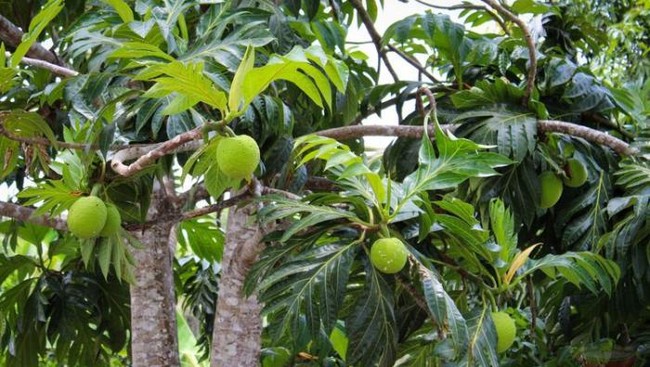
Indonesia has long been known to the world through tropical fruits such as durian and rambutan. However, behind that, there is one native commodity from the Archipelago that has quietly become a global favourite: sukun.
This fruit, with the Latin name Artocarpus altilis, has long sparked curiosity among Europeans. They imagined a “perfect fruit” that was superior to others, namely filling, highly nutritious, and capable of sustaining human life in difficult conditions.
That fantasy was finally answered when the era of ocean exploration began. In the Nusantara and Pacific regions, Europeans discovered a fruit that matched their imagination: sukun.
History records that sukun has long been part of local communities’ lives. Reliefs at Borobudur Temple depict this fruit as one of the important food sources since ancient times.
Europeans’ first encounter with sukun occurred in the 17th century. The English explorer William Dampier saw the fruit directly when he stopped in Guam in 1686. He described the fruit as unique because it grows on a large tree and has no seeds.
“Therefore, we named it breadfruit,” Dampier wrote in his book A New Voyage Round the World (1697).
The name “breadfruit” or bread fruit emerged because of its texture. The flesh of the sukun fruit, when roasted, has a taste and sensation similar to bread. Dampier also assessed that this fruit is very filling and has the potential to be a solution during food crises, even helping to prevent diseases like scurvy.
Dampier’s notes immediately sparked curiosity in Europe. However, limited access meant that sukun remained merely a topic of discussion without realisation.
The Dutch naturalist Georg Eberhard Rumphius expressed something similar. In Herbarium Amboinense (1741), he described sukun as a magical fruit that is rich in nutrients and versatile, and capable of being a saviour in times of famine.
The ambition to bring sukun to Europe was finally realised in the 18th century. The English explorer James Cook, at the urging of botanist Joseph Banks, began researching and spreading this plant to various British colonies.
Banks believed that sukun had high nutritional value and could serve as a cheap food source. He even proposed to King George III of England to plant sukun in colonial territories as a food source.
That proposal was approved. Sukun seedlings were then brought and planted in the Caribbean and other colonial areas. From there, the spread of sukun expanded to Africa, Asia, and various parts of the world.
Over time, claims about the benefits of sukun, which were initially based only on empirical experience, began to be proven scientifically. Modern research shows that sukun is rich in vitamin C, potassium, magnesium, as well as high in fibre and low in fat.
Not only that, sukun is now classified as a superfood. In addition to its nutritional content, this plant is considered superior because it fruits quickly, requires minimal maintenance, and can grow in various environmental conditions.
These advantages have led to sukun being eyed as a solution to facing the threat of global food crises due to climate change. Its ability to withstand extreme weather makes it a strong candidate as a future food source.
From a local fruit grown in the Nusantara, sukun has now transformed into a global commodity and is even touted as one of the keys to facing the world’s “doomsday” of food.