
Rebuilding National Schools
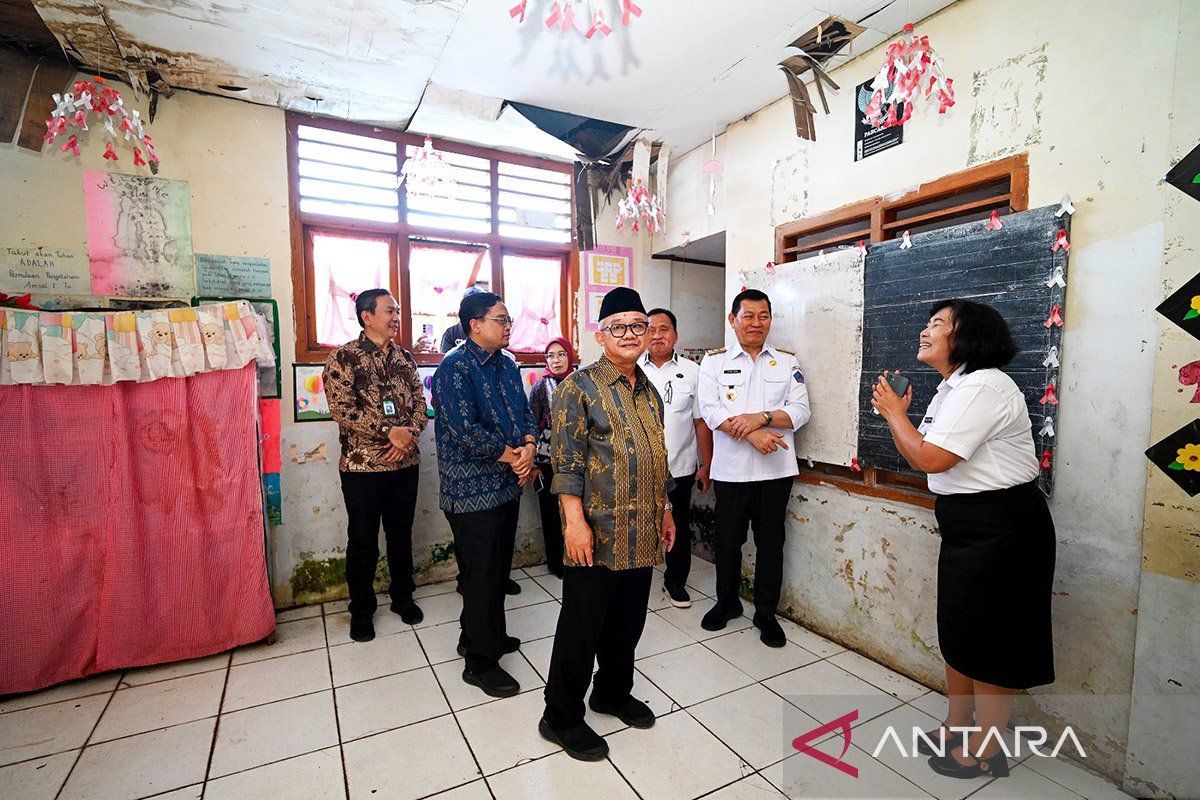
The government’s school revitalisation efforts in the era of President Prabowo Subianto demonstrate a shift in the approach to national education development. A programme previously synonymous with limited physical repairs is now directed towards more structured, data-based interventions involving educational units as the main actors.
The initial conditions underlying this programme are relatively uniform in many regions. Physical damage to school buildings, from leaking roofs and cracked walls to limited classroom space, remains an issue hindering the learning process. In this context, state intervention is an urgent need to ensure minimum standards of education services are met.
The Ministry of Basic and Secondary Education, through the Educational Unit Revitalisation Programme, places three main principles as the basis for implementation: safety, comprehensive improvement, and mutual cooperation. This approach shifts from the old centralised pattern to one more based on real needs at the school level. Data verification is carried out periodically to ensure programme targets align with field conditions.
By the end of 2025, more than 16,000 educational units have been revitalised. This figure shows acceleration compared to the initial target. In 2026, the government will scale up the programme with a target of 71,744 educational units and a budget allocation of Rp14 trillion. Early realisation shows fund disbursement reaching Rp2.6 trillion, with thousands of schools entering the implementation stage.
The programme’s implementation model has also changed significantly through a self-management scheme. Schools are given the authority to manage the construction process, from planning to execution. This mechanism opens up participation opportunities for the surrounding community, including parents of students and local workers.
Data from the Presidential Staff Office indicates that the revitalisation programme has absorbed 238,131 local workers. Each project averages around 22 workers from the local community. The involved personnel include construction workers, project supervisors, and other support staff. In practice, this model encourages economic circulation at the local level because material purchases and project needs are carried out around the school location.
The economic impact is not limited to the construction sector. Around 58,000 micro, small, and medium enterprises are said to be involved in the programme’s activity chain. The presence of workers increases demand for daily consumption needs, which in turn boosts the income of small traders. Economic activities also spill over into the transportation sector and other support services.
The self-management approach is considered to provide efficiency while increasing ownership of the development outcomes. In several cases, schools have been able to optimise budgets to add classrooms or improve other facilities beyond the initial plan. This shows flexibility in resource utilisation that did not previously occur in the centralised development model.
The distribution of the revitalisation programme is also directed to reach areas with high vulnerability levels. Disadvantaged, frontier, and outermost (3T) regions, disaster-affected areas, and island regions become top priorities. The government sets a focus on schools damaged by disasters as an acceleration step in 2026, before expanding to other schools with severe damage.
In addition to physical aspects, the revitalisation programme is beginning to integrate with the digital education agenda. Throughout 2025, digital learning devices have been distributed to hundreds of thousands of educational units. The government is also addressing basic infrastructure constraints by providing internet access to more than 8,000 schools that were previously unconnected, including through satellite technology. On the other hand, cooperation with electricity providers is being carried out to reach more than 2,300 schools that do not yet have electricity access.