
Realism à la Natalius Pigai and the Board of Peace's Calculation
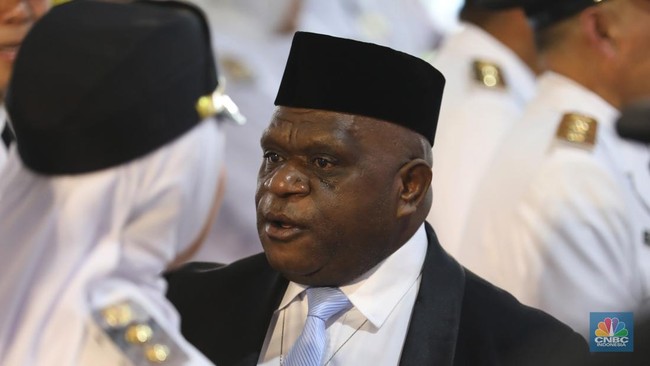
This article is a response to an opinion piece by Minister of Human Rights, scholar, and moral figure Natalius Pigai, who wrote about realism in Detik.com on 6 March 2026. Pigai’s reasoning on realism, including arguments from philosophers Thucydides, Kautilya, and John Mearsheimer, is already “comprehensive”.
According to him, tensions in the Middle East and US involvement in attacks against Iran have forced Indonesia to choose a firm path to save the nation whilst contributing to the salvation of Palestine. He believes the world has been divided into three parts, citing US academic John Mearsheimer’s argument: socialism, capitalism, and realism. Pigai adds that realist ideas often form the foundation of President Prabowo’s policymaking.
At the end of his piece, he also questions academic Anies Baswedan’s opinion: if Indonesia does not participate in the Board of Peace (BoP), how can Indonesia save its nation whilst contributing to Palestinian safety?
Pigai’s sharp ideas can be responded to through several points.
First, the choice of title using the word “ideology” is incorrect, especially when connecting it with realism. Historically, the popularity of the word ideology was introduced by Antoine Destutt de Tracy in the 18th century. This French philosopher argued that ideology is the science that studies ideas or the way humans think, just like “biology” or “zoology”. This thinking emerged after the French Revolution to explain the freedom of French people from the cruelty of the absolute monarchy system.
Furthermore, the French Revolution was also based on an economic crisis that had implications for people from the lower classes, so the revolution had significant meaning for changes in social, economic, and political conditions.
This idea developed in France. However, Napoleon Bonaparte viewed this thinking as a form of understanding that could only be enjoyed by a handful of elites, too abstract, and not based on the political reality experienced by society. Just as Bonaparte’s view of ideology or ideologues, Tracy’s argument could only form a utopian society.
German philosopher Karl Marx also viewed that ideology had produced “false consciousness” for German society. He then believed that the concept of ideology is part of ideas, beliefs, and values created by those in power to strengthen their position as the dominant party in order to exploit the lower class.
This means explanations of ideology are often understood as a form of “belief” that is forced to be adopted by society. This has occurred throughout history and continues today in some countries such as China and North Korea.
Realism developed long before the 20th century. Natalius Pigai indeed mentioned Thucydides and Kautilya. However, what Natalius Pigai often cited is John Mearsheimer. Natalius Pigai illustrated Mearsheimer’s ideas by dividing three groups based on “ideology” such as socialism, capitalism, and realism.
However, based on facts, Mearsheimer never explained these three ideas; rather, he explained liberalism, nationalism, and realism in his book entitled “The Great Delusion: Liberal Dreams and International Realities”.
Realism is the main pillar of John Mearsheimer’s thinking. The core basic assumption of realism is not about the existence of war, but the opposite. Mearsheimer tends to acknowledge that the condition of the international system is anarchy, with no single authority.
He adds that there will indeed be war—because of anarchy—but it cannot be determined regarding the occurrence and scale of that war. States, in his explanation, will attack the weak as a form of survival; Mearsheimer calls this offensive realism (structural realism).
Concerning the explanation of ideology, Mearsheimer does not at all mention the concept of “realist ideology” except in the context of nationalism, which is how states form national identity. For this reason, the realist idea has never been mentioned as a form of “forced” idea upon the people. In other words, the realist idea is better categorised as a theory or perspective seen as the way states take action in response to the anarchic system.
Natalius Pigai has indeed explained conceptually, but has not explained applicatively, so readers cannot determine what correlation exists between offensive realism and Indonesia’s joining the Council of Peace.
The explanation of realism, according to Natalius Pigai, relating to Indonesia at the Council of Peace is irrelevant. In the development of international relations studies, besides realism, academic debate has also been coloured by neoclassical realism groups. The 2012 study by Taliaferro, Lobell, and Ripsman has stated that neoclassical realism is intended to explain each country’s foreign policy to respond to external challenges.
In his explanation, he fails to emphasise that Indonesia’s involvement in the Council of Peace also involves internal affairs variables that could determine state behaviour. This will certainly relate to President Prabowo’s personal decision and those within government circles.
Amid the controversy over President Prabowo’s decision to join the Council of Peace, it is entirely irrational, especially to fight for the fate of the Palestinian territory. This also has implications for the position of foreign policy which is again seen as not neutral.
First, since President Trump promoted the Council of Peace to “stabilise” the Palestinian region and resolve the conflict, he completely did not involve Palestine, but only invited…