
Reading Iran's intelligence strategy versus the United States and Israel
Jakarta – In the 21st century, major wars rarely begin with formal declarations or troop mobilisations, as in previous centuries. They often commence in silence, within intelligence analysis rooms, at satellite monitoring centres, or across computer networks that penetrate other nations’ defence systems.
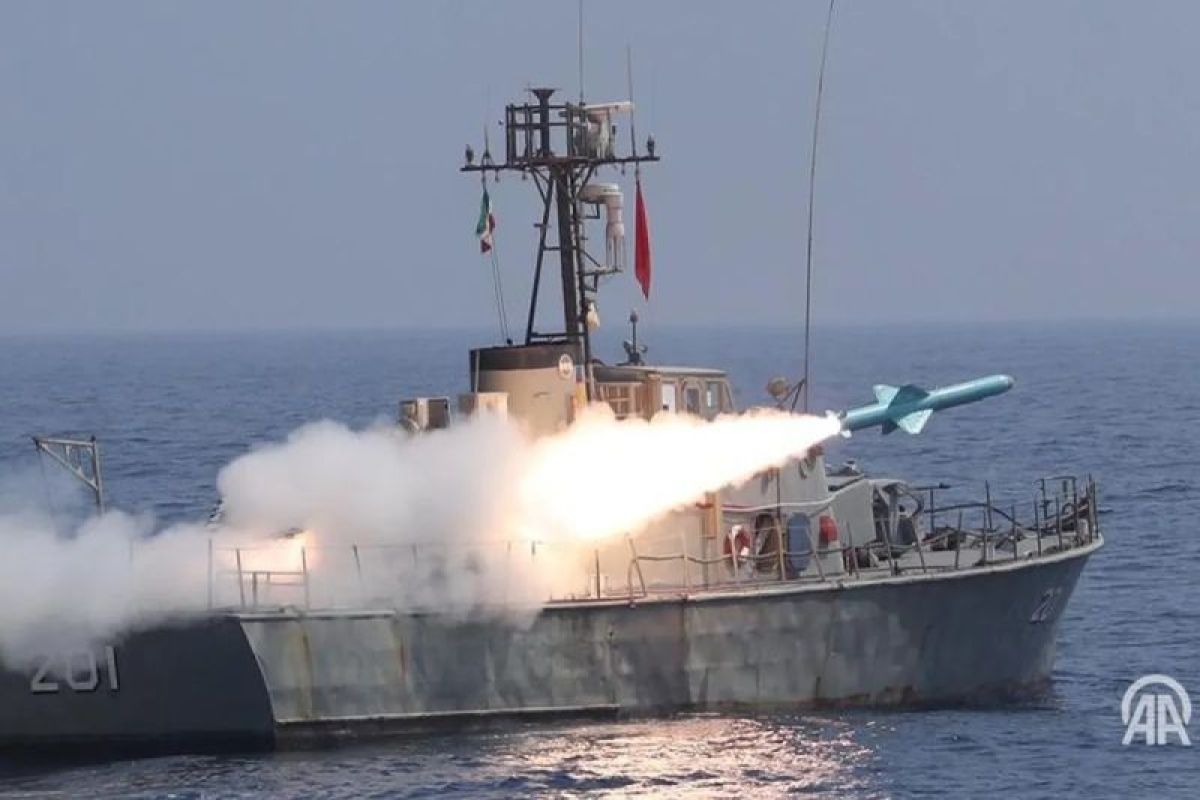
When the public eventually witnesses missiles being launched or drones striking targets, the conflict has already been underway for far longer. In the context of tension between Iran on one side and the United States and Israel on the other, the truly decisive battlefield is not in the Middle Eastern skies but rather in the intelligence arena.
What appears on the surface—such as missile strikes, drone operations, and limited military clashes—is merely the tip of a deeper strategic contest. This conflict represents a prolonged duel between two vastly different models of power. On one side lies the technological dominance, global intelligence networks, and advanced surveillance capabilities of the United States and Israel. On the other sits Iran’s defensive strategy, asymmetric warfare, and regional influence networks built over more than four decades.
The roots of this rivalry can be traced to Iran’s 1979 revolution, which overthrew Mohammad Reza Pahlavi’s government. This event transformed Iran from a principal Western ally into one of the primary challengers to American influence in the Middle East. Since then, relations between Iran and the United States have evolved into a long-term strategic rivalry filled with economic sanctions, military pressure, and covert intelligence operations.
Within this configuration, Israel views Iran as an existential threat, particularly regarding its nuclear programme. Consequently, Israel has made Iran a top priority for its national intelligence operations. Israel’s intelligence agency, Mossad, alongside American intelligence bodies such as the CIA and NSA, has formed an extensive surveillance network monitoring Iranian military activity.
The United States itself operates a military reconnaissance satellite network capable of monitoring various strategically important global regions. This technology enables nearly real-time observation of activities at Iranian military facilities. This information is then combined with global electronic communications surveillance and networks of human agents operating covertly.
One of the most famous examples of such intelligence operations is the Stuxnet cyber attack in 2010, which damaged thousands of centrifuges at Iran’s nuclear facilities. This operation demonstrated a fundamental shift in the character of modern warfare. Strategic sabotage no longer needs to be conducted through bombs or air strikes; it can now be executed through malicious software targeting industrial systems.
Besides cyber attacks, several Iranian nuclear scientists have also been targets of mysterious assassination operations over the past two decades. Numerous Iranian strategic facilities have even experienced explosions or suspicious technical disruptions, including at the Natanz nuclear facility and the Bid Kaneh missile base. This series of events demonstrates that the conflict between Iran and the Western bloc has long existed as a shadow war.
However, Iran is not a passive actor in this dynamic. Recognising that it cannot directly match Western technological dominance, Iran has developed a different approach by constructing layered, decentralised, and difficult-to-disable defence systems.
One core concept within Iran’s military doctrine is “mosaic defence”. Under this concept, the military command structure is designed to be decentralised, allowing field units to continue operating even if the main command centre is attacked. The primary aim of this strategy is to thwart the “decapitation strike” doctrine frequently employed in Western military operations.
Iran’s strategy is further strengthened by its extensive regional influence network. Through allied groups such as Hezbollah in Lebanon, Hamas and Palestinian Islamic Jihad in Palestine, the Houthis in Yemen, and various militias in Iraq within the Popular Mobilisation Forces, Iran constructs layers of military pressure beyond its own territory. With this approach, conflict with Iran does not occur solely within Iranian territory but can emerge at multiple points across the Middle East.