
Ray Dalio, Prabowo Subianto and the Politics of Civilisational Survival
I often read Ray Dalio’s writings – his thick, measured books, his cool essays, and more recently, his lengthy posts on the X social media platform. From these, I’ve learned one thing: Dalio doesn’t write to entertain; he writes to dissect.
He doesn’t predict the future, but rather reveals past patterns that repeat themselves in different guises. As a result, the accuracy of his ideas and predictions doesn’t feel like a coincidence, but rather the result of consistently studying history as a cycle – not as a finished, heroic tale.
In his books and writings, Dalio offers insights that go beyond economics. He speaks of civilizations: how nations thrive when they can balance power and justice; how they collapse when inequality is allowed to fester, legitimacy evaporates, and people feel they are living in a system that doesn’t belong to them.
In Dalio’s framework, economics is merely a symptom. The true cause lies in internal order, or the lack thereof.
A recent lengthy piece by Dalio, which I also shared, states plainly: the post-1945 world order has collapsed. The world is entering a phase of great power politics, where international law weakens, global consensus fractures, and power once again becomes the primary language.
In Dalio’s terms, this is the advanced stage of the Big Cycle: external conflicts run parallel to internal fractures. Nations that fail to manage their own affairs will be drawn into, or forced to choose sides in, conflicts they did not design.
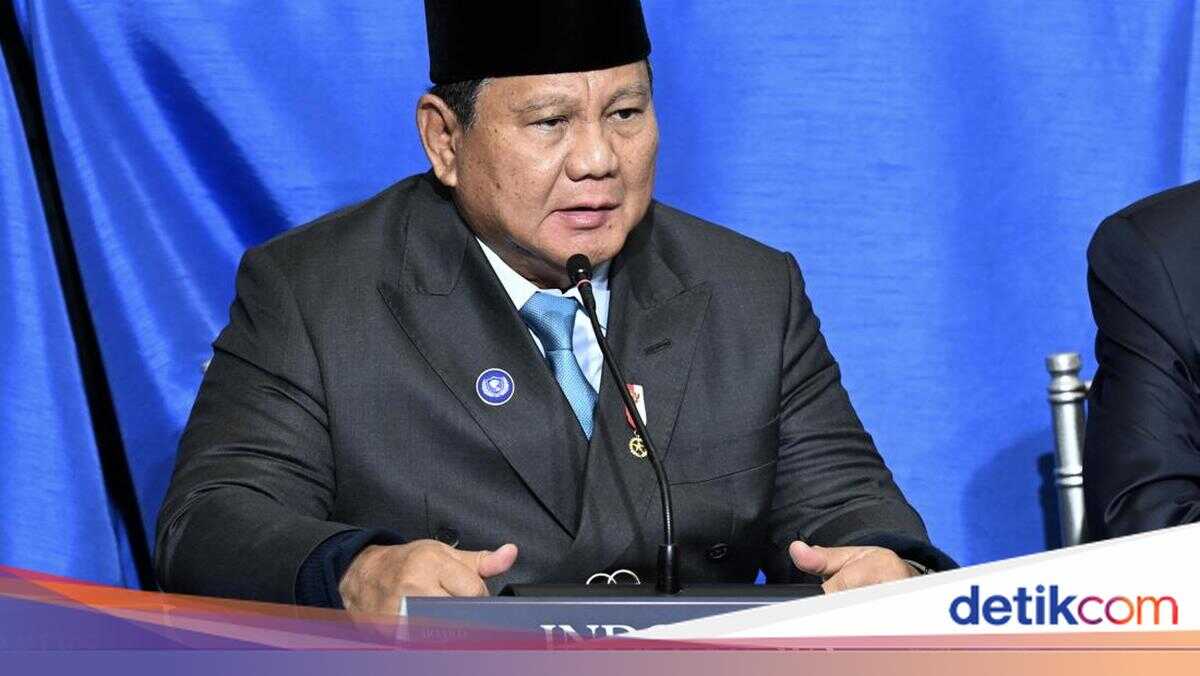
With this in mind, reading the policy direction of the Prabowo Subianto administration becomes more meaningful when viewed as a cohesive architecture, rather than a collection of promises. Many people judge Prabowo based on symbols of strength and the military. However, within Dalio’s framework, lasting power is always supported by buffers – layers of resilience that absorb shocks before they turn into crises.
The free nutritious meal program (MBG) is the most basic layer of this buffer. It is often dismissed as populist. However, Dalio repeatedly emphasizes that nations collapse not because of a lack of grand ideas, but because they neglect the most fundamental needs.
A hungry population has no historical patience. A nation that fails to provide for its people will lose legitimacy before it loses sovereignty. This program works on the social fabric of the nation: preventing latent anger from turning into political conflict. The MBG can be seen not just as providing nutritious meals to vulnerable toddlers, schoolchildren, and students, but also as building an ecosystem of food security, stimulating the local economy – a multi-functional buffer within the nation.
Above this, the Merah Putih Village Cooperatives serve as a structural buffer. Dalio reminds us that extreme concentration of wealth and economic control is a major trigger for internal disorder cycles. Village cooperatives are not simply a romantic notion of people’s economics, but a mechanism for distributing economic power – ownership, not just income. They ensure that growth does not become the story of a select few elites, who are merely observed from the sidelines.
The next layer consists of other buffer programs: food, energy, and water security; price stabilization; downstreaming and industrialization; and social protection. In Dalio’s framework, these are defenses against global economic warfare – wars of supply, price, and technology – which always precede open conflict. A nation that is fatally dependent will be easily pressured. A nation with a buffer will have room to breathe.
This is where Prabowo Subianto’s foreign policy finds its context. Dalio writes bluntly: in a world without referees, power respects power. Neutrality is only respected if it is accompanied by capacity. A non-ideological, pragmatic, and independent-active foreign policy is not a sign of confusion, but a strategy for survival in a fragmented world.
However, Dalio also reminds us that external power always stems from internal stability. A sovereign diplomacy is impossible without a stable domestic base.
Modernization of defense, downstreaming, food security, free nutritious meals, village cooperatives, and social protection – all of these, when read together, are layered buffers. They absorb pressure from below to prevent it from exploding upwards, and absorb pressure from outside to prevent it from directly hitting the people. This is not a guarantee of safety – Dalio never promised that – but a conscious effort to slow down, or even divert, the phase of destruction in the big cycle.
Ray Dalio reminds us that no nation is immune to the laws of history. But he also offers the most important lesson: civilizations survive not because of one spectacular policy, but because of a willingness to patiently nurture their foundations.
In this context, Prabowo’s programs can be seen as a whole – an effort to maintain internal order so that Indonesia does not enter a harsh world with a fragile body.
In an era when rules are blurring and power is once again exposed, perhaps the most important question is not who speaks the loudest, but who is best prepared to endure without losing a sense of justice. And it is there, I believe, that the true test of our civilization will take place.
Jakarta, February 25, 2026
Azis Subekti. Member of the DPR RI, Gerindra Party faction.
(rdp/tor)