
Rasuna Said: The Islamic Orator and Female National Heroine from Minangkabau
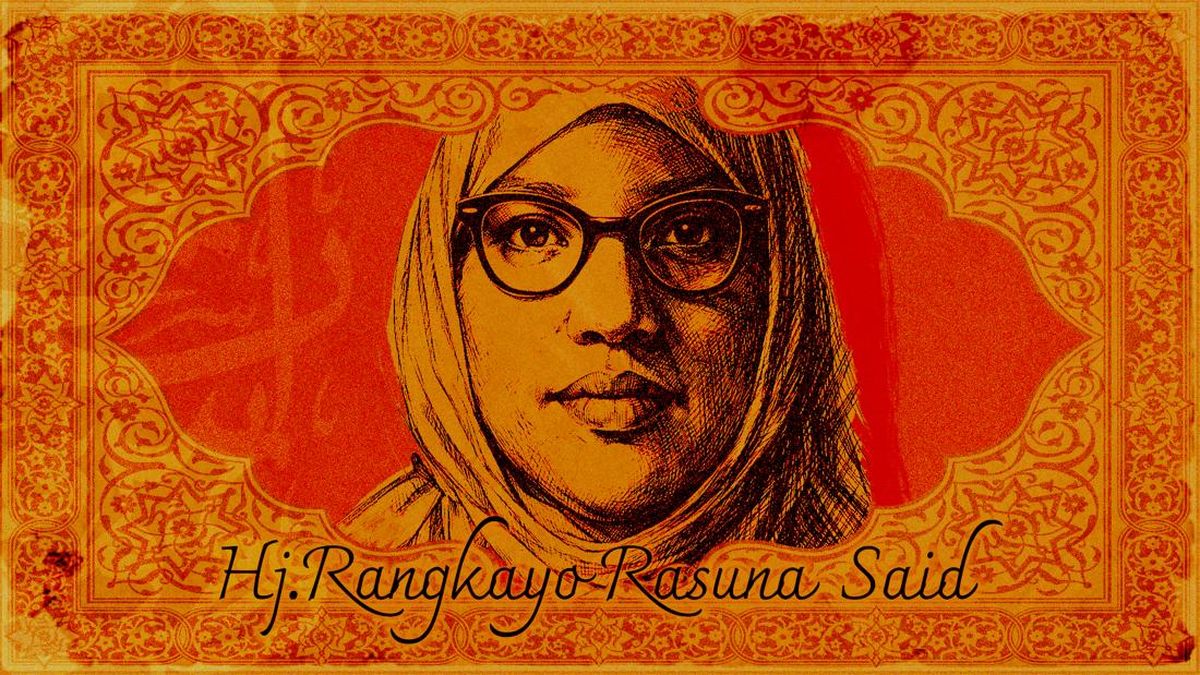
Hajjah Rangkayo (HR) Rasuna Said was one of the few Indonesian women from the independence movement era to have been designated a National Heroine by the state.
Alongside her, several other female figures have received the same honour, including Nyai Ahmad Dahlan (Siti Walidah), wife of the founder of Muhammadiyah, KH Ahmad Dahlan; the West Javanese educator Dewi Sartika; and the labour activist Marsinah, who was tortured and killed during the New Order era.
Rasuna Said (1910–1965), hailing from West Sumatra, was widely recognised as a masterful orator and a teacher at the Thawalib school. The Minangkabau woman was designated a National Heroine through Presidential Decree No. 084/TK/1974, issued on 13 December 1974.
Throughout her life, Rasuna Said championed women’s political and educational rights on a firm Islamic foundation. She can be regarded as a role model for women in upholding nationalism through an Islamic framework.
Born in the village of Panyinggahan, Maninjau, Agam Regency, she pursued her education in her home village before attending Diniyah Putri, the institution founded by Rahmah El Yunusiyyah (who has also been designated a National Heroine) in Padangpanjang. The young Rasuna Said also studied Islamic sciences at the Ar-Rasyidiyah pesantren.
These educational experiences shaped her views on the importance of education for women. Rasuna Said began developing her critical thinking, particularly regarding the role of women in Islamic society.
Not content with merely studying and then teaching at her alma mater, Rasuna also became involved in several movement organisations during the Dutch colonial period. She devoted her attention to social issues and the injustices experienced by women.
According to the National Heroes Encyclopaedia in the Ministry of Primary and Secondary Education repository, she joined the Sarikat Rakyat (People’s Union) organisation and served as a branch secretary. The Sarikat Rakyat was the forerunner of the Partai Serikat Islam Indonesia (PSII).
Rasuna also became a member of Persatuan Muslimin Indonesia (PERMI), the Indonesian Muslim Union. PERMI was founded by the Sumatra Thawalib association in May 1930 in Bukittinggi. Rasuna subsequently rose to lead the organisation’s central executive board.
Within the organisation, she initiated the establishment of several educational institutions, particularly for women in the Minangkabau homeland.
Rasuna Said’s courage was evident when she delivered a public speech entitled “Steps Towards the Freedom of the Indonesian People”, in which she condemned the Dutch colonial government. In her address, she denounced the colonial administration for destroying people’s livelihoods and the various forms of damage wrought by colonial rule.
She called for imperialism to be regarded as the enemy, as it was contrary to Islam and the Quran. The climax came when she proclaimed: “We must achieve Indonesian independence — freedom must come!”
Imprisoned by the Dutch Colonial Regime
Her skill and bravery as an orator denouncing Dutch colonialism and championing independence earned her the sobriquet “The Lioness”.
Indeed, stung by her words, the Dutch authorities imprisoned her. On charges of Spreek Delict — inciting hatred through speech — she was incarcerated by the colonial regime.
Rasuna Said was arrested in 1932 and thrown into the colonial prison in Semarang.
Yet the sentence did not deter her struggle. From behind the bars of the colonial gaol, she also wrote a letter conveying the mandate of her struggle to the PERMI executive board.
“We fight with conviction! If we triumph in our struggle, we shall gain two rewards. First, Indonesia will be free; second, paradise as promised by Allah. And if we fail — though we must not — then Indonesian independence may not be achieved, but paradise still awaits. This is our conviction!”
Beyond her roles as teacher, movement activist, and organisational leader, Rasuna Said was also known as a press figure. According to the book Names and Stories of Indonesian Heroes, Rasuna Said served as editor-in-chief of the magazine Menara Putri (Tower of Women).
Through her journalistic works, Rasuna Said advocated for equal rights between men and women within Islamic boundaries, and highlighted the problems faced by women of that era.
Her burning spirit of struggle brought her close to several national movement figures, among them the proclaimer of Indonesian independence, Sukarno. After Indonesian independence, Rasuna Said became a member of the DPR-RIS (the parliament of the Republic of the United States of Indonesia) before serving as a member of the Dewan Pertimbangan Agung (DPA), the Supreme Advisory Council.