
Rare Moment: Two Prominent Figures Descend to East Jakarta for the Andilan Kebo Tradition, This is Their Mission
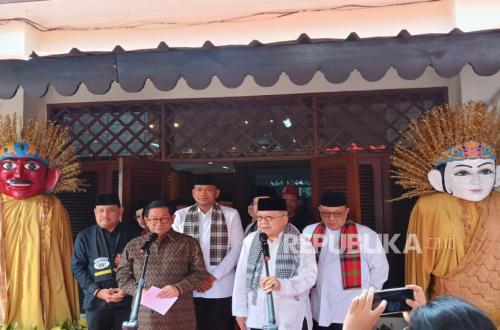
Jakarta Governor Pramono Anung Wibowo hopes that community harmony and togetherness, particularly among the Betawi people, can be continuously maintained through the Andilan Kebo tradition. “Sometimes, this is not just about helping with buffaloes, but the philosophical meaning within it that we often cannot fully implement. As governor, I say that guyub for the Betawi People’s Council is something that must truly be realised,” Pramono said while attending the Andilan Kebo event in Cipayung, East Jakarta, on Wednesday. He stated that nine buffaloes had been slaughtered since Tuesday night (17/3) until Wednesday morning. The meat from the nine buffaloes was then distributed to the surrounding community. Pramono also reaffirmed his commitment to supporting the preservation of Betawi culture. According to him, the existence of Law No. 2 of 2024 places Betawi culture as the primary culture in Jakarta. “This becomes the basic foundation for cultural development as well as Jakarta’s development as a global city,” he said. On the same occasion, Chairman of the Betawi People’s Council (MKB) Custom Council Fauzi Bowo expressed gratitude that the tradition was being held again. Fauzi, familiarly known as Foke, explained that Betawi traditions generally root in religious values, including Andilan Kebo. This tradition serves as a means to strengthen gotong royong while sharing with the needy community. “As in the verse I just recited, ‘In every wealth we possess, there is a right for the poor, whether they ask or not.’ Therefore, we who have excess need to pay attention to God’s word as mentioned. That is our conviction as Betawi people,” he said. He hopes that the tradition continues to develop and endure, thereby strengthening the togetherness of the Betawi people. Andilan Kebo itself is a collective tradition of the Betawi community carried out by pooling resources or contributions to buy buffaloes. This tradition is usually held ahead of or during certain religious moments, as a form of social concern and strengthening community solidarity.