
Rano Karno draws inspiration from Copenhagen to manage waste in an integrated way
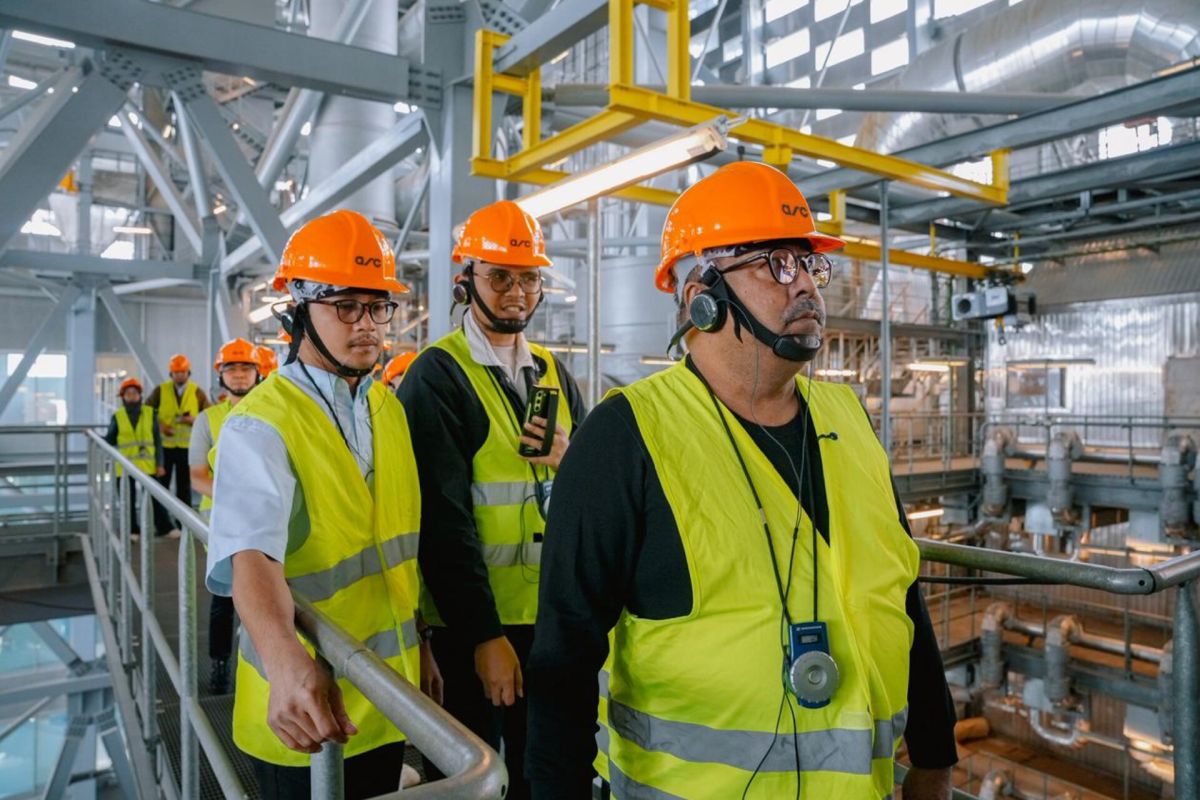
Jakarta – The Deputy Governor of Jakarta, Rano Karno, said he was inspired by the waste processing facility at Copen Hill, Copenhagen, Denmark, which implements an integrated and environmentally friendly modern waste management system.
‘The technology is very advanced. Not only does it convert waste into energy, but the ash from incineration can also be used as a component in asphalt mixtures,’ he said in a formal statement in Jakarta on Tuesday.
He noted that the Copen Hill waste management facility shows that environmental facilities can be built in a modern, efficient way while remaining accessible to the public.
‘Through what is interesting is that the area is designed to be community-friendly, with educational areas, a cafe, and even a grass-ski arena. So environmental facilities are no longer seen as closed-off and dirty,’ Rano added.
According to him, Copenhagen’s experience is an important inspiration for Jakarta, which is currently seeking to accelerate the reduction and sustainable processing of urban waste.
He emphasised that the success of waste management must still begin with changes in public behaviour in separating waste at the source.
‘Source separation at the source is key. Technology can be built, but success is greatly determined by residents’ participation. With a joint commitment between the government and the community, Jakarta has a great opportunity to reduce the city’s waste problems,’ Rano said.
Waste is incinerated at temperatures up to 1,000 degrees Celsius to produce steam that drives the electricity-generating turbine.
The energy produced is used to meet electricity and heating needs for around 100,000-150,000 households in Copenhagen.
The facility, which began operating in 2017, is capable of processing around 440,000-610,000 tonnes of waste per year. From this process, Copen Hill generates about 283 GWh of electricity and 1,383 GWh of heat energy.
Meanwhile, the food waste processed at a separate facility is used to generate biogas for public use.
Copen Hill’s management says that the success of waste processing does not depend solely on technology, but also on the discipline of the public in sorting waste from home.
‘We implement household waste sorting with ten categories. Food waste is processed at a separate facility, while household waste is separated into glass, plastic, and metal before being converted into energy,’ said Flemming G Nielsen of Amager Resource Center, the operator of Copen Hill.