
Ramadhan Strengthens Pesantren Students, Moving the Nation Through Knowledge and Exemplary Conduct
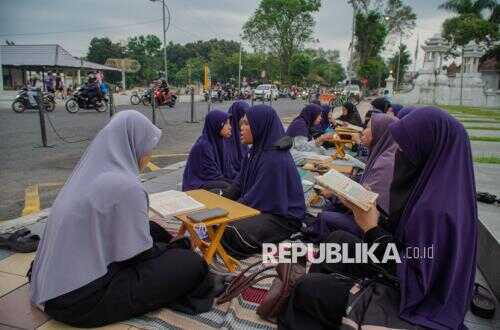
In a corner of South Jakarta as evening approaches, the aroma of warm rice and savoury broth mingles with the recitation of sacred verses. In the pesantren courtyard, students sit cross-legged, some holding classical texts, others awaiting the call to prayer with bright eyes.
Ramadhan has returned, and in the hands of pesantren students, this sacred month becomes a quiet stage where tradition, knowledge, and service meet in one long breath.
At Pesantren Luhur Al-Tsaqafah in Ciganjur, this atmosphere feels vibrant. Indonesia’s Ministry of Religious Affairs held a Pesantren Breaking of Fast event combined with discussion and communal Quranic study, part of the ministry’s Pesantren Directorate Ramadhan programme titled “San Trend Ramadhan”. More than simply sharing food at breaking of fast, this activity becomes a space for exchanging ideas about the future of pesantren students.
Secretary General of the Ministry of Religious Affairs, Kamaruddin Amin, conveyed a message that provoked new thinking among the students. For him, today’s pesantren students need more than deep religious knowledge; they must also understand state structures and national identity. The modern world, with all its complexity, requires students capable of holding strategic positions without losing their identity.
This message found resonance when the pesantren leader, Said Aqil Siradj, spoke about the richness of classical Islamic text traditions. In study rooms that may appear simple, solid intellectual foundations dwell: divine revelation sourced from revelation itself, prophetic tradition referring to the sunnah, and rational reasoning growing from the ijtihad of scholars, producing consensus and analogical reasoning as methods of legal interpretation.
The pesantren, according to Kiai Said, is not merely an educational institution but a small civilisation passed down through generations. There, classical texts are not simply read but revitalised; traditions are not merely memorised but carefully preserved.
The Ministry’s Pesantren Directorate, Basnang Said, affirmed that the theme “From the Pesantren to the World: Projecting the Future Santri” is not an empty slogan. It is a direction. The future pesantren student is imagined as someone whose roots dig deeply into classical Islamic heritage whilst their branches flex to reach the sky of the age, remaining open to change, skilled at reading reality, yet steadfast in national commitment.
This pesantren tradition does not beat only in the yards of large institutions. On the northern Jakarta coast, above the waters of Kamal Muara, Quranic recitations echo from a simple building standing above the water. There, the Floating Quranic Memorisation House witnesses the diligence of 65 students memorising sacred verses amid limitations.
During this Ramadhan, the National Zakat Collection Agency (Baznas) distributed Happy Ramadhan packages to students at the Floating Quranic Memorisation House. Baznas Deputy II for Distribution and Empowerment, Imdadun Rahmat, referred to their dedication as a struggle to elevate God’s word, li i’laai kalimatillah.
However, as the message conveyed, students are also encouraged to view the world more broadly: mastering general knowledge, understanding technology, designing the future with determination as strong as the memorisation they preserve. Food assistance is not merely logistics; it is confirmation that the quiet struggle of Quranic memorisers does not proceed alone.