
Ramadhan, Independence, and the Unfinished Promise of Social Justice
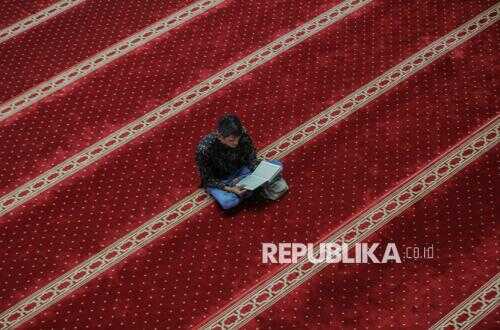
On Friday, 26 February 2026, Indonesia marked nine days into the Ramadhan fast of 1447 Hijriah. On this blessed Friday, measured in the Islamic calendar, it marks Indonesia’s 83rd independence anniversary, approaching nearly 1,000 Islamic months.
Throughout 83 years of Indonesia’s independence journey in the Islamic calendar, a fundamental question emerges: Has the promise of social justice that accompanied the proclamation truly been realised? Ramadhan each year seems to remind us that independence is an unfinished mandate.
The Proclamation in the Silence of Ramadhan
On that morning of 17 August 1945, Jakarta remained simple, the atmosphere not yet bustling, and the long-subjugated nation was observing the Ramadhan fast. It was within this spiritual silence that independence was proclaimed.
Indonesia was born on Friday, 9 Ramadhan 1364 in the Islamic calendar, a moment carrying profound moral significance. Indonesian independence did not emerge from celebrations of victory, but within an atmosphere of worship, patience, and self-restraint.
Fasting teaches people to withstand hunger and thirst, and also to restrain greed and ego. History seems to convey that true freedom is born from moral maturity.
Ramadhan is a month of liberation. It liberates humanity from the dominance of base desires and avarice, whilst simultaneously awakening social empathy. In the context of nationhood, this message affirms that independence means not only freedom from political colonisation, but also freedom from social and economic injustice.
The Quran affirms the purpose of fasting: “O you who believe, fasting has been prescribed for you as it was prescribed for those before you, that you may become righteous.” (Quran 2:183).
Righteousness from a nationhood perspective means collective moral consciousness, the awareness that independence is a mandate demanding justice and integrity.
Ramadhan and the Face of National Solidarity
Every Ramadhan, Indonesia is filled with simple stories that warm the heart. Free meal distributions at roadsides, financial assistance for orphans in village mosques, and sharing initiatives by small communities demonstrate that solidarity still lives in the nation’s pulse.
Ramadhan reminds us that true success lies not in the abundance one possesses but in what one shares. The Quran affirms the principle of just distribution: “So that wealth does not become a commodity exclusively for the rich among you.” (Quran 59:7)
The Prophet Muhammad also said: “None of you truly believes until he wishes for his brother what he wishes for himself,” emphasising that social solidarity is part of faith and the foundation of economic justice.
Ramadhan possesses unique social power; it transforms human orientation from accumulation to distribution, from consumption to sharing. It reminds us that true success lies not in the abundance one possesses, but in what one shares.
Indonesian Islamic scholars from the outset affirmed that independence must produce a virtuous society. KH Hasyim Asy’ari emphasised that independence is a religious mandate to be struggled for, becoming renowned for his resolution to defend independence through jihad.
Buya Hamka stressed the importance of honesty, directly exemplifying honesty and steadfastness in conduct. His religious edicts were so firm wrapped in distinctive communication. His literary works touched generations across time.
KH Ahmad Dahlan demonstrated the implementation of faith through social works.
Messages showing that solidarity is not merely a social action, but part of the nation’s mandate. To this day, Muhammadiyah’s charitable works are spread throughout Indonesia and across parts of the world.
Economic Justice as the Aim of Independence
Indonesian independence aimed not only to build a sovereign state but also to bring about economic justice. Colonialism left a legacy of exploitation and inequality, so independence should have been the path to redistribution of prosperity.
Ramadhan reinforces this message through the practice of zakat (obligatory alms), voluntary charity, and endowments. These instruments demonstrate that shared economy forms the foundation of social justice. However, the journey towards justice remains long.
Inequality and corruption remain challenges reminding us that independence is a mandate that must be protected.
Corruption: A Betrayal of Independence’s Mandate
Ramadhan’s reflection also presents a major challenge: corruption. Corruption destroys the fairness of distribution and betrays public trust. The Quran affirms: “Do not betray the trust placed in you.” (Quran 8:27). The Prophet Muhammad said: “May the curse of Allah be upon the giver and the receiver of bribes.”
Yet the independence journey is also marked by irony. While society competes in sharing, some elites are tempted to misuse their mandate. Corruption becomes a wound that destroys justice and hinders public welfare. Corruption is not merely a legal violation, but a moral sin that destroys social order and people’s welfare.
A daily labourer once said: “We do not ask to be wealthy, we only want to live justly.” This simple sentence reflects the hopes of ordinary people—independence must bring about real justice.
When mandates are misused, not only is law violated but public trust and the promise of independence are broken.
Ramadhan once again presents moral reflection. Fasting is an exercise of honesty that is deeply personal. No one knows whether someone is truly fasting except themselves and God.
This spiritual exercise should produce integrity in public life. Ramadhan also teaches restraint of greed—the root of many moral deviations in economics and power.
Ramadhan in a Land Not Yet Free: Reflection on Palestine
In many places in Indonesia, Ramadhan is synonymous with togetherness and peace. Yet in many parts of Palestine, Ramadhan is often observed amidst limitation and uncertainty.
The stories of Palestinians’ steadfastness in observing the fast present a reminder that independence is a blessing that should never be taken for granted.