
Ramadanomics: When Worship Drives Inflation and Production
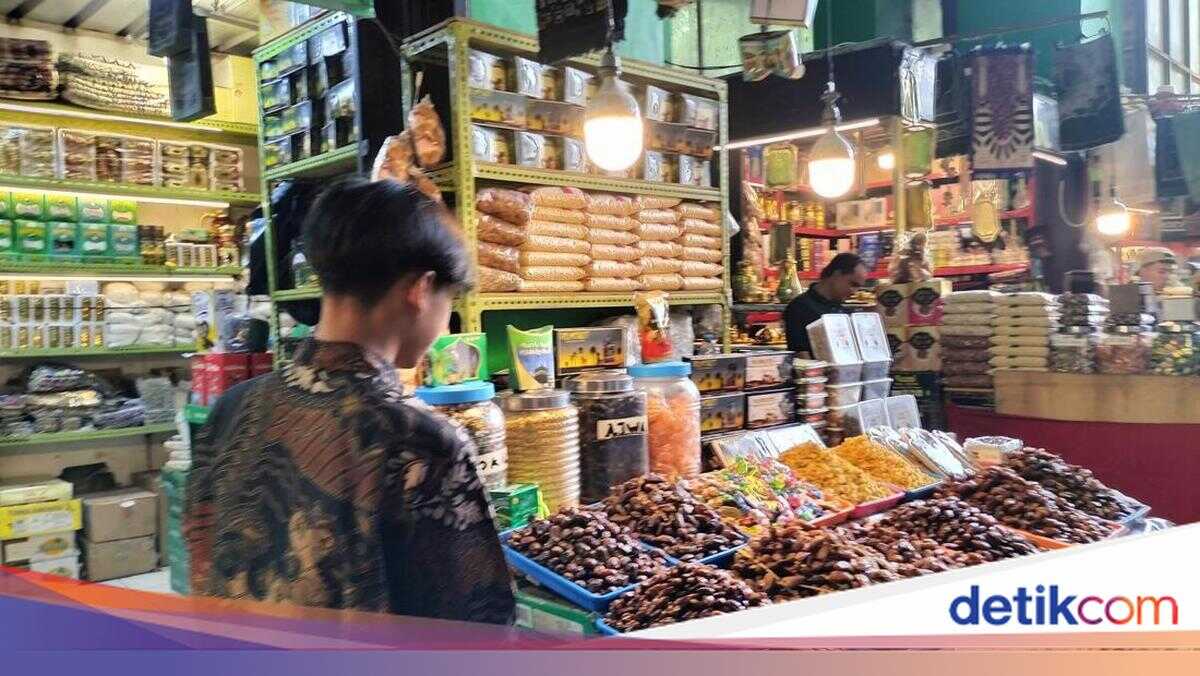
Ramadan always presents a different atmosphere in the lives of Muslim communities around the world, especially in Indonesia. Economic activity changes, consumption patterns shift, working hours adjust, and price movements often come under scrutiny. For Muslims, Ramadan is a month of worship and self-control. But for an economist, Ramadan is also an economic phenomenon worth studying. Changes in consumption and production patterns occurring simultaneously on a large scale create a dynamic in inflation and economic growth. This is what we can call ‘Ramadanomics’. A study conducted by Eyerci, Toprak, and Demir (2021) in Turkey shows that Ramadan does have a real impact on prices and production. The study found that some food prices rise significantly during Ramadan, while industrial production tends to decline at the same time. These findings are important because they show that the Ramadan month is not only a social and religious phenomenon but also has measurable economic consequences. In economic theory, price increases typically occur when demand grows faster than supply. In Ramadan, the change does not lie in the fact that people still eat, but in the shifting time and patterns of consumption. Eating activity that is usually spread from morning to night becomes concentrated in two main times: sahur and iftar. Daytime consumption is practically nil, but at iftar and sahur there is a simultaneous rise in demand. Many families prepare dishes more varied than usual, purchase food in larger quantities for a full month, and increase purchases of certain commodities such as eggs, chicken meat, and processed foods. The concentration of demand within a relatively short period often triggers price pressure. Research in Turkey shows that prices of milk, goat meat, and beef rise significantly during Ramadan compared with other months. This supports the suspicion that seasonal demand surges drive food price increases. This phenomenon is highly relevant to Indonesia’s conditions. Almost every year we witness higher prices for chili, chicken meat, beef, eggs, and sugar approaching and during Ramadan. Price increases are often felt as early as the Sha’ban month before Ramadan begins. In the rational expectations framework, firms and traders already anticipate demand surges. As a result, prices begin to rise earlier in response to anticipated consumption increases. On the other hand, distribution that is not yet fully optimal before Eid reinforces this pressure. In macroeconomic theory, inflation can be structural, cyclical, or seasonal. Ramadan is clearly a seasonal factor. But because the Hijri calendar is lunar-based and shifts about 10-11 days every year relative to the Gregorian calendar, its impact is not fixed in the same month in conventional economic calendars. A Turkish study even reconstructs economic data into the Hijri calendar to confirm that Ramadan’s impact can be identified more accurately. For Indonesia, this approach could help improve inflation analysis and monetary policy formulation. Interestingly, Ramadan’s impact is not limited to the demand and price side, but also to the production side. The study found that manufacturing and mining production in Turkey experienced a significant decline during Ramadan. On average, output growth in Ramadan months is lower than in other months. This decline can be explained by labour productivity theory. During Ramadan, working hours are often shortened, work rhythms change, and some workers take leave ahead of Eid al-Fitr. As a result, production capacity does not operate at optimal levels. If tied to an aggregate demand and supply model, the situation becomes interesting. Aggregate demand rises as household consumption increases, while short-run aggregate supply potentially declines due to reduced production and distribution. This combination can push prices higher more strongly. Similar conditions also often occur in Indonesia, especially ahead of Eid al-Fitr when the flow of people and goods slows distribution and industrial activity. The study also shows that Ramadan effects are not limited to a single month. Price increases can widen to the months before and after Ramadan, Sha’ban and Shawwal. Even when all three months are analyzed together, their impact on several commodities becomes more pronounced. This aligns with Indonesia’s experience, where prices often rise before Ramadan and do not immediately fall after Eid. In economic theory, this phenomenon is known as price rigidity, i.e. the tendency for prices to rise more quickly than they fall. For Indonesia, understanding Ramadanomics has important policy implications. First, stabilising food prices should be done earlier, even before Ramadan begins. Interventions such as market operations, strengthening distribution, and inter-regional coordination should be intensified in Sha’ban. Second, the government must ensure that the production side remains optimal during Ramadan so that a pickup in demand is not offset by a drop in supply. Third, Hijri calendar-based economic analysis can be considered to improve decision-making accuracy. Ultimately, Ramadan teaches self-control and social solidarity, but in practice it also shows how collective behaviour influences the dynamics of the national economy. Economics is not just numbers and graphs; it is a reflection of society.