
Ramadan: The Month of Jihad
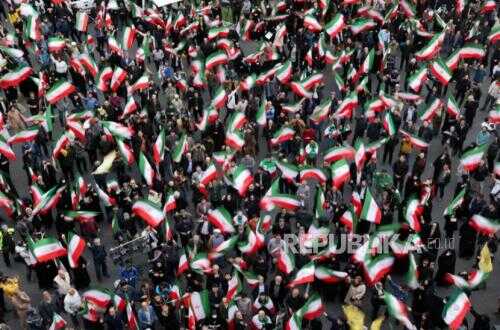
There are nations that mark their calendars with holiday seasons and mid-year discounts. There are also nations that mark their calendars with dates of injury and wounded pride, peoples who include jihad as one of the pillars of faith.
Thus when attacks by the United States and Israel were reported to occur precisely on 10 Ramadan, for the Iranian nation this was not merely a military date, but a date of theological jihad. For them, history is not only written by generals and geopolitical analysts, but also by verses alive in collective consciousness.
Ramadan, in Islamic memory, is not only a month of fasting and date syrup. It is also the month of the Battle of Badr, a month of jihad, when a small community with minimal logistics defeated a great power well-armed with weapons.
History records this event not as legend, but as a psychological momentum that shaped a mentality of resistance. Indeed, it became the launching point of the rise of a great civilisation. Opposing oppression and injustice, with the spirit of the teaching of jihad that pierces the chest.
Thus when Iran responded to the attack on the same day, only within a matter of hours, for many of its citizens this was not read as an ordinary retaliatory operation. It was read as a continuation of narrative: that resistance possesses spiritual legitimacy.
At this point geopolitics meets theology, and the two do not always sit at the same table.
The Western world reads the conflict in the language of deterrence, regional stability, and balance of power. Iran reads it in the language of honour, martyrdom, and religious responsibility. These two vocabularies often do not translate to each other.
Modern Iran was born from the 1979 Revolution which made ideology the foundation of the state. In the official doctrine of the Islamic Republic, the concept of resistance against foreign domination and defence of the oppressed became part of national identity.
For many Iranian citizens, economic sanctions, diplomatic isolation, and military pressure are not merely external pressures, but a price that was calculated from the outset of their political choice. They do not regard themselves as victims of historical circumstance, but as actors of historical choice.
In the eyes of its supporters, Iran’s retaliation against US+Israeli attacks is projected as a mandate of honour: defending dignity, protecting the oppressed, and demonstrating that threats do not always end in compliance.
In this perspective, the myth of “superpower” appears cracked when intimidation is met with firmness. History indeed shows that great powers often collapse not because of a lack of weapons, but because of losing moral legitimacy in the eyes of the world.
Yet history also teaches that every resistance carries consequences. Sanctions, isolation, inflation, and civilian suffering are not metaphors, but daily realities. Iran has experienced this for decades, which has actually made it strong and self-reliant.
Iran is not a utopian country; it is a real country with real people who bear the cost of geopolitical choice. But in the collective psychology built by revolution and theology, suffering can be transformed into a narrative of endurance. This is where ideology works: transforming cost into meaning.
Iran’s strikes were also directed at Israel in the context of the long Palestinian conflict since 1948.
For supporters of the axis of resistance, this action is viewed as an attempt to shatter the assumption that oppression is always safe behind the protection of great power. The international world is also forced again to witness an old reality: a conflict that never ends will always find its new form.
The contrast is felt even in distant countries such as Indonesia. Some among the faithful read this event as a mirror of courage; others see it as a risk of dangerous escalation.
This debate shows one thing: the Islamic world is not monolithic. It consists of a broad spectrum of views, from pragmatic to ideological, from realist to spiritual.