
Ramadan Tests the Conscience of Power
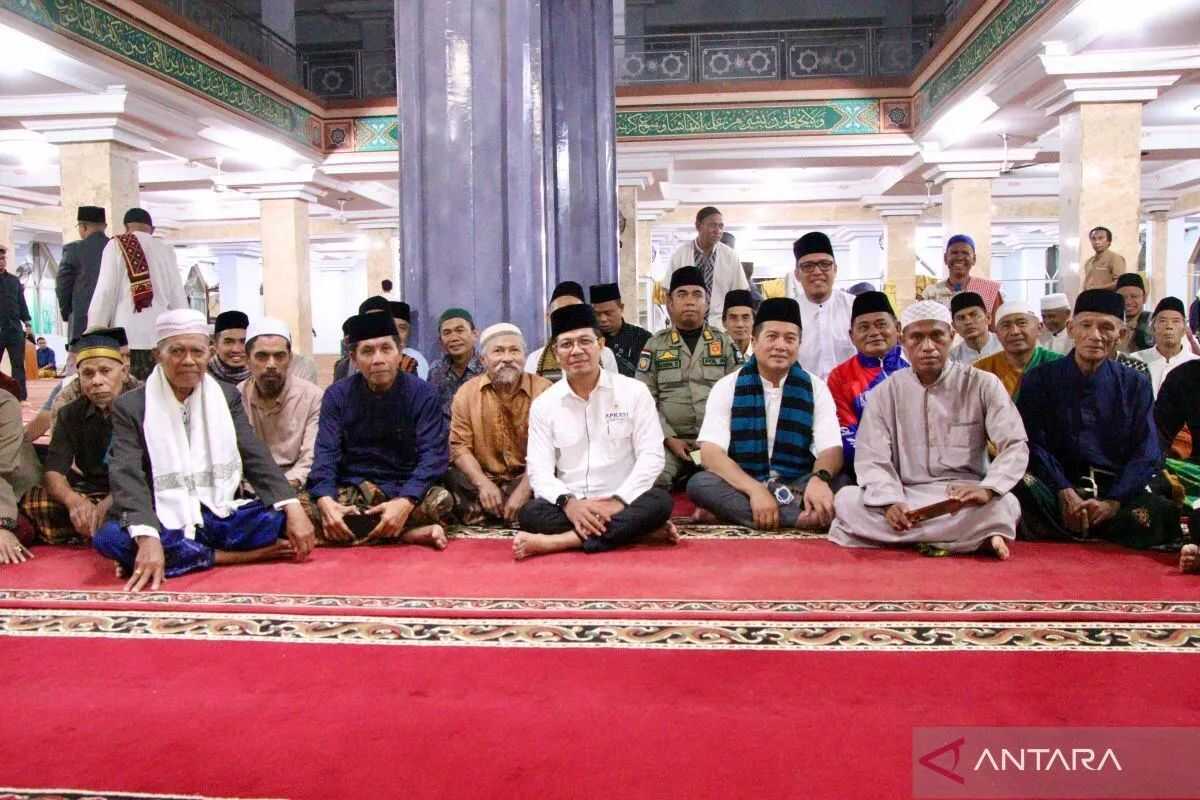
Mataram (ANTARA) – Dompu’s sky was still dark as worshippers began filling the prayer rows at the Baiturrahman Grand Mosque. The pre-dawn air was cold and hushed. In the front line, the Governor of West Nusa Tenggara, Lalu Muhamad Iqbal, stood in line with the people, closing the Ramadhan Safari with congregational prayers.
There was no grand stage. No excessive protocol. Only prayer mats laid out, whispered prayers, and light conversations after the greeting of peace.
Dawn always holds meaning. It is the quiet beginning, a moment of pause before the daytime bustle takes over. In that silence power is tested, not by applause, not by ceremonies, but by the distance between words and deeds.
There, the Ramadhan Safari finds its symbolic meaning: leaders stepping from the meeting room to the worship space, from the policy desk to the mosque floor. The question is, to what extent does this safari truly function as a tool of public service, rather than just an annual routine?
Ramadhan 1447 Hijri in NTB presents an interesting pattern. The Governor and Vice Governor, regents and mayors, moved almost in parallel. Some began from markets, some from extremely poor villages, and some tied it together with cheap market operations. The religious agenda blended with economic and social agendas.
Within that landscape, the Ramadhan Safari is not only a spiritual event. It became a stage for evaluating local leadership.
Building Empathy
A few days before the closing in Dompu, Governor Iqbal conducted a field visit to a traditional market in North Lombok. The price of chilies remained in the range of Rp90,000 to Rp100,000 per kilogram. In Mataram, it even reached Rp170,000 before falling again. Price fluctuations of basic goods are a classic issue every Ramadan.
Provincial government responses were measured. Spot checks were conducted, cheap markets were held, distributions strengthened. In Bima City, Deputy Governor Indah Dhamayanti Putri inspected Pasar Amahami and ensured stock security.
Medium rice at Rp13,500 per kilogram, chicken meat around Rp50,000 per kilogram, red onions Rp35,000 per kilogram. The government sought to keep increases within reasonable bounds.
In Mataram City, the Mayor Mohan Roliskana wove the safari with cheap market operations. Price differences of Rp1,000 to Rp5,000 per commodity may seem small, but for low-income families, that means room to breathe.
These steps show a more concrete approach than mere preaching. The safari becomes the entry point for policy intervention. The government is not only delivering moral messages but also SPHP rice at Rp11,600 per kilogram and Minyakita Rp15,500 per litre.
Price stability is only one side. The next challenge is to ensure that interventions are not merely reactive. The chilli distribution chain circulating from Central Lombok to East Lombok, and back again, shows how long the trade chain remains. Without systemic reform, cheap markets will always be a ‘firefighter’ emergency.
This is where the safari should become a space for cross-regional policy consolidation. The forum of kinship could be upgraded into a forum for synchronising food distribution, so that solutions do not stop at a one-off operation.
Empowered villages
This year’s Ramadhan Safari also touched on more fundamental issues: extreme poverty and village self-reliance. In Desa Saneo, Dompu, the NTB Vice Governor inspected the Desa Berdaya programme that targeted 31 extremely poor households. The two-year intervention scheme, with thematic and transformative approaches, is a model worthy of scrutiny.
Social assistance, decent housing, health insurance, and capacity-building were part of the intervention package. The programme attempts to move away from charitable aid towards sustainable empowerment.
A similar step was seen in Central Lombok. Regent Lalu Pathul Bahri strengthened the Merah Putih Village Cooperative with operational fleet support. His message was clear: the cooperative must not buy paddy below the set price. Money must circulate in the village.
Data shows Central Lombok has about 50,000 hectares of protected wetland, making it a breadbasket area and national buffer. If cooperatives are managed professionally, villages are not merely objects of development, but actors in the economy.
In East Lombok, whose population is almost 1.5 million out of NTB’s total 5.7 million, the governor described it as a key growth lever. With a land area of 1,605 square kilometres and potential in farming and fisheries, this region could drive growth. The road infrastructure, which began to be repaired after 11 years of neglect, forms an important foundation.
Interestingly, this safari also touches on education and public service issues. Plans for People’s Schools for low-income families, the construction of Adhyaksa Hospital in Central Lombok, and a fisherfolk village in East Lombok show a common thread between worship and human development.
Consistency is the keyword. The Desa Berdaya programme requires accurate data and stringent oversight. Village cooperatives require transparent management. Without that, the safari will remain a ceremony of handing out aid.