
Ramadan Should Be a Moment for Business Tycoons to Repay Their Social Debt to the People
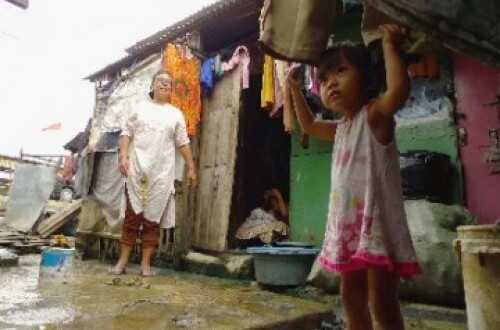
REPUBLIKA.CO.ID, JAKARTA — The holy month of Ramadan should be a moment for business tycoons to repay their social debt to the people. It should not be used as an opportunity to continue profiting from the people.
“Even though it is not recorded in financial reports or appear in audits, the social debt of business tycoons exists and is real,” said Toto Izul Fatah, Chairman of the Ikatan Alumni PP Ibadurrahman YLPI Sukabumi, West Java, to the press in Jakarta, Friday (February 27, 2026).
The concern of business tycoons, said Toto, is not a kindness that should be excessively praised. It is a minimal moral and social obligation from those who have benefited from this republic.
According to him, it is a fact that this country has become a fertile ground for some economic elites. They exploit its natural resources, trade its products, utilize millions of people as its market, and turn it into huge profits.
Toto admitted that seeking profit is not wrong. But when that profit is built from the Indonesian market, from Indonesian land, from Indonesian labor, and from Indonesian consumers, then they should have a moral obligation to return some of the benefits to the people.
Especially, continued Toto, when people are under pressure and worried because they cannot afford to buy rice and other basic necessities, the prices of which are starting to rise. “This is where moral and social responsibility should emerge. Not the other way around, but instead taking advantage of that anxiety as a business opportunity,” he said.
According to Toto, this is not just about charity. But this is about minimum social justice, that the large wealth obtained by them, especially these business tycoons, should not go without moral responsibility.
So far, according to Toto, the public has often been presented with the narrative that business tycoons are “economic drivers,” “job creators,” or “development partners.” Although not wrong, this narrative becomes empty if not accompanied by the courage to be present in the midst of people’s suffering.
“What is the meaning of praise about economic contributions, if when floods hit, landslides swallow residents’ homes, or the prices of basic necessities are burdensome on the eve of Eid, the ones who move are small communities, volunteers, mosques, churches, young people, and ordinary people who pool their resources?” he said.
Meanwhile, said Toto, some of the major capital owners who control the food supply chain, distribution networks, warehouses, and modern retail, are more often seen protecting margins than protecting empathy. “We are not asking them to be angels. We are just asking them to be economic elites who have a sense of shame. That they owe a social debt to the people,” he said.
Toto hopes that Ramadan should not just be a season of harvest. Ramadan must be a month of solidarity and a month of concern, not a month of profiting. At this point, business tycoons, especially those who have often been called the “9 dragons,” must prove that they are not only good at calculating profits, but also understand social suffering.
If they really care about this country, continued Toto, before Eid, it is not enough to just share Eid greetings and put up advertisements with the theme of togetherness and the like. The community needs concrete, measurable, and massive actions, one of which is to hold a large-scale Cheap Food Bazaar in densely populated areas.
“For conglomerates with trillions of assets, this step is not a sacrifice. This is not even much. But for the little people, a price difference of a few thousand rupiah on rice, oil, sugar, or eggs can be very helpful. Don’t hide behind ceremonial CSR,” said Toto.
It is time for the public to stop being lulled by cosmetic CSR. “Photos of handing over assistance, large banners, press conferences, and then it’s over. That is not the concern that this nation needs. That is just a ritual of image building,” he said.
The concern that the community needs is one that is ready to be tested for its impact. For example, said Toto, how many people are helped, how many tons of food are distributed, where are the target areas, how many days does the program run, who monitors it, and whether the prices in the field have actually decreased or become more affordable.
Toto reminded that if the business tycoons do not care, do not blame the public if they are cynical. They must understand that it is not only the company’s image that is at stake, but also social legitimacy. The public today is increasingly critical. People can see who is truly present, who is just appearing, and who is silent when people are in difficulty.
“Ramadan and natural disasters like the one that occurred in Sumatra are two clear mirrors to test who the business tycoons are. They should know that Indonesia is a shared home. Whoever has taken the most benefit from it should also give back the most,” he said.