
Ramadan logistics surge expected to rise by up to 30 per cent
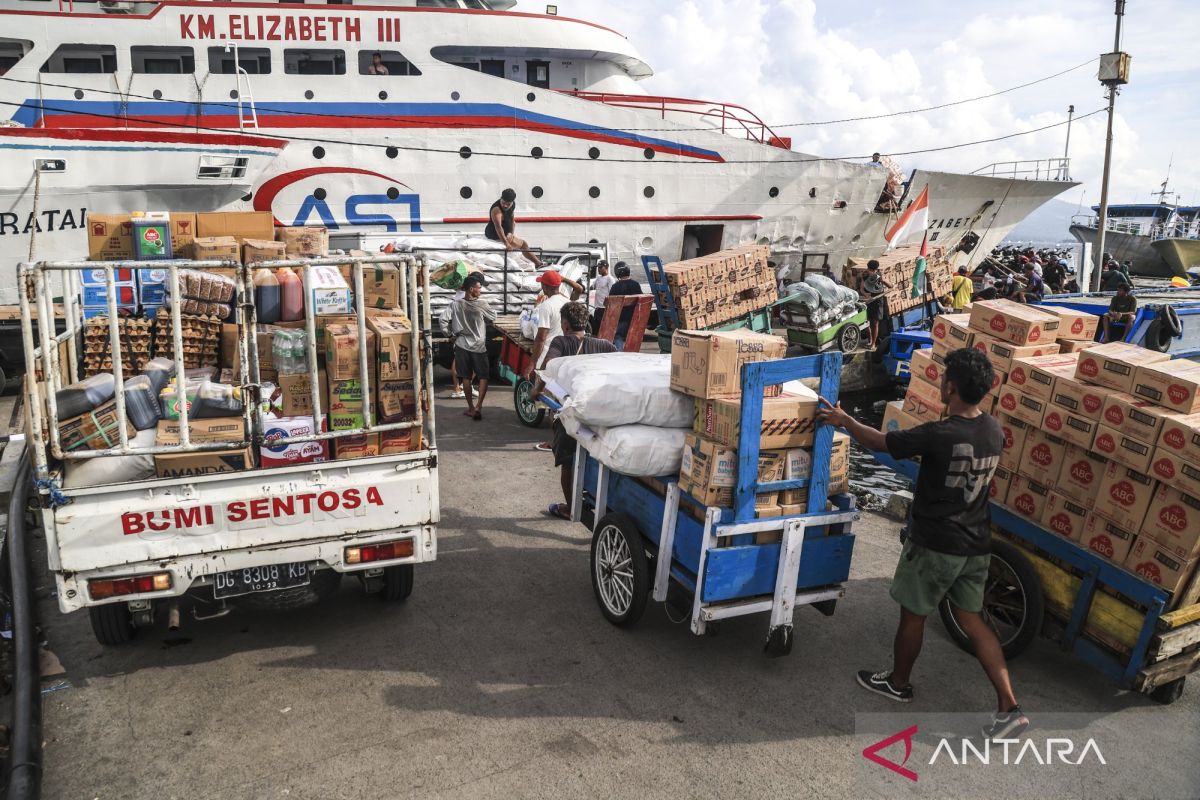
National logistics activity during Ramadan is projected to experience significant growth with a surge in cargo distribution volume reaching approximately 30 per cent compared to normal periods, in line with increased consumer consumption and e-commerce transactions.
Mahendra Rianto, Chairman General of the Indonesian Logistics Association (ALI), stated that such surges occur throughout the entire supply chain, from inter-regional distribution to delivery to consumption centres.
“Typically, the increase in supply chain volume during Ramadan can reach around 30 per cent,” Mahendra told ANTARA in Jakarta on Wednesday.
According to him, the increase in distribution activity also aligns with a rise in e-commerce transactions during Ramadan, which is estimated to grow by approximately 15–20 per cent.
Mahendra explained that in modern logistics systems, particularly in the e-commerce sector, goods are generally shipped through a cargo consolidation mechanism before being distributed to various regions.
“Orders that come in are usually collected until they form one full truck load, then shipped from hub to large hubs such as in Semarang, Bandung, or Surabaya before being distributed to destination areas,” he said.
From these main hubs, goods are then forwarded to regional hubs until the final distribution stage or last mile, which is generally conducted within cities.
He added that several product categories experience the largest surge in shipments during Ramadan, particularly fast-moving consumer goods (FMCG), fashion products, and health products.
“The most dominant are usually FMCG, fashion, and also medical products such as medicines from pharmacy retail networks,” he said.
Mahendra explained that the surge in shipments is also influenced by distribution preparation patterns conducted well before peak demand. For more distant regions such as Sulawesi, Maluku, and Papua, shipments typically begin around 30 days before Eid al-Fitr.
Meanwhile, distribution to relatively closer regions such as Kalimantan generally requires around seven to ten days, whilst to Sumatra approximately five to six days via land routes.
“For distant areas, shipments usually begin from 30 days to 20 days before Eid so goods can arrive on time,” he said.
According to Mahendra, the greatest challenge in logistics distribution during the Ramadan period remains related to Indonesia’s geographical conditions as an archipelago and limitations in transportation facilities.
On land routes, logistics companies often face fleet limitations due to simultaneously increased shipping demand. Meanwhile, on sea routes, the industry also faces container shortages which impact rising transportation service rates.
“Specifically on sea routes, there is currently a shortage of containers so transportation service rates are also rising,” he said.
Additionally, the distribution disparity between western and eastern Indonesia remains a challenge for the national logistics industry.
Mahendra explained that the majority of goods production centres remain concentrated in western Indonesia, so distribution to eastern regions is often not balanced with adequate return cargo flows.
“Often from east to west there is not sufficient return cargo, so ships or vehicles return empty,” he said.
This condition results in higher distribution costs because operational expenses must still be borne even though cargo is not optimal.
In response to the surge in demand, logistics industry players are implementing more adaptive distribution strategies, including earlier shipping schedules and optimisation of hub-based distribution systems.
Mahendra also emphasised the importance of technology utilisation in improving operational efficiency in the logistics sector.
According to him, digitalisation has helped increase productivity and distribution efficiency through various systems such as real-time shipment tracking, more efficient distribution route management, and logistics data integration.
“Technology has a very significant role in improving logistics efficiency, because it can regulate the movement of goods and vehicles more effectively,” he said.
However, he acknowledged that digital transformation in the logistics sector has not been evenly distributed across all industry players. Large companies that have long-term contracts with customers generally adopt technology faster compared to smaller business operators.
Mahendra added that the logistics sector also has an important role in supporting the growth of micro, small, and medium enterprises (MSMEs), particularly through utilisation of e-commerce platforms.
According to him, MSME operators need to increase their understanding of logistics systems so they can take advantage of various cost efficiency opportunities in distribution.
“MSMEs need to understand logistics processes, for example how to consolidate shipments or utilise more efficient distribution routes,” he said.
Additionally, experience during the COVID-19 pandemic also provided important lessons for the logistics industry regarding the importance of preparedness in facing uncertainty in global supply chains.
Mahendra believes the logistics industry is now more prepared to face various potential disruptions because business operators have prepared various alternative scenarios in distribution operations.
“In supply chains, what is certain is uncertainty. Therefore, companies must always have backup plans so distribution continues,” he said.