
Ramadan Blessing: Bamboo Lemang Vendors Flooded with Orders
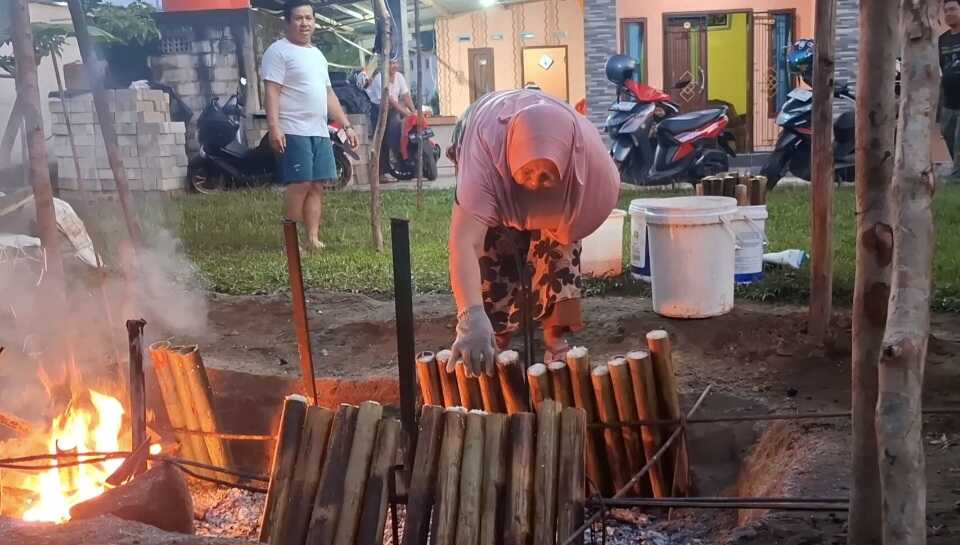
The production of bamboo lemang has become a bustling operation in Desa Kace, Bangka Regency, with activity starting at one in the morning. While residents sleep, Asmi and her family work to prepare ingredients for making bamboo lemang.
Lemang is a traditional Indonesian dish made from sticky rice, coconut milk, and a pinch of salt. The preparation is straightforward: mix all ingredients together, place the mixture inside bamboo segments lined with young banana leaves, then cook using embers from firewood. The cooking process takes approximately three hours.
The stable embers produce a distinctive aroma that whets the appetite, making lemang a favoured dish for breaking the fast during Ramadan and a signature dish for Eid celebrations. Asmi is a seasonal bamboo lemang trader who operates only during Ramadan and the Eid al-Fitr and Eid al-Adha festivals. She has been operating this seasonal business with her family since 2010.
Asmi reports selling up to 80 bamboo lemang sticks daily at 40,000 rupiah per stick. “Buyers come from various groups, from local residents to regular customers who have placed orders long in advance,” she said.
However, she noted that since the Covid-19 pandemic, her sales have declined significantly. Whereas she previously sold up to 125 sticks per day, she now sells between 50 and 80 sticks daily. Nevertheless, she remains grateful because orders have increased during this Ramadan period, enabling her to help meet her family’s economic needs.
According to Asmi, rising raw material costs have pushed the retail price of bamboo lemang during this Ramadan to 40,000 rupiah per stick, up from the previous 24,000 rupiah per stick. Despite the increase, buyers have been understanding of the price rise.
The high demand is driven by the public’s need for beef as part of their breaking-of-the-fast and pre-dawn meals during Ramadan.