
Ramadan Beneath a Scorching Sky: Prayer, Tears, and the Hope of the Faithful
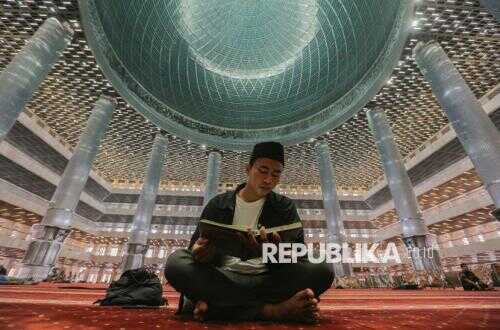
Ramadan arrives once more. It always comes gently, like a soothing night breeze, like the call to prayer piercing the silence, like the cool floor of a prayer room. Yet this time, it arrives when the world’s sky feels scorching.
In the Middle East, the earth trembles again. Tension rises. Missiles and sirens become familiar sounds. Military bases are attacked, great powers bare their teeth to one another, and the threat of regional escalation hangs like a dark cloud that shows no sign of lifting. The world watches with bated breath.
When conflict intensifies, it is not only the land that cracks but human souls as well. Global markets tremble. Energy prices fluctuate. Share indices change colour within hours. Analysts speak of inflation, volatility, and geopolitical risk. Yet behind graphs and statistics lies something quieter: human anxiety.
A mother stares at her mobile phone screen, reading news of war and economic threats. A father recalculates his monthly expenditure. A student ponders the future of a world that feels uncertain, murmuring questions in his heart: what kind of world will I inherit?
Perhaps the sound of war sirens is not heard, nor are there explosions in Indonesia’s sky, yet there is a subtle pounding in the chests of many people—a sense of fear and worry. Conversations about rice prices, fuel, and basic necessities become increasingly sensitive. In family spaces, there is anxiety that is not always voiced loudly, but is felt in silence.
Modern psychology calls this state collective anxiety—a collective unease that emerges when global uncertainty continuously fills the space of public consciousness. Yet Islam had already understood this phenomenon in different language: the restlessness of the heart seeking refuge. This is an age when modern humanity realises anew that security is not something permanent. And amid such an atmosphere, Ramadan arrives.
When the World Trembles, Allah Speaks: “I Am Near”
Allah declares: “And when My servants ask you, [O Muhammad], concerning Me—indeed I am near. I respond to the invocation of the supplicant when he calls upon Me.” (Quran 2:186)
There is no command of “say” (qul) in this verse. Allah does not instruct the Prophet to answer. Allah answers directly: “Indeed, I am near (fa-inni qarib).” Amid a world that feels far from peace, this phrase is like light seeping into darkened hearts.
Imam al-Qurṭubi stated: “The verse of supplication was placed among the verses of fasting as a signal to strive earnestly in prayer.”