
Ramadan and Eid Amidst War: Can the Economy Grow Above 5 Percent?
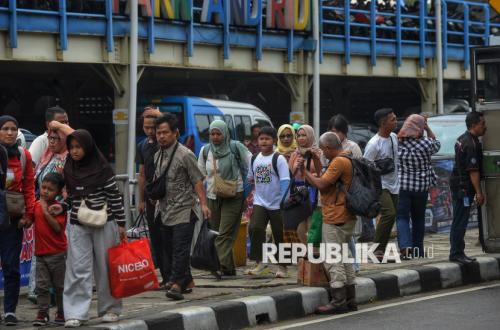
The phenomenon of the war between Israel and the United States against Iran is colouring this year’s Ramadan and Eid al-Fitr momentum. This is assessed to impact the seasonal moment that usually peaks Indonesia’s economic growth.
Executive Director of the Center of Economic and Law Studies (Celios) Bhima Yudhistira predicts economic growth in the first quarter of 2026 to reach 5.05 percent thanks to the seasonal factors of Ramadan and Eid al-Fitr 1447 Hijriyah. “Economic growth in the first quarter of 2026 is estimated at 5.05 percent, influenced by the seasonal factors of Ramadan-Eid,” said Bhima in Jakarta on Wednesday (25/3/2026).
Fundamentally, said Bhima, economic growth in the first three months of 2026 is capable of exceeding the projected figure of 5.05 percent. However, he sees several challenges that make household consumption relatively more limited.
The first trigger is the public’s tendency to hold back holiday allowance (THR) money for spending and instead allocate it as savings. This tendency is likely influenced by concerns over surging energy and food prices after Eid.
Meanwhile, restrained public spending could potentially hold back the pace of economic growth. In response to these challenges, Bhima suggests that the government should focus on controlling inflation during the homecoming period so that the public feels more confident in spending their THR.
The next inhibiting factor is the return flow of people, which is estimated to be not yet optimal due to limited job opportunities in cities.
Usually, explained Bhima, job seekers take advantage of the Eid al-Fitr moment to migrate to cities. Therefore, Bhima urges the government to intensify job creation so that the number of homecomers grows higher and of better quality.
In addition to these two challenges, Bhima also believes the government can optimise economic growth during the Ramadan and Eid al-Fitr season through support for the tourism sector.
“Seasonally, homecoming provides a boost to the tourism sector. However, going forward, more aggressive promotion to new tourist destinations is needed so that the length of stay is longer,” he stated.
The government targets national economic growth in the first quarter of 2026 to grow in the range of 5.5 percent to 5.6 percent (year-on-year/yoy).
This target is driven by accelerated state spending, fiscal stimulus, and strengthening of public purchasing power, especially amid the Ramadan and Eid al-Fitr period.
To maintain public purchasing power and stimulate economic growth, the government has launched an economic stimulus package in the first quarter of 2026.
One of them is transportation incentives for Eid homecoming in the form of a 30 percent discount on train tickets, 30 percent on sea transport, 100 percent on ferry services, and 17-18 percent discounts on flight tickets.
Head of the Macroeconomics and Finance Centre at the Institute for Development of Economics and Finance (INDEF) M Rizal Taufikurahman estimates that the Ramadan and Eid al-Fitr moment can drive economic growth to 5.1-5.2 percent (year-on-year/yoy) in the first quarter of 2026.
“In aggregate, the Eid momentum is estimated to add around 0.2-0.5 percentage points to first-quarter economic growth,” said Rizal.
He explained that the Eid momentum falling at the beginning of the year creates a front-loading effect, so growth acceleration is concentrated in the first quarter.
According to him, the increase in public spending is supported by the disbursement of holiday allowances (THR), social assistance (bansos), and mobility stimuli that directly boost household consumption as the largest contributor to gross domestic product (GDP).
“This surge in consumption also generates a fairly broad multiplier effect, especially in the retail, transportation, accommodation, and micro, small, and medium enterprises (MSME) sectors, as well as encouraging the redistribution of economic activity to regions during the homecoming period,” he added.
However, Rizal highlights that the character of the growth boost in the first quarter is relatively short-term. This is because the boost is not accompanied by increased production capacity, so it more reflects an increase in economic utilisation rather than fundamental improvements.
“Although first-quarter growth has the potential to appear strong, there is a risk of normalisation in subsequent periods. Eid consumption tends to be temporary and based on seasonal factors, so it has the potential to be followed by a slowdown after the holiday, especially among lower-middle income groups,” explained Rizal.
Therefore, he said, it is important for the government to strengthen more structural sources of growth, particularly from investment and exports, so that economic growth can be sustainable.
“Strengthening more structural sources of growth is crucial so that economic performance is not only strong cyclically but also solid in the medium term,” he stated.