
Raksha Loka Elevates Community Action to Protect the Environment, Engaging the Youth
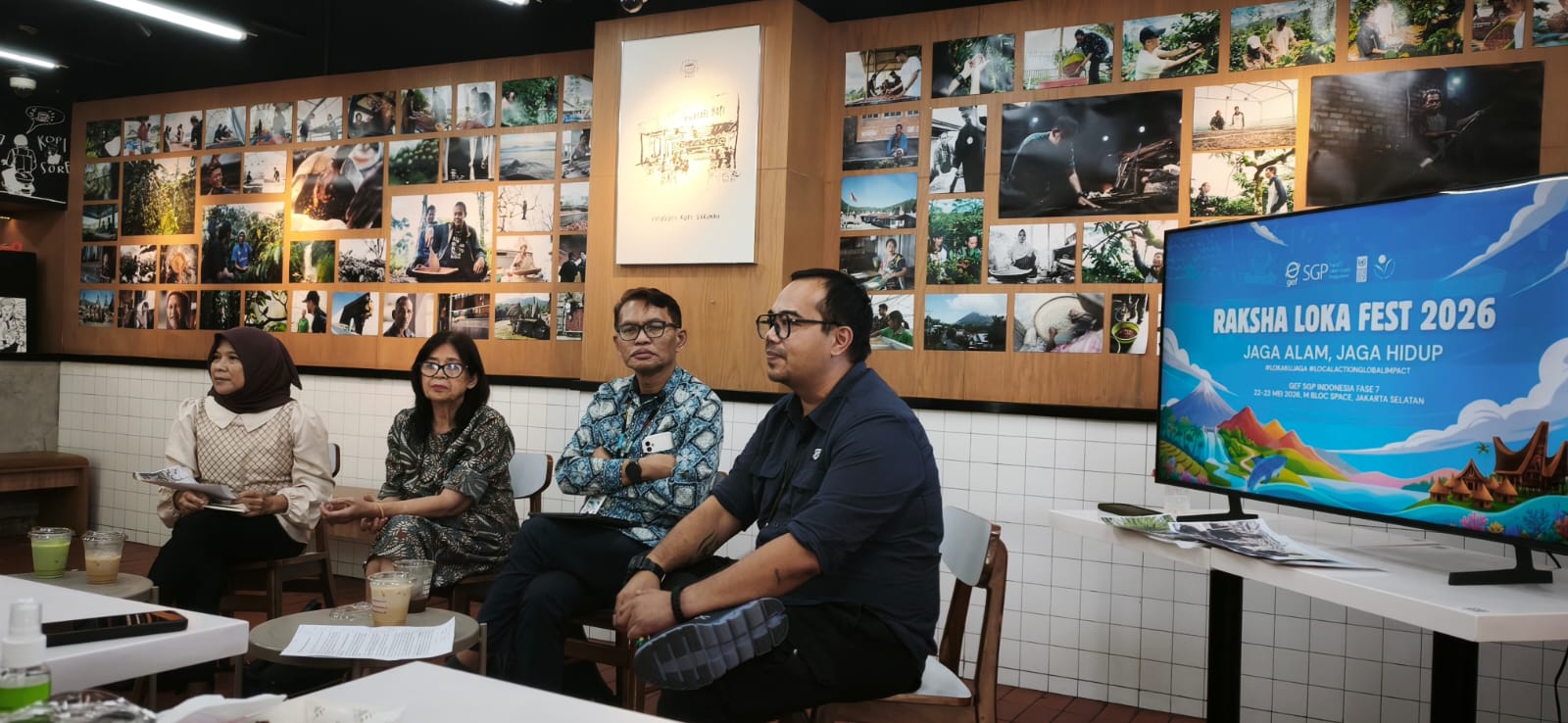
GLOBAL Environment Facility Small Grants Programme (GEF SGP) Indonesia will organise Festival Raksha Loka on 22–23 May 2026 at M-Bloc Space, South Jakarta. Under the theme “Protecting Nature, Protecting the Future”, the festival marks the conclusion of Operational Phase 7 (2021–2026) and serves as a collaborative space to bring together local communities, the government, academics, the private sector, and the youth to strengthen community-based environmental conservation efforts.
Raksha Loka Festival comes amid rising threats from climate crisis, environmental degradation, and biodiversity loss. Through the festival, GEF SGP Indonesia aims to demonstrate that local communities play a crucial role as frontline stewards of ecosystem sustainability while also creating economic solutions that directly benefit residents.
According to an official statement, GEF SGP Indonesia is a small-grants environmental programme supported by the Global Environment Facility (GEF), implemented by the United Nations Development Programme (UNDP), and carried out nationally by Yayasan Bina Usaha Lingkungan (YBUL). The programme focuses on empowering grassroots communities and civil society organisations in biodiversity conservation, climate change, sustainable forest management, and the protection of coastal and marine areas.
GEF Focal Point Indonesia, Erik Teguh Primiantoro, said the programme goes beyond conservation and also aims to spur a conservation-based economy. He noted that the grant funds should trigger collaboration and innovation, not merely provide short-term aid.
“Talking about the environment in romantic terms will not feed people. Hence environmental management must create a new economy that gives people a sense of ownership and pride in protecting their own land,” Erik observed. He cited various creative practices already undertaken by communities, such as mangrove educational tours along the coast and coral transplantation linked to diving tourism in Bali. Through such approaches, conservation activities no longer incur only costs but also generate economic benefits for local communities while supporting environmental restoration.
National Coordinator of GEF SGP Indonesia, Sidi Rana Menggala, added that the programme also includes a sustainability strategy through continued funding for communities deemed to have made progress. Among them is the Bantuan Usaha Melalui Investasi (BUMI) scheme, which enables community groups to obtain additional support to strengthen environmentally based ventures.
“The programme does not stop when the grant ends. We have a sustainability strategy so that community groups can move up a level and continue growing,” Sidi stated.
In the same note, YBUL Executive Director, Yani Witjaksono, said that many assisted communities have proven that local natural resources can be processed into higher-value products, from forest honey processing to seafood development and strengthening energy-based fisher cooperatives. These concrete examples demonstrate how community empowerment can connect with broader markets.
According to Yani, the GEF SGP Indonesia’s “Local Action, Global Impact” approach emphasises that solutions to the global environmental crisis can start with local actions that are relevant to the cultural context and needs of local communities.
Meanwhile, Latipah Hendrarti, a Member of the GEF SGP Indonesia Steering Committee, regards youth involvement as crucial for environmental preservation through holistic education. In Festival Raksha Loka, students and young people will be invited to learn about four landscapes supported by GEF SGP Indonesia through educational and interactive activities.
“Young people need to see directly that they are part of the ecosystem. Therefore, environmental education must be integrated with daily life and local community contexts,” Latipah said.
During Operational Phase 7, GEF SGP Indonesia has disbursed more than USD 2.8 million in grants and involved over 80 active partners from communities, civil society organisations, and academia. The programme operates through a four-landscape approach: Bodri River Basin in Central Java, Balangtieng Basin in South Sulawesi, the Nantu area and Tahura in Gorontalo, and Sabu Raijua Island in East Nusa Tenggara.
Raksha Loka Festival will feature a community initiative expo, public discussions, cultural performances, and a multi-stakeholder collaboration forum highlighting best practices of community-based environmental management from across Indonesia. (H-2)