
Rakik-Rakik Festival: A Light That Shines Amid the Wounds of Maninjau
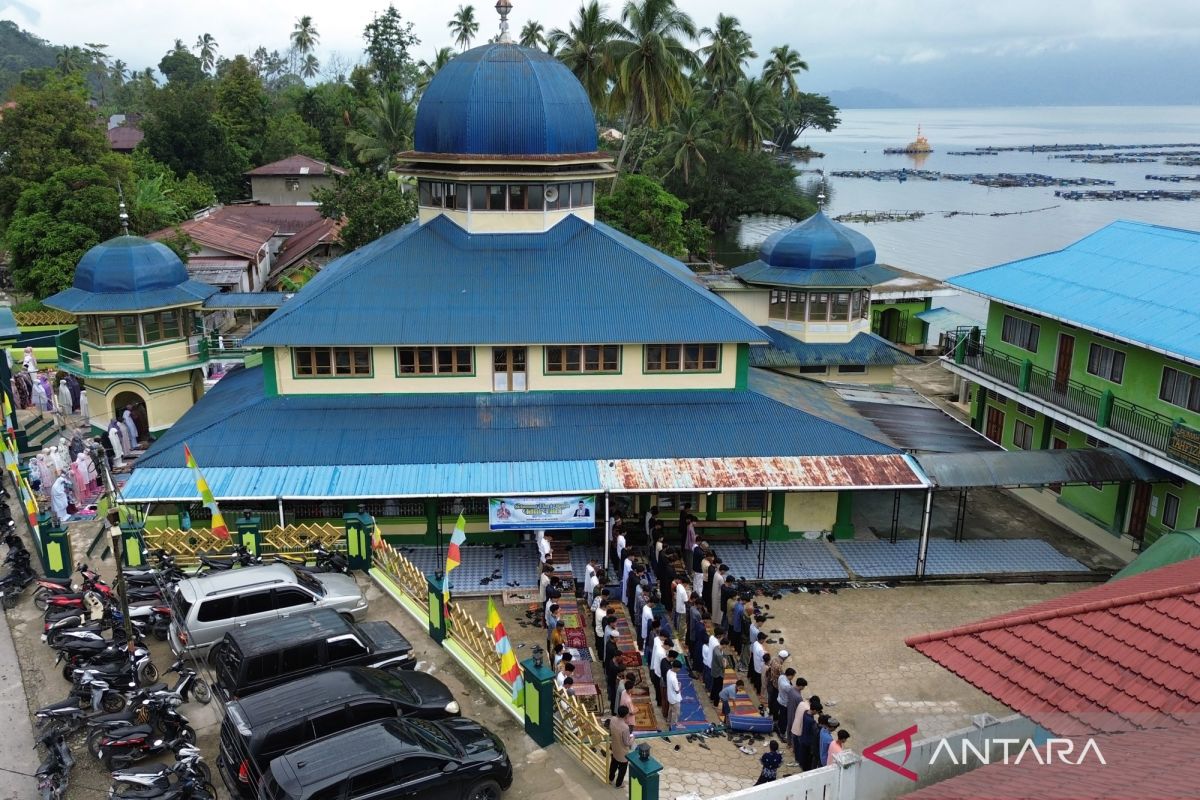
Agam (ANTARA) - In Lake Maninjau, Agam Regency, the night of takbir descends slowly like a curtain drawn from the sky. The ripples of the water reflect small lights beginning to glow, while the echoes of takbir from mosques blend with the gentle breeze.
From the roadside bordering the dark river, shadows of lights appear to shimmer faintly. They serve as markers that on the opposite shore, the community’s activities are underway.
The uneven, rocky road leads to the lake’s edge in Nagari Maninjau in West Sumatra. At that point, around thirty young men move nimbly, following instructions from the elders. They carry miniature Rumah Gadang houses made of plastic paper towards the water.
“Watch out for the hot water,” shouts one young man supporting the traditional Minangkabau house model called telong-telong.
The shout breaks the attention of villagers who have been staring at the traditional rafts, floating with the aid of drums and covered with wooden planks about 10 metres long.
On one side, an engine is installed, ready to propel the raft across the lake’s surface. Part of the raft’s body is enclosed by a square bamboo-framed space, decorated with dried leaves that rustle in the wind.
Along the shores of Lake Maninjau, villagers stand in small groups; others choose to squat, as if their bodies can no longer stand for long, yet they refuse to leave the anticipated moment.
The voices of adults are heard softly, almost drowned in layers of intertwined sounds—the rippling water, the passing breeze, and the hum of the genset machine.
In between, the sounds of games from children’s mobile phones occasionally emerge, creating a small, odd yet familiar contrast amid the enduring rooted tradition.
The night wind grows colder, creeping in. The traditional raft stands complete. The light initially from a large lamp gradually turns into the sparkle of LED lights adorning the ornaments, blending with torches encircling the front, creating a warm glow over the dark water.
The miniature Rumah Gadang stands alongside the Rangkiang—rice storage barn symbolising prosperity. Above it, various shaped ornaments rise, forming a stark silhouette in the night light, while on its sides, colourful flags flutter gently, touched by the wind crossing the surface of Lake Maninjau.
The propulsion engine no longer has open space in front. A row of batuang (bamboo cannons) stands in line, occasionally exploding with deafening booms. Inside, calcium carbide, a greyish-black crystalline compound, reacts to produce acetylene gas that triggers the loud blasts, as if marking the increasingly lively pulse of the night.
The beats of the gendang tambua tansa drum respond to the bamboo cannon explosions, weaving a rhythm that enlivens the atmosphere. Villagers who were previously sitting listlessly rise together, raising their phones to capture the long-awaited moment.
The Rakik-Rakik Festival is ready to set sail on the surface of Lake Maninjau.
Preparing the Medicine
The day before the event, preparations for the Rakik-Rakik Festival were observed in Kubu Baru Panyinggahan.
A group of young people gathered on the shore, preparing simple rafts from materials they had begun assembling at the start of Ramadan. The ropes are tied with precision born from generational habits.
Preparations proceed slowly. The competitive spirit has not yet fully ignited, as if still held back by the shadow of the hydrometeorological disaster that struck at the end of November 2025.