
Railway Operations Demand High Discipline to Serve Millions of Customers Daily
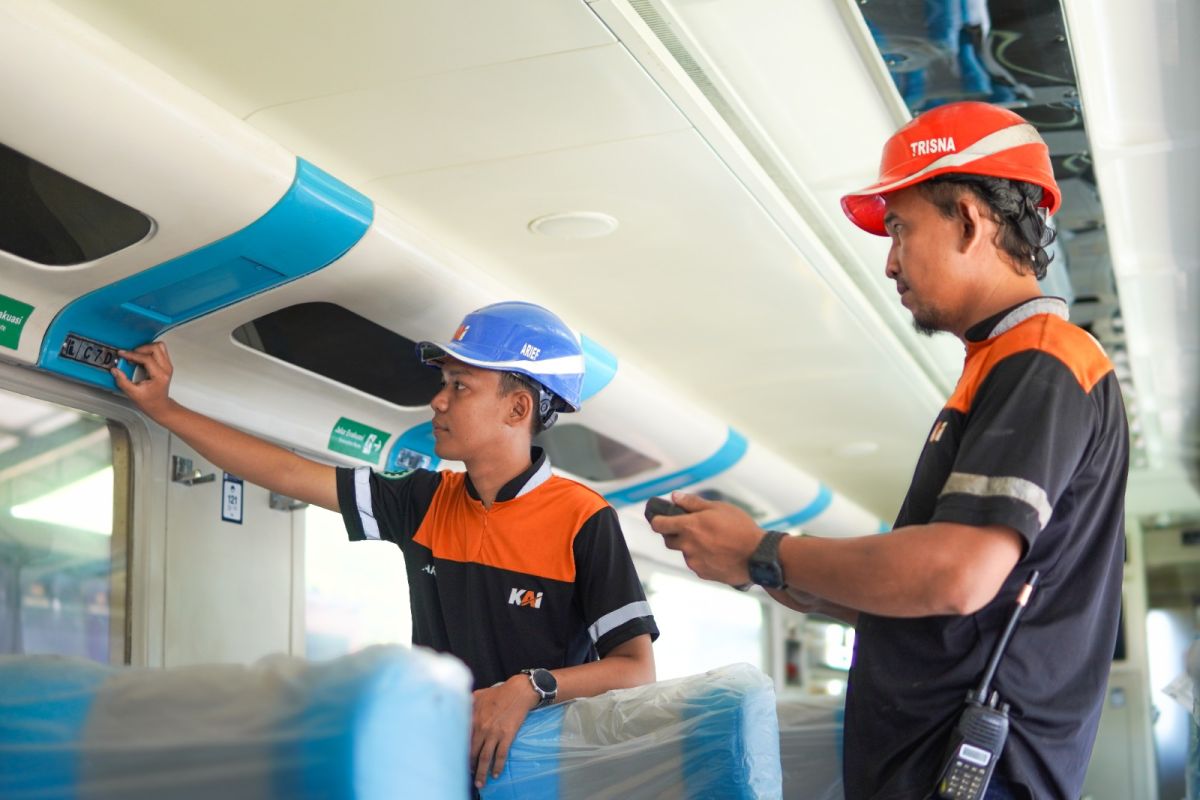
The trend of certified KAI workers continues to increase, from more than 14,150 workers in 2022 to more than 19,167 workers in 2025.
Jakarta (ANTARA) - Every day, millions of customers entrust their journeys to rail transport. Behind the journeys that appear to run smoothly and on time lies a complex operational system run with discipline by thousands of railway personnel across various fields of work.
Railway operations function through interconnected coordination in every second of the journey. From train crew, train schedulers, train controllers, track inspectors, maintenance personnel for facilities and infrastructure, to level crossing guards, all have responsibilities directly related to journey safety.
KAI Vice President of Corporate Communication, Anne Purba, stated that railway journey safety is built on competence, meticulousness, discipline, and consistent adherence to operational procedures.
“Trains are a mode of transport with a very detailed operational system. Every officer plays an important role, and all processes must run precisely. Therefore, every railway worker must possess competence, readiness, and high discipline before carrying out operational duties,” said Anne.
As part of strengthening human resource competence, KAI continues to increase the number of certified workers year on year. In 2022, there were more than 14,150 certified workers, increasing to more than 15,983 in 2023, then 16,186 in 2024, and reaching 19,167 certified workers in 2025.
In 2026, KAI plans for 18,297 certified workers spread across various strategic operational fields. This number consists of 4,129 Railway Vehicle Crew (ASP), 440 Special Railway Vehicle Crew, 2,260 Train Schedule Officers (PPKA), 229 Train Controllers, and 1,542 Assistant PPKA certified.
In addition, there are 1,482 infrastructure maintenance personnel in the Rail and Bridge sector, 1,437 maintenance personnel for Train Operation Facilities, 1,854 track and bridge infrastructure inspectors, 119 Train Operation Facilities inspectors, 2,652 Vehicle Inspectors, 1,990 Vehicle Maintenance personnel, and 163 Level Crossing Guards (PJL) certified.
Anne explained that every operational worker must go through a process of education, training, competency testing, and certification before carrying out duties in the field.
In addition to certification from authorised institutions including the National Professional Certification Agency (BNSP), KAI also continuously conducts training, workshops, discussion forums, operational simulations, and competency refreshers to ensure workforce readiness remains maintained.
“In railway operations, decisions made by officers must be quick, accurate, and in accordance with procedures. Therefore, the competence building process is carried out continuously so that every officer is ready to face various operational conditions in the field,” clarified Anne.
KAI also conducts routine inspections of facilities and infrastructure to maintain operational reliability. Checks are carried out periodically and must follow established operational procedures to ensure all aspects of train journeys are in reliable and safe condition for use.
Inspections are conducted from rail tracks, turnouts, signals, bridges, operation systems, to train vehicle conditions through direct field inspections, detailed track observations, ride borders, and ride locations by officers with competence and certification according to their field.
Through the Safety Railway Information (SRI) application, every employee can report potential hazards or unsafe conditions that could disrupt train journey safety. These reports are then followed up for mitigation and risk prevention processes.
Beyond internal aspects, railway operations also face various external challenges such as indiscipline at level crossings, stone-throwing at trains, theft of railway assets, illegal buildings around tracks, and weather and natural factors like floods, landslides, and earthquakes.
Therefore, KAI continues to strengthen coordination and collaboration with the government, regulators, local authorities, communities, and the public to comprehensively maintain train journey safety.
“Every safe train journey is actually guarded by many individuals working with full discipline 24 hours a day. Safety is built from meticulousness, adherence to procedures, human resource competence, and collaboration with stakeholders and the community in maintaining railway operations. KAI will continue to strengthen all these aspects so that the trust of millions of customers remains maintained in every journey,” concluded Anne.