
Railway Electrification Becomes the Main Driver of Modern Urban Mobility
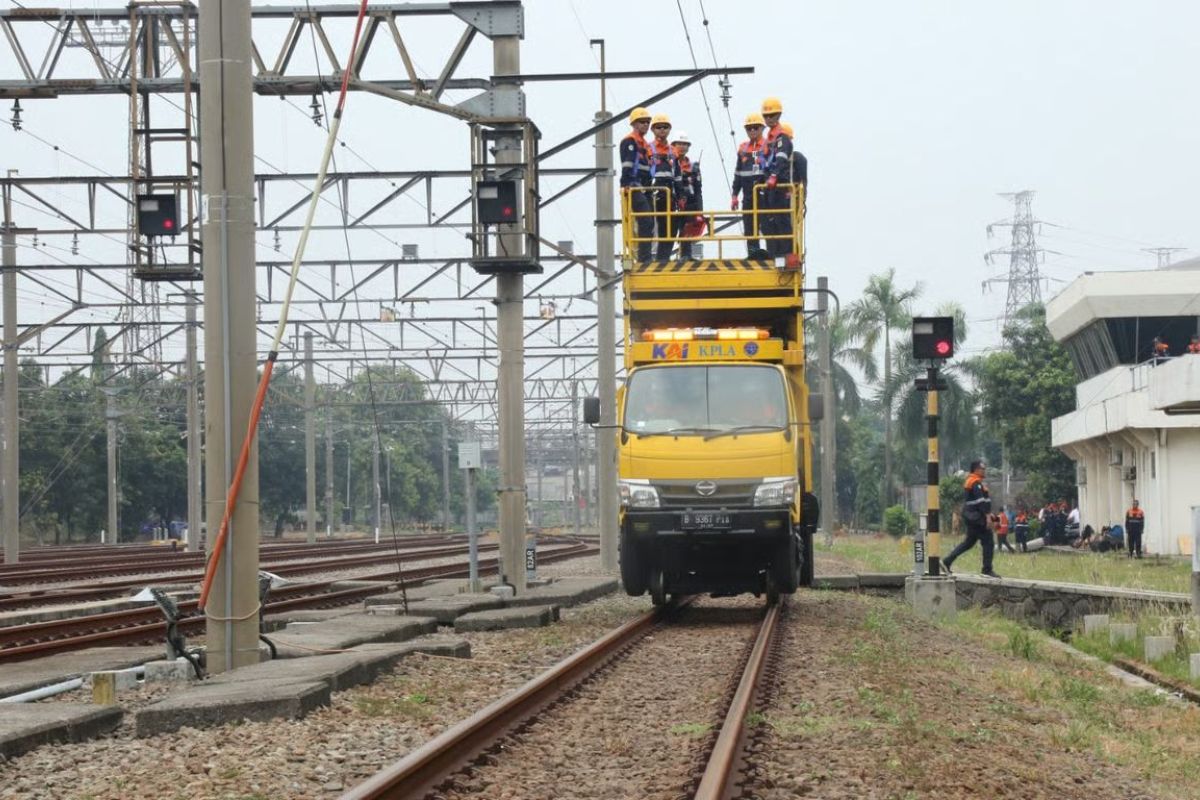
Jakarta — The growth of urban mobility over the past decade has driven the need to strengthen rail electrification in metropolitan areas. The increase in KRL journeys, the expansion of satellite residential areas, and the growth of economic activity hubs have raised demand for electric power supply to ensure smooth rail operations. Anne Purba, Vice President of Corporate Communications at KAI, said electrification plays a critical role in modern urban transport systems because it directly relates to journey capacity, operational stability, and the reliability of the signalling system managed in partnership with the Directorate General of Railways (DJKA) of the Ministry of Transport.
“Ketika jumlah perjalanan KRL terus meningkat, kebutuhan daya listrik juga ikut bertambah. Penguatan elektrifikasi menjadi penting untuk menjaga kestabilan operasional perjalanan, mendukung sistem persinyalan, serta memastikan perjalanan KRL tetap berjalan aman dan andal di lintas dengan trafik yang semakin padat,” ujar Anne.
Based on research into urban travel and rail electrification, the number of KRL users rose significantly over the ten-year period from 257 million journeys in 2015 to 401 million journeys in 2025. During this period there was an addition of over 140 million journeys by urban residents. Mobility recovery after the pandemic was rapid, with user growth of 50 percent in 2022 and a further 31 percent in 2023.
The mobility surge is reflected in the rise in total daily KRL journeys. In 2015, there were 881 daily journeys, rising to 1,063 per day by 2025. The Bogor Line recorded the highest journey frequency at 299 per day, followed by the Bekasi Line with 232 and the Serpong Line with 204. This indicates growing requirements for capacity and operational stability across urban lines with dense traffic.
Anne noted that as headways become tighter, the operating system requires more robust and stable electrification support. Adequate power supply is a key factor in maintaining KRL journey performance, including supporting signalling equipment, electrical substations, and operational arrangements on busy lines coordinated with the DJKA of the Ministry of Transport.
“Electrification is closely related to the system’s ability to handle growth in journeys. When urban mobility rises rapidly, power infrastructure must be strengthened to keep operations stable and reduce the risk of service disruptions,” Anne added.
The research also shows that Jabodetabek urban mobility has become one of the largest in Southeast Asia, with a total of 349.3 million journeys in 2025. This figure is far higher than other urban regions such as Bandung (18.7 million journeys), Surabaya (16 million), and Yogyakarta (10.1 million).
This development runs in tandem with the transformation of urban rail services, continually promoted by the Ministry of Transport’s DJKA in collaboration with rail operators, ranging from station revitalisation, intermodal integration, digitisation of services, strengthening connectivity in strategic areas, to the development of new mobility hubs in metropolitan areas. Electrification is a crucial part of supporting the entire system to operate in an integrated and sustainable manner.
As part of strengthening the urban rail electrification system, KAI also supports plans to develop electrification infrastructure in the Jatake Station area, which is projected to become a strategic point for boosting power supply for KRL journeys in the future. The development is expected to help maintain operational stability of rail travel, improve the reliability of the signalling system, and anticipate growth in journey frequency on increasingly busy urban routes.
Looking ahead, the need to strengthen electrification is projected to become more important as new urban areas are developed, journey frequencies rise, headways are optimised, and transport is integrated towards strategic areas and new hubs such as business districts, integrated housing, and international activity centres.
“Rail-based transport is now developing into the backbone of urban mobility. Therefore, electrification development should be viewed as a long-term strengthening of the transport system to maintain service capacity, support journey efficiency for the public, and improve the quality of connectivity across urban areas,” concluded Anne.