
Rahmah El Yunusiyah: Education Hero, the First to Hoist the Red-and-White Flag
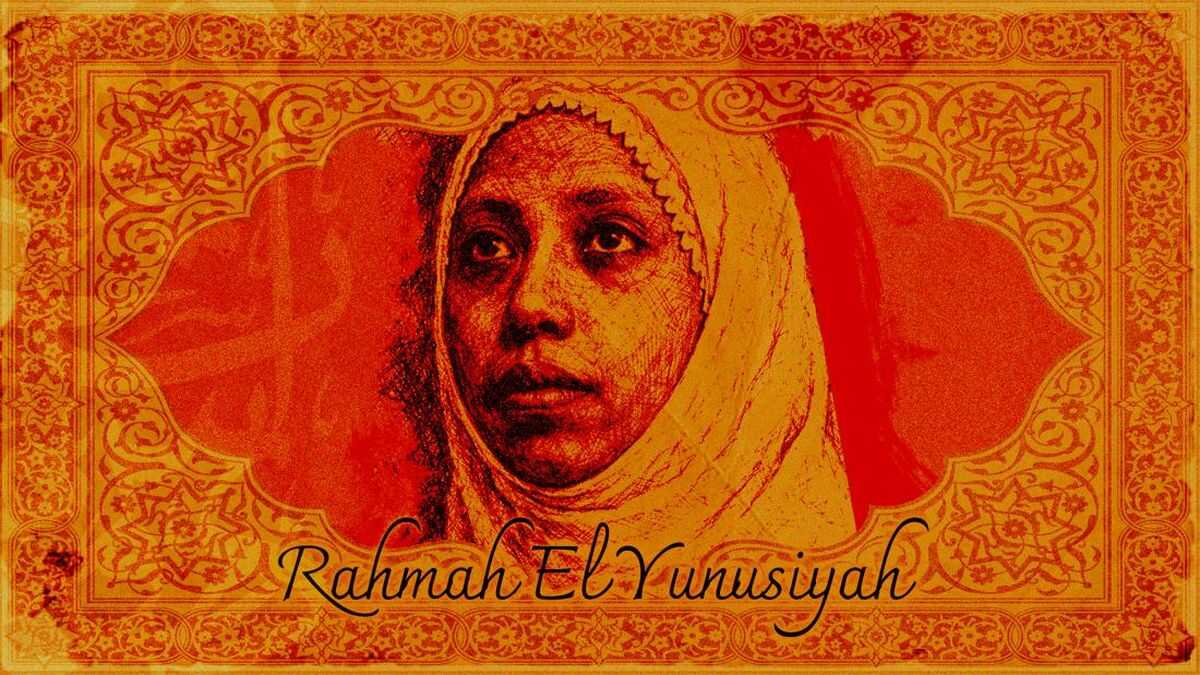
Rahmah El Yunusiyah: Education Hero, the First to Hoist the Red-and-White Flag
A Muslim activist recognised by the state as a national hero, the relatively small number of female heroes includes Rahmah El Yunusiyah from Padang Panjang, West Sumatra. Born on 20 December 1900, she laid the foundations for girls’ Islamic religious education in Nusantara with the establishment of Diniyyah Putri.
Citing from the book Perempuan-Perempuan dalam Sejarah Islam, in 1955, during an official visit to Indonesia, the Rector of Al Azhar University in Cairo, Sheikh Abdurrahman Taj, visited the Perguruan Diniyyah Putri founded by Rahmah in Padang Panjang. The Sheikh admired and revered Rahmah’s struggle to champion education for women. At that time, education for women was still taboo—even in much of the Islamic world.
He invited Rahmah to Al Azhar as a Guest of Honour. Rahmah accepted the invitation in 1957, which coincided with her departure to perform the Hajj in Mecca. She was officially welcomed by Al Azhar University as Syeikhah Rahmah El-Yunussiyah. From then on, she was no longer ‘Encik Rahmah’ or ‘Kak Amah’. The honorary title ‘Syeikhah’, the highest religious title rarely given to a woman at that time, was conferred.
“Rahmah El-Yunusiyyah as the first woman in the world to receive prestigious recognition from the oldest and most influential Islamic scholarly institution,” the same book notes.
Descended from a prominent Minangkabau ulema family, Rahmah was born to Muhammad Yunus and Rafiah. Her father was a leading ulema who served as Kadi, the judge who issues decisions according to Islamic law. Her primary education began at a Diniyah School in her hometown, but she learned mainly from her two elder brothers, Zainuddin Labay and Mohammad Rasyid.
Zainuddin Labay, Rahmah’s eldest brother, was a reformer of the Islamic education system and a founder of the place where Rahmah received her initial schooling.
Diniyah Putri
In the midst of the era when women’s contributions to the progress of the nation and religion were relatively muted, Rahmah went on to establish a school for women in 1923, the Madrasah Diniyah Li al-Banat, better known as the Diniyah School Putri. The school’s establishment was aided by her elder brother Zainuddin Labay. At the early stage of plans for a girls’ school, Rahmah was questioned by Zainuddin about whether she would be strong enough to face the Minangkabau adat society’s potential opposition. He asked, ‘Are you really ready and able to establish such a girls’ school?’ Rahmah replied with full conviction, ‘InshaAllah, Amah is ready and able.’ Then, after discussions and support from colleagues in the organisation she founded, the Persatuan Murid-murid Diniyyah School (PMDS), Rahmah established the first Islamic girls’ school or Dinniyah Putri on 1 November 1923 in Pandang Panjang. The initial students numbered 71, consisting of housewives and adolescent girls in a modest building on a waqf land donated by Rahmah’s mother, Ummu Rafiah.
Despite being teased and scorned—including when her brother Zainuddin, who acted as the main support system, died in 1924—Rahmah remained steadfast in advancing the school she established.
In 1927, she mobilised funds in Aceh and North Sumatra for three months. As a result, Rahmah built a building and a dormitory capable of accommodating 275 pupils from a total 350. Not only that, in 1926 she opened the Menjesal School, a school for women who could not yet read or write.
Rahmah’s approach to education continued to be based on Islamic principles, not on radical feminism. According to Rahmah, women should be dignified and equipped with knowledge because they would later become the first educators of their children. In addition, Rahmah did not view education as limited to a single age level. At the time, she promoted ‘lifelong learning’, especially for women.
Then in 1934, Rahmah founded the Taman Kanak Kanak (Freubel School) and the Junior School (primary level), equivalent to the Hollandsch-Inlandsche School (HIS). The HIS schools were Dutch-established for natives of certain social classes.
Diniyah Putri continued to develop with a seven-year system, comprising Ibditaiyah for four years and Tsanawiyah for three years. To address the need for qualified teachers, Rahmah founded the Kulliyat al Mu’alimat al Islamiyah in 1937, an institution to train professional female Muslim teachers.
Higher education followed. In 1967 she established the Faculty of Tarbiyah and the Faculty of Dakwah. In 1969 these two faculties were renamed the Faculty of Dirasah Islamiyyah.
Red and White of Indonesia’s independence
In the book Khazanah Ulama Perempuan Nusantara (2023), during the Japanese occupation, Rahmah fought to rescue her students from Nippon soldiers. She, who was also a member of Anggota Daerah Ibu (ADI), became a leading opponent who refused to accept indigenous Indonesians as jugun ianfu (comfort women).
Shortly after the proclamation of Indonesia’s independence by Sukarno and Mohammad Hatta in Jakarta, she immediately hoisted the Red-and-White flag in the courtyard of Perguruan Diniyah Putri. Rahmah was the first person to raise the flag.