
Qurbani Amid Economic Pressures: Between Religious Devotion and Welfare Support
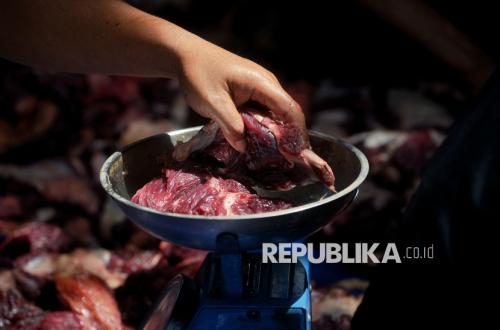
Amid economic pressures and declining purchasing power, a notable phenomenon observed each Eid al-Adha is the continued effort by communities to perform Qurbani. Even many households classified as poor set aside funds for this sacrifice, despite rising basic necessities, increased living costs, and ongoing economic uncertainty affecting the middle class.
This phenomenon demonstrates that Qurbani is more than an annual religious ritual commemorating Prophet Ibrahim, Siti Hajar, and Ismail. It has evolved into a crucial nexus of spirituality, social solidarity, and national economic circulation.
The Strategic Research Centre of the National Zakat Agency (Baznas) RI reports that Indonesia’s Qurbani economic potential and realisation for 2025 is around Rp34.3 trillion, sourced from millions of participants and livestock transactions across regions. Meanwhile, the Institute for Demographic and Poverty Studies (IDEAS) estimates the national Qurbani economic value at Rp27.1 trillion for 2025, citing middle-class economic pressures as a key factor influencing the number of participants this year.
Various philanthropic institutions and livestock industry players project that the 2026 Qurbani economic potential remains substantial, though growth is slowing due to household consumption pressures and reduced purchasing power. At this point, Qurbani serves as an honest reflection of socio-economic conditions.
The World Bank (2019) warned that Indonesia’s middle class is highly vulnerable to downward mobility during economic shocks. Many seemingly stable households lack robust financial resilience, exacerbated by post-pandemic conditions, rising food prices, household debts, and job insecurity.
Amid these pressures, the Qurbani tradition persists. Many households continue to allocate funds for it, even by reducing other expenditures. According to John Maynard Keynes’ consumption theory (1936), consumer behaviour is influenced by disposable income and future economic expectations. However, in the context of Indonesia’s Muslim society, economic behaviour does not entirely conform to modern rational economic logic.
Moral factors, social identity, and religiosity also play a role. Qurbani thus becomes a unique form of social consumption—not merely an expense, but an expression of solidarity and moral legitimacy within religious communities.
Middle-class resilience
Monzer Kahf (1995) explains that wealth distribution in Islam aims to create social justice, not just economic growth. In this context, Qurbani functions as an economic redistribution mechanism: funds from the middle class flow to rural livestock farmers and the poor, resulting in widespread economic impact.
Eid al-Adha creates an “economic season” for small-scale farmers. Feed traders, livestock transport drivers, butchers, spice sellers, and small-to-medium enterprises processing meat all benefit from this annual economic cycle.
This is significant because small-scale farmers are often the most vulnerable in the Qurbani economic chain. They experience temporary income surges before Eid al-Adha but face challenges with capital, feed, and distribution afterward.
However, if managed strategically, Qurbani could become a larger instrument for rural economic development. Fred R. David (2011) states that effective strategies must link resources to long-term impacts. Qurbani management should not end at slaughter and meat distribution but must include sustainable economic empowerment designs.