
Qurban and the Ummah Economy: Why Is This Event Increasingly Significant?
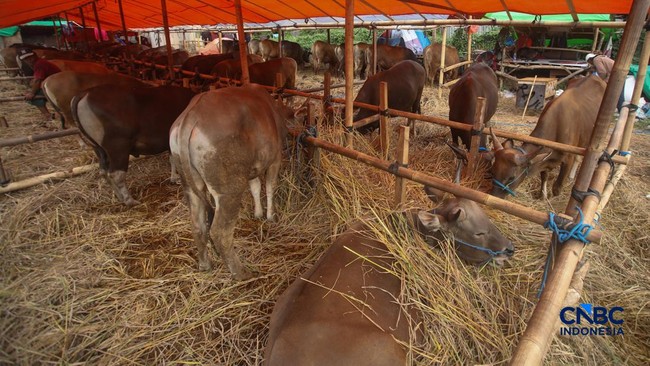
Iduladha has long been associated with sacrifice, sincerity, and social care. Yet behind this religious ritual lies a significant economic pulse often overlooked. Qurban is not merely an annual spiritual activity but part of the ummah’s economic ecosystem involving livestock farmers, traders, SMEs, food distribution, and household consumption resilience. Amid increasingly complex global economic pressures, the qurban economy demonstrates its relevance as a strategic socio-economic instrument.
According to projections by the Institute for Demographic and Affluence Studies (IDEAS), the national qurban economy’s potential in 2026 is estimated at Rp26.89 trillion. This figure stems from over 1.5 million animals expected to be sacrificed during Eid al-Adha. These numbers show qurban is not a small-scale economic activity; it generates a broad multiplier effect, from increased demand for smallholder livestock farming, food distribution, logistics, to regional economic circulation.
In many rural areas, the qurban period is a key driver of local economies. Small-scale farmers rely heavily on Eid al-Adha for the majority of their annual income. As demand surges, village economic activity flourishes.
Conversely, recent global pressures have altered qurban’s economic dynamics. Rising energy costs, currency depreciation, and increased distribution expenses have driven up livestock prices. Meanwhile, middle-class purchasing power is under strain.
This phenomenon is evident as some communities opt for smaller animals or collective schemes to align with financial capacity. This shows qurban is no longer merely about ‘ability to afford’ but how Muslim households manage financial priorities amid economic uncertainty.
Here, financial planning becomes increasingly relevant. Many families still view qurban as a seasonal expense considered only close to Eid al-Adha. Consequently, some resort to emergency funds, consumer loans, or sacrificing other needs to fulfil this annual ritual. Philosophically, however, qurban teaches preparedness and planned management.
From a Sharia economics perspective, religious observance is inseparable from asset management. Qurban is not merely a religious consumption expense but part of social welfare distribution with dimensions of ta’awun (mutual aid), maslahah (social benefit), and hifzul maal (preserving wealth sustainability).
Therefore, qurban budgeting should be part of Muslim households’ financial goals, akin to setting aside funds for education, emergencies, or future savings.
Managing Qurban with Smarter Planning
Amid economic pressures and rising living costs, qurban planning must be realistic and measured. It need not start with large sums but with consistent, healthy financial preparedness. A simple approach is setting aside funds monthly via dedicated savings or Sharia-compliant, liquid, low-risk instruments.
Households should separate religious expenditures from daily needs to avoid disrupting primary cash flow during Eid al-Adha. In unstable economic conditions, consumers should avoid financing qurban for social prestige. The essence lies not in the size of the animal but in piety, sincerity, and societal benefit.
Collective or shared qurban schemes also offer a more inclusive solution amid purchasing power pressures. Such models sustain religious practice while broadening social participation. Broader still, sound qurban planning reflects Sharia economics’ prudence principle—balancing worship, financial stability, and social responsibility.
Amid growing investment culture and digital lifestyles, communities often plan better for gadgets or holidays than religious funds. Yet socio-economically, qurban has far wider impacts. Strategically managed, the qurban economy can strengthen smallholder livestock farming, equitable protein distribution, halal supply chain development, and rural economic empowerment.
Idy Muzayyad, Head of Baznas’ Distribution, Utilisation, and Empowerment Directorate, stressed qurban plays a major role in strengthening the ummah’s economy and promoting equitable welfare. He said qurban management is not just about meat distribution but part of strengthening a community-based economic ecosystem.
Baznas aims to manage millions of qurban animals by 2026 to expand national social and economic benefits. ‘Qurban is not just a spiritual ritual but an economic empowerment tool,’ Muzayyad said.
However, sustaining the qurban economy faces structural challenges. Indonesia still relies on imported animal feed, faces livestock price volatility, and distribution and logistics inefficiencies.