
Quranic Literacy and the Future of Civilisation
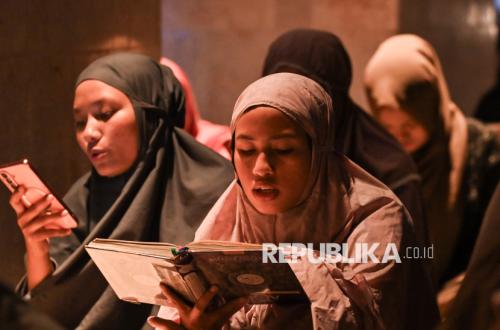
Ramadhan brings a distinctive atmosphere to the lives of Muslims in Indonesia. Mosques resound with the melodious recitation of sacred verses. Quranic reading sessions are held in nearly every corner of villages.
The Quran is read in homes, prayer rooms, and even in public spaces. Ramadhan consistently strengthens the relationship between Muslims and their holy scripture.
It is unsurprising that this month is known as Shahrul Quran, the month when the Quran was first revealed as guidance for humanity.
However, amid this warm religious atmosphere, there is a question we rarely ask honestly: how many Muslims are truly able to read the Quran properly?
This question becomes important when we examine the reality of Quranic literacy in Indonesia. As a country with the world’s largest Muslim population, the ability to read the Quran should be something extremely common. Yet the data reveals a more complex picture.
Enhancing a culture of reading
A 2024 study by the Institute of Quranic Sciences (IIQ) Jakarta showed that the percentage of Quranic illiteracy in Indonesia reaches 58 to 65 per cent.
Meanwhile, data from the Ministry of Religion’s Quranic Literacy Index for 2023 revealed that only 44.57 per cent of Muslims are able to read verses fluently in accordance with tajweed rules.
This data illustrates a rather striking paradox. In a country inhabited by the world’s largest Muslim population, the ability to read their holy scripture is surprisingly low. This phenomenon cannot be viewed as merely a technical problem.