
Quietly, Many Indonesians Are Starting to Choose Cheap Goods – What's Going On?
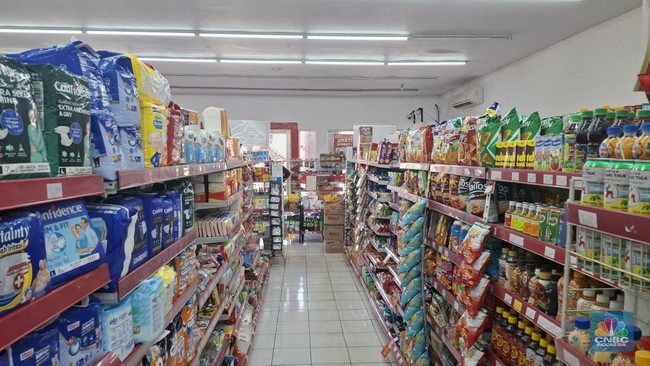
Jakarta, CNBC Indonesia - A shift in consumption and shopping trends among Indonesians has been reported to be underway, at least since the end of 2025. Unfortunately, the shift involves residents now preferring cheaper goods.
Aprindo Chairman Solihin revealed that the consumption shift means consumers are no longer bound by loyalty to specific brands. Instead, needs have become the primary consideration.
“This shift has already occurred. Previously, they would buy a specific brand of shampoo; now they choose the cheaper one. As long as it lathers and cleans, that’s fine. And this has been going on for quite some time, since the beginning of this year, since the end of last year,” Solihin said when contacted by CNBC Indonesia on Tuesday (12/5/2026).
On the other hand, he acknowledged that this change in consumer behaviour does not significantly disrupt the growth of modern retail turnover. Because, in terms of volume, consumption continues to occur.
“Aprindo’s members are not producers. They are just intermediaries between producers and buyers, i.e., users. There is a standard margin. If producers raise prices, we do too. Like now, plastic prices are up, which does have an impact. That goes to the producers, and ultimately, goods prices rise,” he stated.
“If asked whether it lowers turnover, no. Because we maximise the volume. So, if the selling price at the producer rises, there will be a price adjustment at the end consumer,” he added.
However, Solihin did not clearly confirm whether the consumption volume is able to compensate for the shift from prioritising brands to prioritising needs, which leads to choosing cheaper goods.
On the other hand, he continued, modern retailers are now preparing to face conditions after the festive period, namely Ramadan-Eid 2026.
“If asked about growth, there is growth. But this is just after the festive period, Fasting-Eid. The real test is after this, passing this festive period. May to September. The next festive is only at Christmas-New Year,” he said.
“There is growth, what percentage, it varies each year. But last time we hoped for 10% growth during the festive period, that wasn’t achieved,” Solihin said.