
Quick US-Iran Deal Set to Boomerang? Everything Could Fall Apart
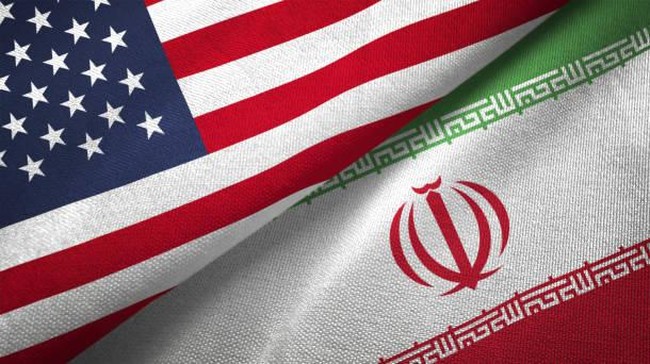
European allies have warned that plans for a quick framework agreement between the United States (US) and Iran risk creating new problems. The agreement is feared to be unable to resolve the long-standing nuclear dispute.
Several diplomats who have been involved in negotiations with Tehran assess that Washington’s push for a quick diplomatic victory for President Donald Trump could instead result in a superficial agreement that is difficult to implement.
“The concern is not that there will be no agreement,” a senior European diplomat told Reuters, quoted on Monday (20/4/2026). “The problem is that a poor initial agreement will create endless follow-up issues.”
The US government has dismissed these concerns. White House spokesperson Anna Kelly affirmed that Trump will only approve an agreement beneficial to his country.
“President Trump has a track record of achieving good deals and will only accept a deal that prioritises America,” she said.
However, European countries such as France, the United Kingdom, and Germany feel increasingly sidelined in the latest negotiation process. Previously, they played a crucial role in the birth of the Joint Comprehensive Plan of Action (JCPOA), the agreement limiting Iran’s nuclear programme in exchange for sanctions relief.
That agreement was reached during President Barack Obama’s era, before Trump unilaterally withdrew from it in 2018, deeming it unfair to the US.
Former EU foreign policy chief Federica Mogherini, who helped coordinate the JCPOA negotiations, emphasised that achieving a nuclear agreement is not a simple matter.
“It took 12 years and extraordinary technical work. Does anyone really think this can be resolved in 21 hours?” she said.
Risks of a Detail-Light Agreement
Diplomats assess that a framework agreement could indeed be reached quickly, especially if it only covers broad outlines on nuclear restrictions and economic sanctions relief.
However, technical issues are considered highly complex, particularly regarding Iran’s uranium stockpile enriched to 60% and amounting to around 440 kilograms, a quantity approaching material for nuclear weapons if further processed.
“America might think it’s enough to agree on a few points in a short document. But in nuclear issues, one clause can open up dozens of potential new disputes,” said another European diplomat.
Several options are currently being discussed, including the downblending of uranium within Iran under the supervision of the International Atomic Energy Agency, or a hybrid scheme with some material shipped abroad.
Turkey and France are mentioned as candidate storage locations, while shipping to the US is seen as politically difficult for Iran. On the other hand, Russia is also not an ideal choice for Washington.
Nevertheless, diplomats stress that every option still requires lengthy negotiations, from material verification and security to transportation processes. All of this could potentially lead to new impasses if not designed carefully from the outset.