
Questioned by Students, DPR Member: Does the Public Know What Asset Confiscation Means?
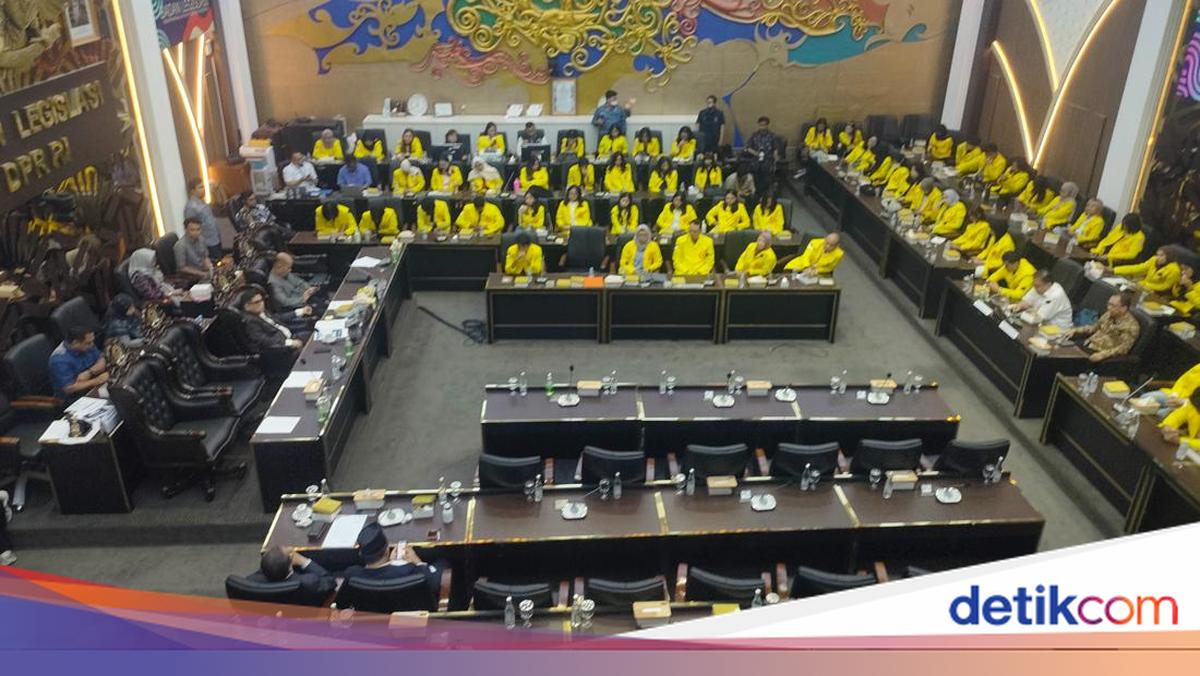
The DPR’s Legislation Body (Baleg) held an audience with students from the Faculty of Criminology at the University of Indonesia (UI). In this meeting, UI students questioned the status of the Asset Confiscation Bill (RUU Perampasan Aset), which has yet to be enacted into law.
Andre, a PhD student in criminology at UI, asked the Baleg to explain the fate of the Asset Confiscation Bill. He highlighted the lengthy process of discussing the bill.
“Besides being a student, I work at PPATK, sir. Earlier, the chairman mentioned the Asset Confiscation Bill, sir. If possible, could it be discussed a bit, sir? As far as I know, this bill has been around for over a decade, perhaps nearly two decades, sir,” said Andre during the Baleg meeting at the parliamentary complex in Senayan, Jakarta, on Wednesday (13/5/2026).
Siti Aisyah, a member of Baleg from the PDIP faction, responded to the student’s question. She initially questioned whether the public understands what the Asset Confiscation Bill entails.
“For example, why hasn’t the Asset Confiscation Law been passed? Does the public now know what asset confiscation means? Is it that when someone is declared a corruptor, their assets are immediately confiscated? We are all legal experts here, and everyone has been called in—whether professors, academics, or law enforcers. We listen to their opinions,” said Siti Aisyah.
Siti stated that the Asset Confiscation Bill is currently being discussed by Commission III of the DPR. She assessed that the rules on asset confiscation are not as portrayed externally.
“In asset confiscation, it is not arbitrary; this is not something we refuse to discuss. It is currently being discussed in Commission III in coordination with Baleg. Asset confiscation is not like what is stated outside,” she said.
Siti noted that the Asset Confiscation Bill intersects with other legislation. She said that asset confiscation is already applied in law enforcement on the ground.
“For example, is there any conflict with other laws? Is asset confiscation already regulated in other laws? Actually, there are laws that already regulate asset confiscation,” said Siti.
“For instance, narcotics. When there is a narcotics crime but the person is not there, the assets or money can also be seized, including money laundering—that is what asset confiscation means, one of them,” she added.
Siti mentioned that in law enforcement related to asset confiscation, cases of ownerless imported goods have also been determined. According to Siti, the asset confiscation being discussed by the DPR prioritises the active role of law enforcers.
“So, what is not yet regulated in asset confiscation? Actually, our laws have already stated that it has existed and is regulated. It’s just that we lack law enforcement officials who fail to implement it,” she said.
Siti highlighted that the rules in the Asset Confiscation Bill should not contradict democracy. She emphasised that there must be limitations set by the DPR.
“And when an innocent person is suspected, and we confiscate their assets, does that not violate democracy and the human rights of others? We also look at that, not just the issue of asset violations. But in law, in democracy, democratic freedom is limited by the freedom of others. The broadest democracy is limited by the rights of others,” she said.
Siti does not want the Asset Confiscation Law to become a tool for power abuse in the future. Asset confiscation, she said, should not rely solely on suspicions.
“When we confiscate assets based on suspicion, does that not become an abuse of power? Law enforcement power because I don’t like my sibling, my love was rejected, I order the apparatus. Their style is different, I suspect—can it be confiscated just like that? There must be an original criminal act. So not like those kinds of suspicions,” she added.