
Question Mark over the Strait of Hormuz: How Far Will Iran Go in Being "Accommodating"?
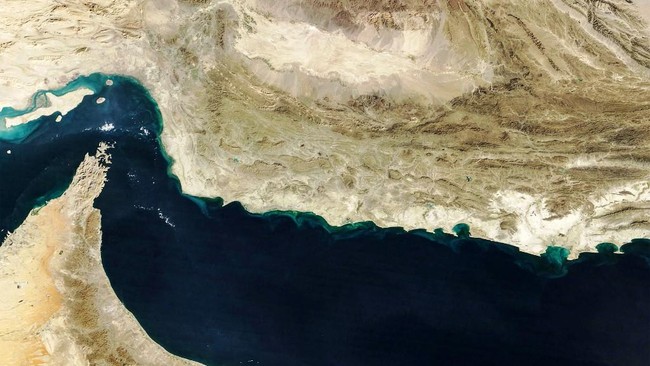
The Iranian government has finally given signals of easing restrictions on the world’s most vital energy trade route, the Strait of Hormuz, amid an increasingly dire global energy crisis. Tehran has stated that ships deemed “non-hostile” are now permitted to pass safely through the strait.
This statement emerged on Wednesday (25/03/2026), following the paralysis of maritime traffic that has triggered the largest global energy crisis in several decades. Iran’s mission to the United Nations (UN) announced on Tuesday that ships can utilise the route for transit.
“Ships may utilise the safe passage through that waterway, provided they do not participate in or support aggressive actions against Iran and fully comply with the stated safety and security regulations,” reads the official statement from Iran’s mission, as reported by Reuters.
Iranian authorities emphasised that all ship movements crossing the strait must be under strict supervision. According to the statement posted on social media, transit permission is granted through clear coordination with Tehran’s competent authorities.
“Ships will be permitted to transit the strait in coordination with Iran’s competent authorities,” the statement continued.
In addition to the announcement, Iran has reportedly shared a similar statement regarding the strait’s status with the International Maritime Organisation (IMO). Nevertheless, Tehran did not provide further details on the technical regulations that ships must adhere to in order to navigate the area through which one-fifth of the world’s oil and liquefied natural gas (LNG) supplies pass.
This Iranian step coincides with claims from US President Donald Trump stating that negotiations are underway to end the US-Israel war against Iran. Trump expressed optimism, despite Iran’s earlier denial of any talks between the two sides.
Data from maritime intelligence firm Windward shows a drastic decline in ship traffic since the war broke out on 28 February. While there are normally an average of 120 daily transits, only five ships were recorded crossing the Strait of Hormuz on Monday via their automatic identification systems.
This situation had previously raised concerns among analysts that crude oil prices could soar to US$150 or even US$200 per barrel if the blockade continued. However, news of the Donald Trump administration’s 15-point peace plan quickly cooled the market.
The international benchmark Brent crude oil price plunged more than 9% on Wednesday. This sharp decline occurred following reports of the peace proposal sent by the US to Iran to end the armed confrontation.
Signals of the conflict’s end were also positively received by Asian stock exchanges on Wednesday morning. Japan’s Nikkei 225 index rose 2.3%, South Korea’s KOSPI index surged 2.6%, and Hong Kong’s Hang Seng index climbed 0.7%, amid hopes of restoring global economic stability.