
PYC Talks Discusses Dissemination of the 'Biodiesel Supply Chain Analysis' Study
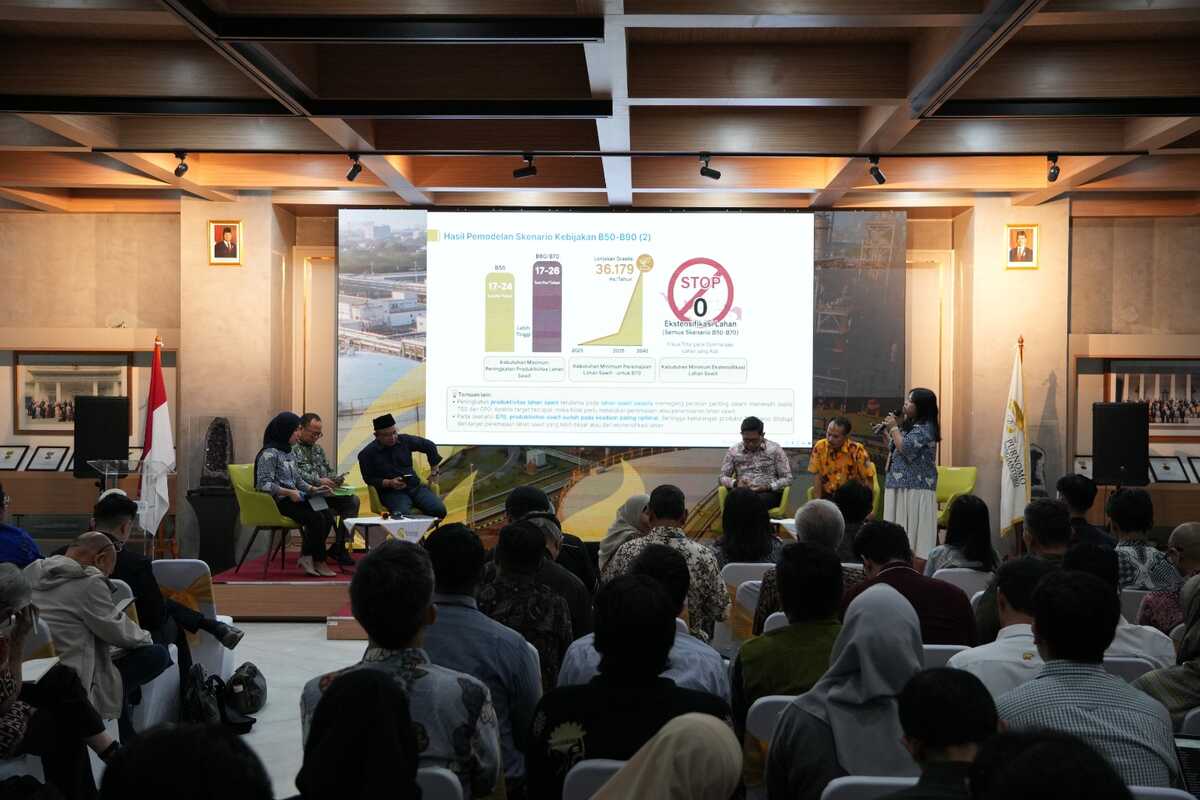
The Purnomo Yusgiantoro Center (PYC) held “PYC Talks Volume 1” with the theme “Dissemination of Study: Analysis of the Biodiesel Supply Chain” on Tuesday, February 24, 2026, at the Purnomo Yusgiantoro Center Office, Jakarta. This event is part of PYC’s routine agenda to present the results of in-depth studies on the dynamics of the national biodiesel supply chain, while also formulating relevant policy recommendations to support Indonesia’s energy independence agenda.
Through a statement today, the Chairman of the Purnomo Yusgiantoro Center (PYC), Filda C. Yusgiantoro, stated that the development of biodiesel is one of the strategic options to reduce imports of crude oil and fuel. “The success of the biodiesel policy depends on regulatory support and cross-sector coordination to overcome supply chain challenges, ranging from land productivity, CPO allocation, to the readiness of distribution infrastructure,” she said.
Edi Wibowo, as Director of Bioenergy, Directorate General of EBTKE, Ministry of ESDM, also emphasized in his keynote speech that the mandatory biodiesel program is a strategic effort to strengthen national energy resilience through the use of vegetable-based fuels. The success of this program depends on the readiness of the biodiesel supply chain, from the availability of CPO, production capacity, to coordination from upstream to downstream. Challenges arise because CPO is also needed for food and exports, and the majority of plantations are managed by private companies.
In the panel session, PYC and IREEM presented the results of a collaborative study that used a system dynamics modeling approach to project the ability of the biodiesel supply chain to support the achievement of national energy mix targets. Massita Ayu Cindy, as Research Coordinator of PYC, conveyed the main policy recommendations, namely that B40 should be maintained as the mandatory baseline.
The modeling results show that even with the B40 baseline, the biodiesel supply-demand ratio will fall below 100% starting around 2042. Meanwhile, the escalation scenario of B50–B90 blending accelerates system pressure, where the biodiesel supply-demand ratio falls below 100% starting in 2030, so that policies above B40 in practice accelerate the risk of supply deficits.
The PYC Talks Vol. 1 event was also enriched with discussions and responses from the Ministry of Agriculture, LEMIGAS, APKASINDO, and GAIKINDO. Togu Rudianto Saragih, as Chairman of the Palm Oil Cultivation Group, Directorate of Palm Oil and Other Palma, Directorate General of Plantations, Ministry of Agriculture, gave his response that strengthening the biodiesel supply chain must begin with improving the upstream palm sector through good governance, and the implementation of B50 needs careful consideration.
Meanwhile, Gulat M. E. Manurung, as Chairman of APKASINDO, conveyed his concern regarding the role of stakeholders who need to increase their focus on essential things in the biodiesel production process. From the downstream side, Cahyo S. Wibowo, as Coordinator of Product Application Testing, LEMIGAS, said that LEMIGAS has conducted many technical tests related to engine compatibility in the implementation of biodiesel, and other countries have also conducted many studies on Indonesia.
Abdul Rochim, as a Member of Working Group II: Renewable Energy GAIKINDO, expressed his appreciation for Indonesian biodiesel innovators who are always persistent in conducting comprehensive research so that the quality of biodiesel production in Indonesia is increasing and dispels doubts about Indonesia’s credibility in producing biodiesel. This response is considered very useful for the studies conducted, so that it can support the formulation of biodiesel policies to support sustainable national energy resilience.
The session was closed with a discussion with the participants. The PYC Talks Volume 1 event was attended by 85 participants from government institutions, NGOs, associations, and industry. PYC Talks reaffirms PYC’s commitment to supporting the development of inclusive and innovation-based sustainable energy policies, as well as in line with national development goals.