
PVMBG Prohibits Activities Within 2km of Erupting Mount Ibu Crater
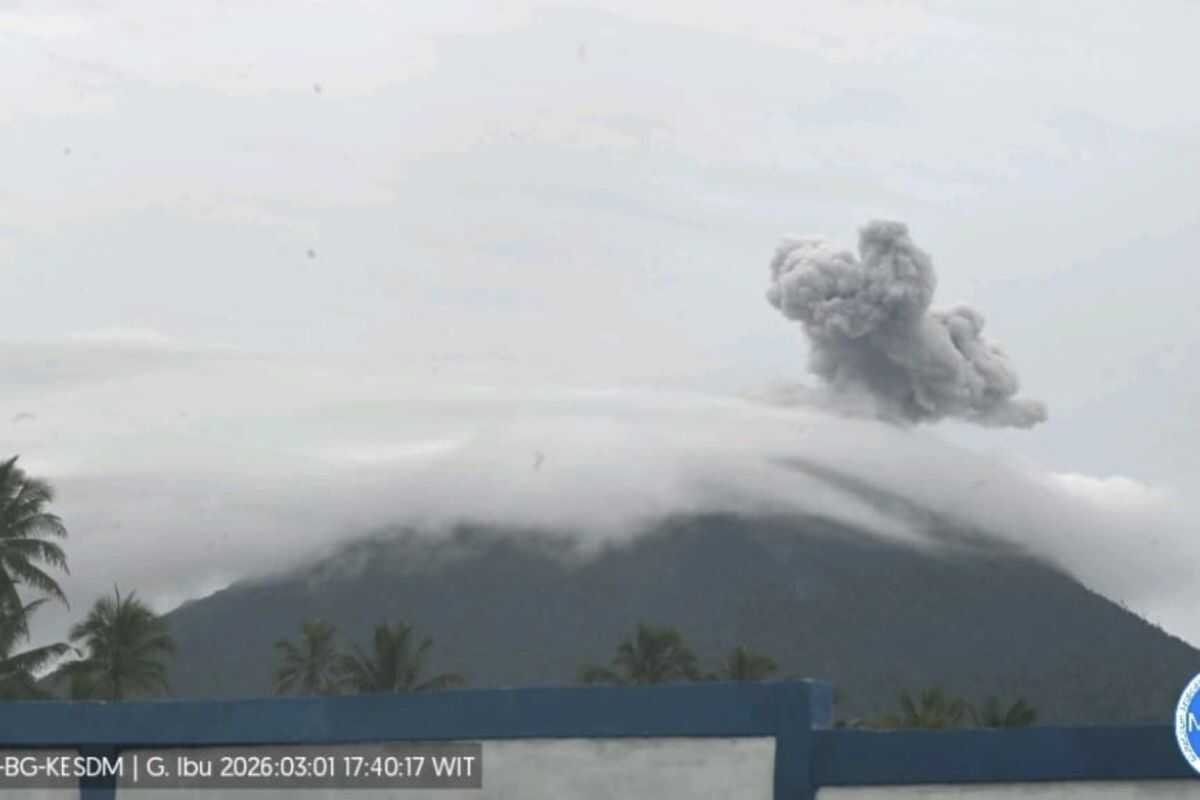
Jakarta — The Centre for Volcanology and Geological Hazard Mitigation (PVMBG) has recommended that residents in the vicinity of Mount Ibu in West Halmahera Regency, North Maluku, avoid activities within a radius of 2 kilometres from the active crater.
The recommendation was issued by PVMBG in Jakarta on Sunday, following Mount Ibu’s renewed eruption on that day at 17:37 WIT.
“Based on official reports, the ash column was observed to a height of approximately 300 metres above the summit, or around 1,625 metres above sea level,” according to PVMBG’s official statement in Jakarta.
The statement noted that the ash column was grey in colour with thick intensity and was observed to be drifting southward.
Mount Ibu is currently at Alert Level II (Advisory). There is a sectoral expansion extending 3.5 kilometres in the direction of the crater opening in the northern section, which must also be cleared of civilian activity.
PVMBG also urged residents to use nose and mouth protection such as masks and eye protection in the event of ash fall and if they must be outdoors.
Residents are asked to remain calm, maintain the stability of the region, and refrain from spreading false information or being swayed by unclear or unverified claims.
The West Halmahera Regency Government has been asked to continue coordinating with PVMBG in Bandung and the Mount Ibu Observation Post in Gam Ici to obtain the latest information regarding volcanic activity developments.
Indonesia is one of the countries situated along the Pacific Ring of Fire, a region with the most active tectonic and volcanic activity in the world. This position means Indonesia is surrounded by hundreds of active volcanoes and is prone to earthquakes and tsunamis.
Geologically, Indonesia’s territory lies at the convergence of three major world tectonic plates: the Indo-Australian Plate, the Eurasian Plate, and the Pacific Plate. The collision and movement of these plates form a chain of volcanoes stretching from Sumatra, Java, Bali, the Nusa Tenggara islands, to Maluku and Sulawesi.
This situation makes Indonesia a region of high geological disaster potential, but it also provides benefits such as fertile soil, geothermal energy sources, and abundant mineral wealth.