
Putin Issues Warning to Trump, Cites Dangerous Consequences in Iran
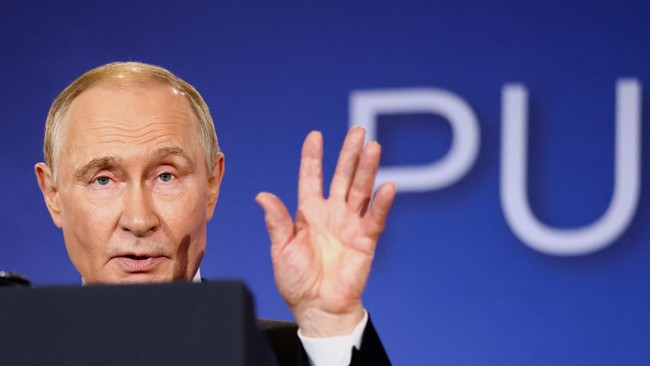
Russian President Vladimir Putin has issued a harsh warning to US President Donald Trump. The Kremlin has cautioned of “horrific consequences” should fighting resume amid the current highly fragile ceasefire.
Citing a Newsweek report, Kremlin foreign policy adviser Yuri Ushakov revealed that Putin had contacted Trump directly via telephone. In the conversation, Putin stressed that reigniting hostilities would be a highly dangerous step for global stability.
“Putin told Trump that renewed hostilities would be ‘dangerous and unacceptable’, especially any ground operations in Iranian territory,” Ushakov said to Russia’s state news agency, TASS, quoted on Thursday (30/4/2026).
This warning comes after Trump officially rejected Iran’s latest proposal to reopen the Strait of Hormuz, meaning the US naval blockade remains in place. Nevertheless, Putin views the decision to extend the ceasefire as the right step to provide an opportunity for negotiation channels.
On the other side, Trump made a surprising statement when met in the Oval Office on Wednesday (29/04/2026) afternoon local time. He said that Putin had once offered assistance regarding Iran’s uranium enrichment issue, but Trump instead urged Russia to focus on something else.
“I told Putin, ‘I would much prefer you to get involved in ending the war with Ukraine’,” Trump said to reporters.
Meanwhile, domestically in the US, pressure on the military budget is intensifying after the estimated costs of the Iran war have reached a staggering $25 billion (Rp 431.32 trillion). Defence Secretary Pete Hegseth and Joint Chiefs of Staff Chairman General Dan Caine must face sharp criticism from Congress regarding the effectiveness of those strikes.
“Iran’s nuclear facilities have been ‘eliminated’,” Hegseth claimed during a hearing with the House Armed Services Committee.
Hegseth’s statement immediately sparked heated debate, especially as the Trump administration is proposing a record-breaking $1.5 trillion (Rp 25.87 quadrillion) defence budget for 2027. Lawmakers from both parties are questioning the long-term objectives of this conflict and the burden on US troops and ammunition stocks.
In response to the scepticism from committee members, Hegseth fired back by calling the criticism damaging to military efforts in the field. He accused words coming from Congress as the biggest obstacle at present.
“The biggest challenge, the biggest enemy we face right now is the reckless, weak, and defeatist words from Democrats in Congress and some Republicans,” Hegseth asserted before the committee.
To date, the US and Iran remain stuck in a diplomatic deadlock that has yet to find common ground. Trump insists he will not end the war unless Iran abandons its nuclear ambitions, while Tehran remains unwilling to yield despite being under pressure from a crippling naval blockade on their economy.