
Purbaya's Diplomacy in Washington: Between Global Optimism and Domestic Reality
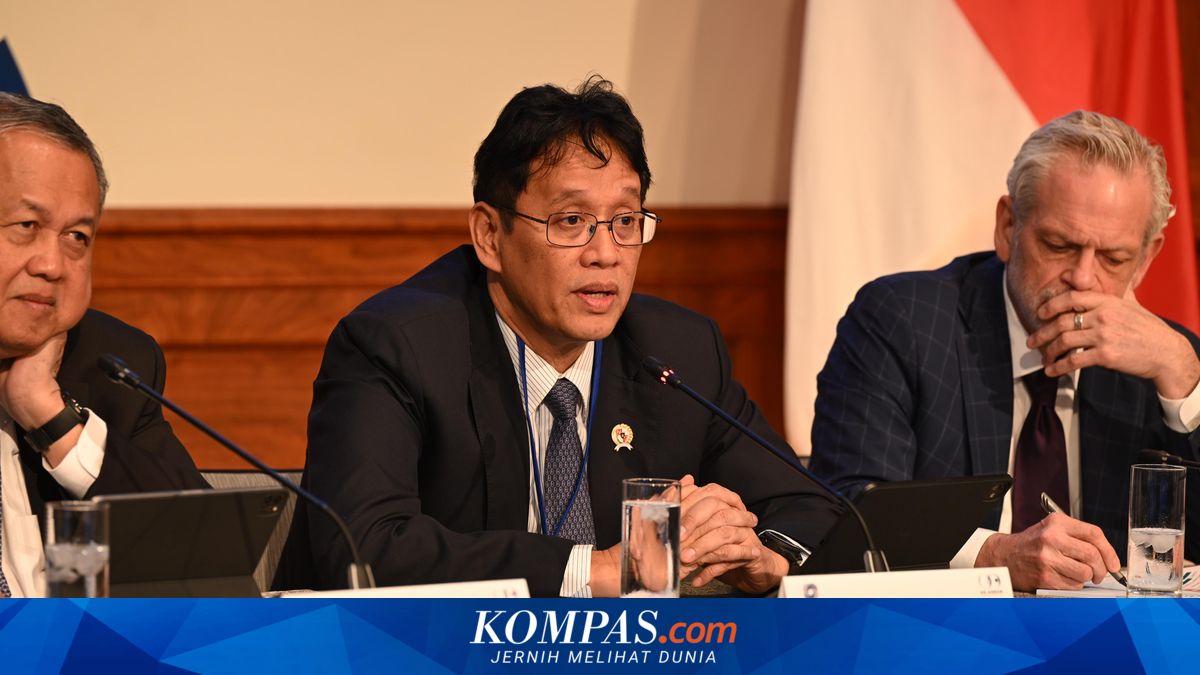
The face of the global economy today is like sailing through a storm that has not yet fully subsided. Amid geopolitical uncertainties triggering commodity price volatility—evident from fluctuations in crude oil prices that once reached 85–90 US Dollars per barrel—and high interest rate policies stifling from the world’s central banks, Indonesia stands at a crucial crossroads. The Federal Reserve’s policy rate (FFR), still holding at 5.25 to 5.5 percent, has forced Bank Indonesia to maintain interest rate disparities to stem capital outflows. In this context, Finance Minister Purbaya Yudhi Sadewa’s visit to Washington D.C. to attend the IMF-World Bank Spring Meetings becomes a highly vital stage for economic diplomacy. This visit occurs amid the IMF’s downward revision of global economic growth, predicted to stagnate at 3.2 percent, while the World Bank issues a “warning” to Indonesia with a growth projection of only 4.7 percent. This figure is quite distant from the government’s APBN target, which sets growth at 5.2 percent. The main mission is clear: to convince capital holders that Indonesia’s economic fundamentals remain robust, with a debt-to-GDP ratio still maintained at 38-39 percent, far below the 60 percent threshold set by the State Finance Law. However, behind the narrative of success and handshakes in New York’s skyscrapers, there lurk structural challenges that require more than mere optimistic rhetoric. The primary issue overshadowing Indonesia’s economy is the disparity between domestic ambitions and international perceptions. The World Bank recently released a projection of Indonesia’s economic growth at 4.7 percent, a figure well below the government’s optimistic target above 5 percent. This difference is not merely a statistical matter; it reflects global doubts about the resilience of our growth engine if it relies solely on household consumption without significant structural transformation. On the other hand, pressures on the rupiah’s exchange rate due to the Fed’s “higher for longer” policy and the increasingly heavy fiscal burden from poorly targeted energy subsidies become a ticking time bomb. In this condition, Finance Minister Purbaya bears the burden of convincing the world that Indonesia is not only “surviving” the crisis but remains a promising investment destination. Finance Minister Purbaya’s visit carries the mission of “straightening” perceptions. His meetings with IMF and World Bank leaders demonstrate efforts in data diplomacy.