
Purbaya Seeks to Amend Tax Refund Regulations, Mining and CPO Bosses Speak Out
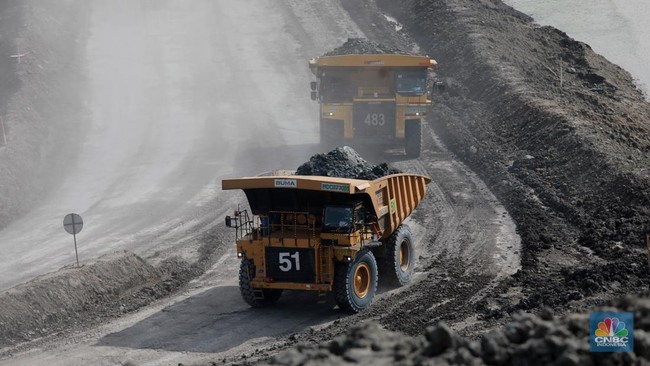
Jakarta, CNBC Indonesia - Business circles have voiced their opinions regarding Finance Minister Purbaya Yudhi Sadewa’s plan to amend tax refund provisions.
Chairman of the Indonesian Employers’ Association (APINDO) Tax Committee, Siddhi Widyapratama, stated that business groups are still monitoring the plan to change the refund scheme through the issuance of a draft ministerial regulation on finance (RPMK).
He said that until now, business circles are awaiting two-way discussions between the government and stakeholders in preparing the latest policy, which revises PMK 39/2018 as amended by PMK 119/2024.
“As a strategic partner in economic development, we view constructive discussions with the government as important to ensure this policy aligns with the business environment and a conducive investment climate,” Siddhi told CNBC Indonesia on Wednesday (15/4/2026).
Siddhi said that business parties have not yet received the new refund scheme offered by the government. He has only heard of a policy for refunds to be applied selectively.
“We are still awaiting the latest developments, although there is thinking about implementing the policy selectively,” he emphasised.
Meanwhile, Chairman of the Indonesian Palm Oil House, Kacuk Sumarto, also admitted that he has not received information on the new scheme to be implemented by the government regarding tax refunds. However, he stressed that the new policy should not temporarily halt tax refunds, as they are the rights of taxpayers.
“Refunds are the rights of taxpayers; if the amount has been approved, it should be disbursed immediately, and the approval process should also be accelerated,” Kacuk asserted.
Kacuk emphasised that if the refund policy is disrupted, the effect will impact the operational cash flow of companies. Ultimately, it could disrupt domestic industry activities, potentially pressuring economic growth.
“Of course, if it is tightened to the point of becoming slow, it will affect cash flow. This depends on how taxpayers manage their cash flow. The principle is that refunds are the rights of taxpayers; there’s no need to make it difficult,” he said.
“If the state has no money, then find other funding sources and don’t hinder or complicate taxpayers. Or reduce non-priority expenditures, and don’t make everything a priority and urgent,” Kacuk stated.
A similar view was expressed by Executive Director of the Indonesian Mining Association (API-IMA), Sari Esayanti. She even stressed that the government should reconsider the discourse on halting tax refunds, which could have a significant impact on business stability and the continuity of company operations in the mining sector.
She also emphasised that tax refunds are the rights of every taxpayer for excess tax payments already deposited with the state, and they are important in supporting cash flow as well as reflecting good governance by the government.
“We think the current system is already good, where companies fulfil their obligations and can get back their rights if the payment made turns out to be excess, or conversely must pay if there is an underpayment,” Sari said.
As previously known, the stricter policy on refunds of overpaid taxes for businesses is planned to be implemented on 1 May 2026. This plan was revealed in the Draft Ministerial Regulation on Finance already submitted to the Ministry of Law and Human Rights.
“As part of regulatory renewal, this RPMK will revoke and replace several previous regulations related to preliminary refunds of overpaid taxes, and is planned to take effect on 1 May 2026,” quoting the website of the Directorate General of Legal Regulations of the Ministry of Law and Human Rights on Tuesday (14/4/2026).
The Directorate General of Legal Regulations (DJPP) held a Harmonisation, Rounding, and Concept Finalisation Meeting for the Draft Ministerial Regulation on Finance regarding Procedures for Preliminary Refunds of Overpaid Taxes on Friday to Saturday (10-11 April 2026) virtually.
“This meeting is a follow-up to previous harmonisation activities conducted on 6 April 2026, to perfect the substance and ensure the alignment of the RPMK’s content with legal provisions.”
The activity was attended by representatives from the Coordinating Ministry for Economic Affairs, Ministry of Finance, State Secretariat Ministry, and officials from the Ministry of Law, particularly the Directorate General of Legal Regulations.
One of the main points is the mechanism for examining taxpayer applications, which serves as the basis for the Director General of Taxes in determining whether a preliminary refund can be granted or not.
In addition, it regulates that if the examination results show fulfilment of formal requirements and there is an overpayment of tax, the Director General of Taxes may issue a Decision Letter for Preliminary Refund of Overpaid Tax. Conversely, if the requirements are not met or there are certain conditions such as tax audits or law enforcement processes, the application may be rejected.
This draft regulation also includes provisions on the timeframe for settling applications, namely a maximum of 3 (three) months for Income Tax and 1 (one) month for Value Added Tax since the application is received.