
Purbaya Opens Opportunity for Widening 2026 State Budget Deficit Above 3 Per Cent
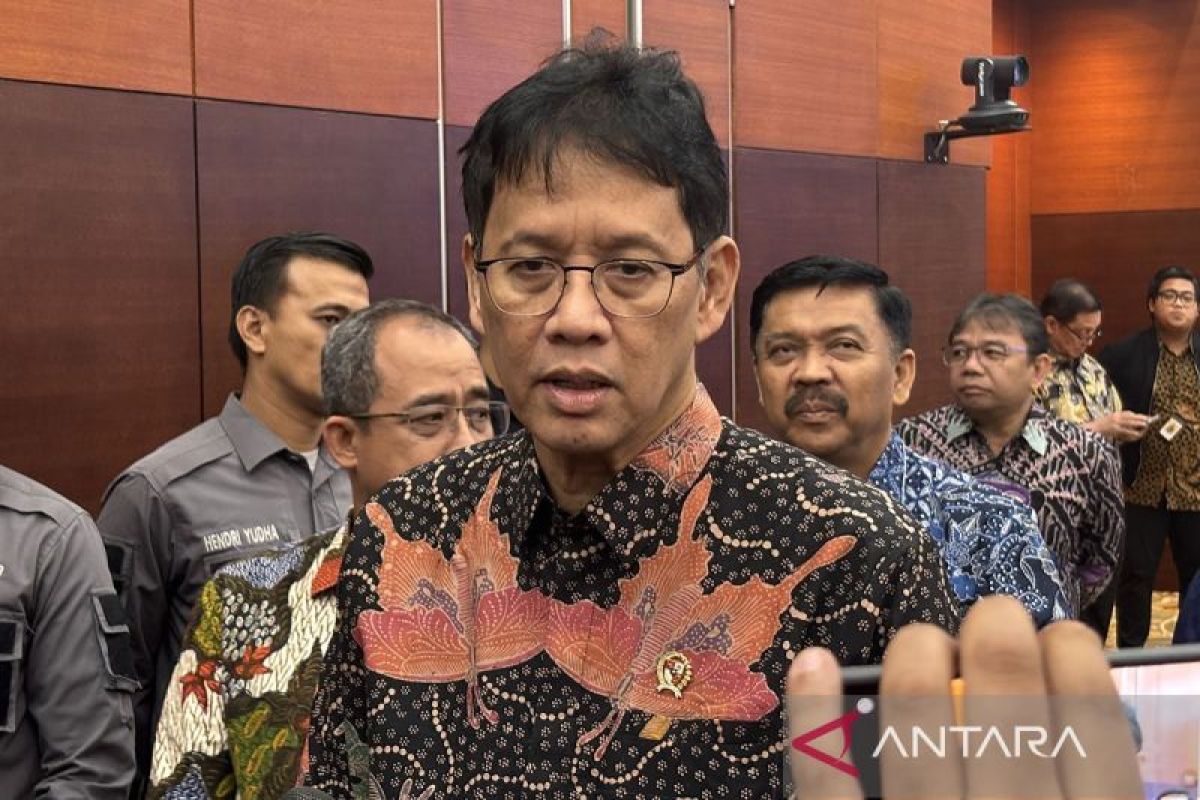
Finance Minister Purbaya, when confirmed by journalists at the Ministry of Finance office in Jakarta on Friday, said that the decision regarding state budget deficit adjustments would follow the direction of President Prabowo Subianto, given that the minister’s function is to serve as the president’s assistant.
“If it’s a presidential order, we will execute it. I am merely the president’s hand,” said Purbaya.
The option to widen the deficit has emerged due to pressures from geopolitical turmoil between Iran and the United States-Israel, which has driven a surge in energy prices and increased global uncertainty.
Regarding these pressures, Purbaya stated that the ministry would continue to calculate the impact of rising oil prices on the state budget.
Budget adjustment decisions will focus on the potential risks posed by these factors.
The sensitivity of the 2026 state budget to changes in basic macroeconomic assumptions, calculated by assessing each one-dollar increase in Indonesian crude price (ICP) per barrel, has the potential to add up to 6.8 trillion rupiah to the budget deficit.
Under the 2026 state budget macroeconomic assumptions, ICP was set at 70 dollars per barrel.
Should oil prices remain at 92 dollars per barrel throughout the year and there is no government intervention, the state budget deficit could reach 3.7 per cent of GDP.
Nevertheless, the Finance Minister ensured that state budget management to date has been conducted carefully.
When viewed from a broader perspective, he continued, a widening fiscal deficit also plays a role in driving national economic growth.
In 2025, for example, Indonesia achieved relatively rapid growth at 5.11 per cent (year-on-year) with a deficit of 2.92 per cent of GDP.
Purbaya said this performance was reasonably competitive with peer countries.
By comparison, Malaysia recorded growth of 5.17 per cent (year-on-year) with a deficit of 6.41 per cent of GDP.
Meanwhile, Vietnam achieved record growth of 8.02 per cent (year-on-year) with a deficit of 3.6 per cent of GDP.
With this performance, Purbaya was confident that Indonesia’s fiscal position remains within safe limits.
The state treasurer was also cautious in addressing scrutiny from global rating agencies Fitch Ratings and Moody’s Investors Service regarding state budget management in determining fiscal policy.
“Based on those figures alone, there should be no problem. It’s just that they are looking at other aspects that we are currently studying. But clearly, until now, we will implement fiscal policy carefully,” he said.
The 3 per cent state budget deficit ceiling is stipulated in Law Number 17 of 2003 concerning State Finance.
Changes to the deficit limit must go through amendments to existing legislation or new regulations that provide the legal framework.
The Indonesian government previously suspended the 3 per cent deficit limit during the COVID-19 pandemic, regulated through Government Regulation in Lieu of Law (Perppu) Number 1 of 2020.
That regulation was subsequently followed up by Law Number 2 of 2020 concerning State Financial Policy and Financial System Stability for COVID-19 response.
At that time, the state budget deficit expanded beyond 6 per cent of GDP, which was then gradually reduced over several subsequent budget years.