
Purbaya Explains How Indonesia's Economy Can Remain Strong, IMF Chief Somewhat Perplexed
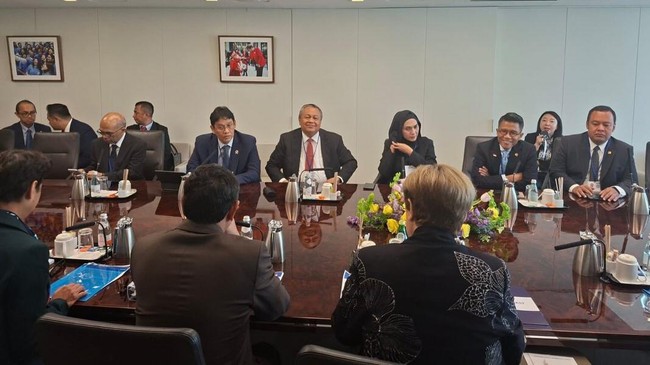
Jakarta, CNBC Indonesia - Finance Minister Purbaya Yudhi Sadewa revealed that the International Monetary Fund (IMF) Managing Director, Kristalina Georgieva, was somewhat perplexed by Indonesia’s economic resilience amid persistently high global uncertainties.
Purbaya shared this following a meeting with Kristalina during the IMF Spring Meetings in Washington DC, United States.
Purbaya stated that the IMF questioned how Indonesia has managed to endure and even advance amidst global economic pressures, geopolitical conflicts, and surges in commodity prices.
“Yes, they were a bit confused, actually. Why we can hold on in the midst of the global situation like this,” said Purbaya in an official statement quoted on Thursday (16/4/2026).
Purbaya explained that Indonesia’s current economic strength is inseparable from the policy changes implemented by the government since last year. These economic strategy adjustments are deemed to have made Indonesia better prepared to face global turbulence.
“So we are experiencing acceleration when shocks come from global uncertainties, from high oil prices. Thus, we can absorb the shocks that occur,” he said.
Additionally, Purbaya mentioned asking whether the IMF has specific policies to help mitigate the ongoing global uncertainties.
In response, Kristalina explained that the IMF does not have direct authority to halt global turbulence. However, the IMF is ready to provide funding facilities for countries needing assistance during crises.
“Clearly, I asked her if there is a specific IMF policy to help reduce uncertainty,” Purbaya clarified.
“Yes, she said the IMF does not have the authority to do that, but they provide aid funds for countries that need it,” he added.
Nevertheless, Purbaya emphasised that Indonesia currently does not need such assistance. According to him, the domestic economic condition remains sufficiently strong, and the government has adequate fiscal room to face global pressures.
“Of course, Indonesia does not need it because our country is doing quite well, and we still have a fairly large limit, namely Rp420 T as I mentioned earlier,” he said.