
Purbaya Chooses Budget Efficiency: Continued Borrowing Will Lead to Public Discontent
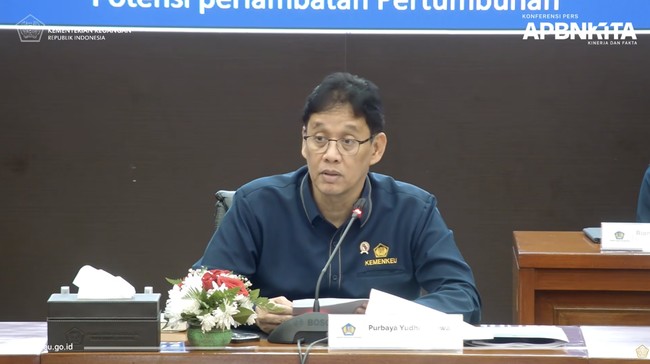
Jakarta — Finance Minister Purbaya Yudhi Sadewa has confirmed that the government prefers to implement budget efficiency rather than increase the state budget deficit ceiling above 3% of gross domestic product (GDP) amid mounting pressure from global crude oil prices caused by Middle East conflict.
This option was discussed during today’s Limited Coordination Meeting (Rakortas) with Coordinating Minister for Economic Affairs Airlangga Hartarto, held on Monday, 16 March 2026.
“The discussion covered it: if fuel prices continue rising, the first step is efficiency. We’re already preparing the necessary measures by ministries and agencies,” Purbaya stated.
During the meeting, each ministry and agency was asked to begin preparing budget allocations that could be cut. “We’ve instructed them to prepare and determine what percentage of their budgets could be reduced,” he added.
Purbaya said the budget efficiency directive extends to the National Nutrition Agency (BGN), which implements President Prabowo Subianto’s priority programme of free nutritious meals.
“There are additional allocations creating bloat. So with the current budget, we’ll focus on existing programmes first. Additional items we’ll postpone until circumstances permit, but clearly it’s not possible now,” Purbaya explained.
According to him, the Finance Ministry will begin calculating the scope of government budget efficiency starting next week to anticipate volatile global crude oil prices, which frequently exceed US$100 per barrel or surpass the state budget macro assumption of US$70 per barrel, affected by US-Israeli conflict with Iran.
“But execution isn’t certain yet — which items get cut, roughly speaking. Later they’ll adjust their policies based on the Finance Ministry’s reductions,” he said.
Purbaya emphasised that efficiency is the best option to counter global crude oil price pressures rather than widening the state budget deficit. This approach means the government need not add fiscal burden through additional debt.
“It would be easy for me to just say let’s raise the deficit, I’d relax and borrow more, but then you’d all complain again — the government keeps borrowing,” Purbaya stated firmly.
Additionally, he stressed that the government’s budget surplus (SAL) remains sufficiently strong to cover potential widening of the state budget deficit to 3.5% of GDP, equivalent to an additional Rp110 trillion from the current deficit projection of Rp698 trillion.
“If I only need Rp110 trillion, I can cover it from my SAL — still sufficient, right? I still have savings, so don’t worry,” Purbaya concluded.