
Purbaya Assures APBN Deficit Remains Under Control Despite No Increase in Fuel Prices
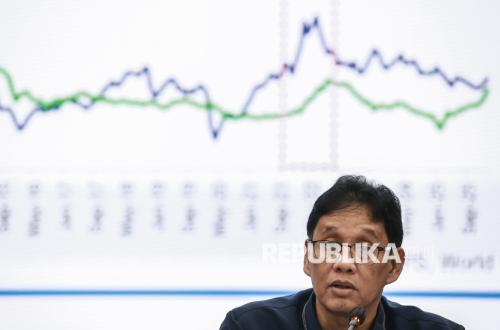
REPUBLIKA.CO.ID, JAKARTA — The rise in global oil prices has raised concerns about Indonesia’s fiscal resilience. The government assures that the state budget (APBN) deficit remains under control despite not increasing subsidised fuel (BBM) prices.
Finance Minister Purbaya Yudhi Sadewa stated that fiscal scenarios have been prepared assuming global oil prices reach $100 per barrel until year-end. The government is also making spending adjustments to keep the deficit within safe limits.
“I have run exercises with an average global oil price of $100 per barrel until year-end. And with other exercises, cuts here and there, savings here and there, we can ensure the deficit remains around 2.9%,” said Purbaya during a press conference at the Coordinating Ministry for Economic Affairs office in Jakarta on Monday (6/4/2026).
The government has decided not to raise subsidised BBM prices until year-end. Purbaya assessed that as long as oil prices do not stay above $100 per barrel for long, there is still sufficient fiscal space to keep the deficit under control.
The government has also prepared liquidity reserves to anticipate the worst-case scenario. “If it gets tight, for example, if prices are even higher, out of control, as long as the supply is there, we still have a financial buffer of Rp420 trillion currently in the form of SAL. If it’s tight, that can still be used. But I think it’s still far off because the chance of oil prices staying above $100 per barrel for an extended period is small,” said Purbaya.
He added that the government continues to monitor global geopolitical developments, including dynamics in the United States and conflicts in the Middle East. According to him, these conditions remain the main factors affecting energy prices and domestic fiscal stability.
“The public need not worry or speculate that I am running out of money,” said Purbaya.