
Pupuk Indonesia diversifies raw material sources to safeguard national fertiliser supply
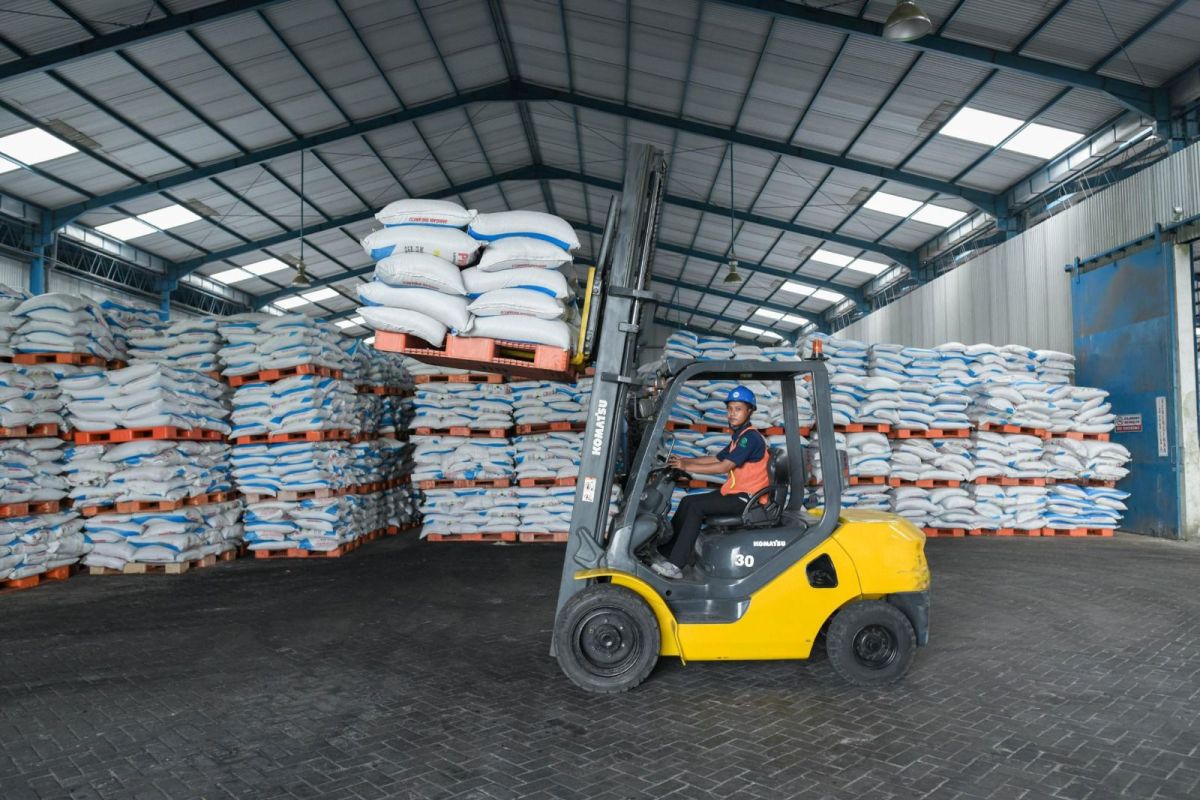
Amid evolving geopolitical dynamics, the company is ensuring that the national fertiliser supply remains secure so that farmers can continue planting without concern.
Jakarta — PT Pupuk Indonesia/PI (State-Owned Enterprise) is diversifying sources of strategic raw materials to maintain stable production and national fertiliser supply amidst rising geopolitical tensions in the Middle East region.
Yehezkiel Adiperwira, Corporate Secretary of Pupuk Indonesia, confirmed in a statement in Jakarta on Monday that the company is ensuring global conflict turmoil does not significantly impact fertiliser availability for domestic farmers, supported by strong production capacity and a diversified supply chain management approach.
He stated that the company continues to fulfil the government mandate to maintain fertiliser availability for the national agricultural sector.
“Pupuk Indonesia is committed to implementing the government mandate to ensure fertiliser availability and affordability for farmers. Amidst the geopolitical dynamics occurring, we ensure that the national fertiliser supply remains secure so that farmers can continue planting without concern about fertiliser availability,” said Yehezkiel.
Currently, Pupuk Indonesia Group’s production capacity reaches 14.8 million tonnes per year for various types of fertiliser. For urea fertiliser specifically, the company’s production capacity is sufficient to meet all domestic requirements.
National urea production is considered relatively self-sufficient as the main raw material, natural gas, can be supplied from domestic sources whose price and distribution are regulated by the government.
Under these conditions, according to him, escalation of conflict in the Strait of Hormuz, a key global urea distribution route, has no direct impact on national urea supply.
“Pupuk Indonesia is the largest urea producer in the Asia-Pacific, Middle East and North Africa regions. With this strong production capacity, we have the ability to maintain optimal fertiliser supply for Indonesian farmers,” said Yehezkiel.
To strengthen supply chain resilience, Pupuk Indonesia is also diversifying import sources of strategic raw materials, particularly phosphate (P) and potassium (K), which are key components in NPK fertiliser production and are not naturally available in Indonesia.
Phosphate supply currently comes from several North African countries such as Morocco, Tunisia and Algeria. Meanwhile, potassium supply is sourced from Canada and Laos, which are located outside the Middle East conflict zone, thus minimising supply disruption risks.
Additionally, sulphur raw material, which is partly sourced from Middle Eastern countries such as the United Arab Emirates, Qatar and Kuwait, has been anticipated through alternative supply sources from other countries such as Canada and Kazakhstan. Some sulphuric acid requirements can also be met from domestic sources.
The company also strengthens raw material inventory management by maintaining adequate availability of phosphate, potassium, sulphur and sulphuric acid to support production processes. This measure simultaneously serves as mitigation against potential increases in logistics costs from rising global oil prices.
On the operational side, Pupuk Indonesia is implementing an industry revitalisation programme supported by Presidential Regulation Number 113 of 2025, including the construction of new factories and modernisation of seven existing factories over the next five years to improve energy efficiency and raw material utilisation.
With support from production capacity, raw material diversification and strengthened inventory management, the company is confident that national fertiliser supply stability can be maintained.
“Our primary focus remains ensuring that domestic fertiliser requirements are met optimally,” said Yehezkiel.