
Pupuk Indonesia CEO Assures Subsidised Fertiliser Ceiling Price Will Not Rise Despite Hormuz Strait Turmoil
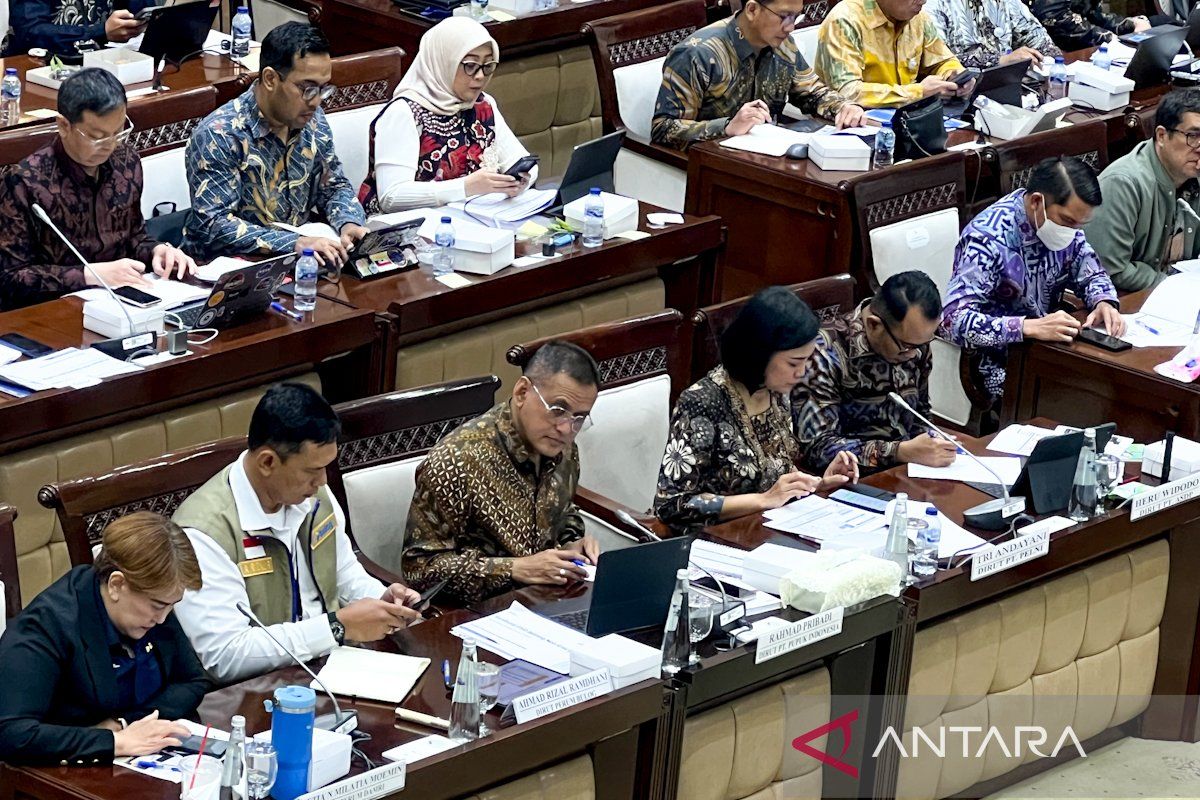
Jakarta (ANTARA) - The President Director of PT Pupuk Indonesia (Persero), Rahmad Pribadi, has assured that the maximum retail price (HET) for subsidised fertiliser will not increase despite the turmoil in the Strait of Hormuz, ensuring that supply and stability remain maintained domestically.
“The HET (for subsidised fertiliser previously) has already been reduced by 20 percent; there are no plans to raise it again, meaning the HET will remain the same,” Rahmad stated during a working meeting with Commission XI of the House of Representatives (DPR RI) in Jakarta on Thursday.
According to him, although the Strait of Hormuz is a strategic route through which around 30 percent of global fertiliser trade passes, the unrest in the region does not affect domestic fertiliser.
Rahmad assured that Indonesia is not significantly impacted because it has sufficient domestic urea production capacity to meet national needs.
Pupuk Indonesia’s operational urea production capacity stands at 8.8 million tonnes, although the installed capacity reaches 9.4 million tonnes, with some facilities being quite old.
With this capacity, domestic needs for urea fertiliser, both subsidised and non-subsidised, are believed to be fully met without dependence on foreign supplies.
Moreover, global urea prices had previously surged from around US$400 per tonne to US$800 per tonne due to the closure of the Strait of Hormuz, but this condition does not directly affect domestic supply.
In addition to urea, supplies of other raw materials such as phosphate and potash are also assured to remain secure, as there are no production disruptions from major supplying countries.
Any potential impact is more likely on shipping costs or freight, but this is deemed not to disrupt the overall availability of fertiliser domestically.
With these various factors, Pupuk Indonesia assures that national fertiliser availability remains safe and stable, while also keeping prices controlled to support agricultural sector productivity.
The government previously reduced the price of subsidised fertiliser by 20 percent, effective from October 2025. This policy is part of the major breakthroughs of President Prabowo Subianto’s administration.
The reduction in subsidised fertiliser prices applies to two main types: urea and NPK. For urea fertiliser, the previous price of Rp2,250 per kilogram has now dropped to Rp1,800 per kilogram. Thus, the price per 50-kilogramme sack, which was previously Rp112,500, is now Rp90,000.
Meanwhile, NPK fertiliser, previously sold at Rp2,300 per kilogram, is now set at Rp1,840 per kilogram. The price per 50-kilogramme sack has also decreased from Rp115,000 to Rp92,000. This reduction applies nationwide.
The decrease is believed to directly impact the improvement of the Farmer Exchange Rate (NTP), reduction in production costs, and enhancement of farmer welfare. The government is optimistic that national agricultural production will increase significantly in the coming years.
“From the impact of this 20 percent HET reduction, the redemption of fertiliser in 2025 and 2026 has increased quite significantly. In 2026, it has increased by 31 percent,” Rahmad said.
Nevertheless, he did not provide detailed figures on the quantity of subsidised fertiliser distributed to farmers during the January-March 2026 period.