
Pupuk Indonesia CEO Assures Raw Material Supply Remains Secure Amid Middle East Turmoil
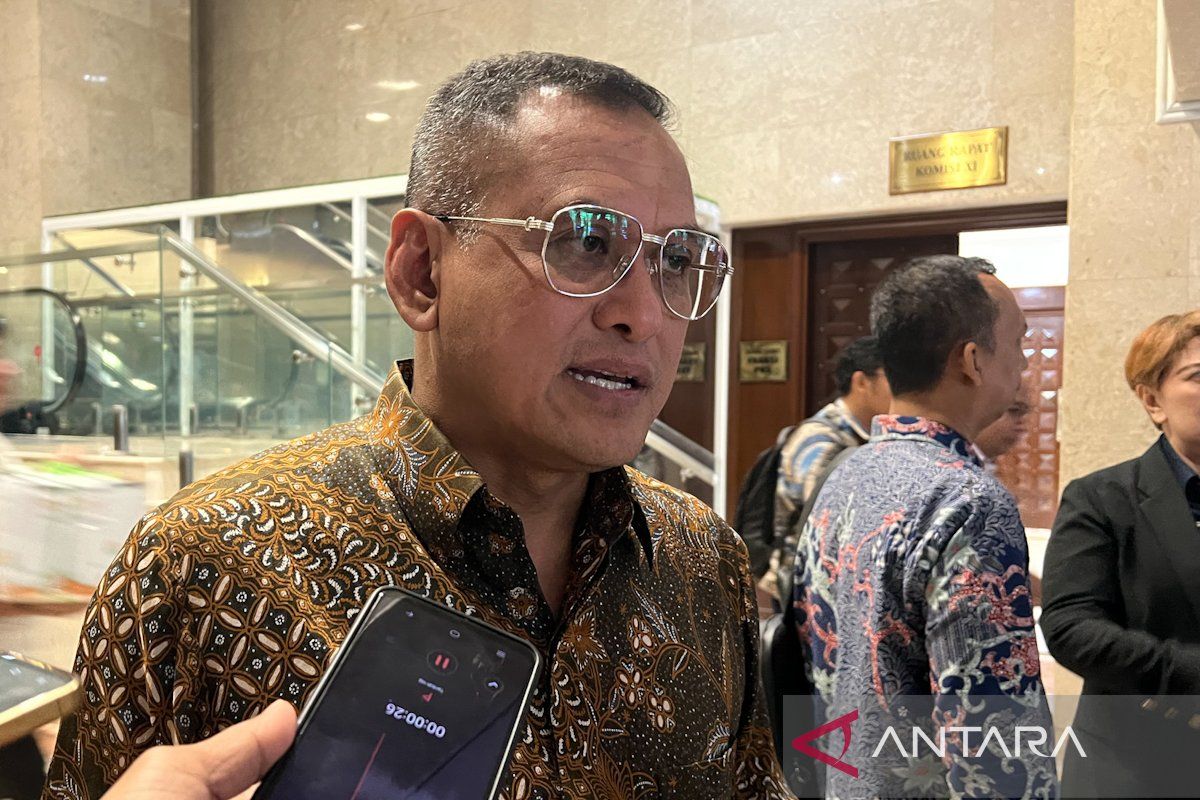
Jakarta (ANTARA) - The President Director of PT Pupuk Indonesia (Persero), Rahmad Pribadi, has assured that the national fertiliser supply and raw materials remain secure despite the escalation of geopolitical conflicts in the Middle East, particularly along the Strait of Hormuz route.
“Because we have advance payments from the government, we can purchase the raw materials upfront, those that are imported. For domestic ones, the prices are set by the government and do not change, so everything is under control,” Rahmad stated when met after a working meeting with Commission XI of the House of Representatives in Jakarta on Thursday.
Rahmad emphasised this when journalists confirmed the availability of fertiliser raw materials amid the Middle East turmoil.
He assured that the raw materials are still in a controlled position. The national operational urea fertiliser production capacity reaches 8.8 million tonnes, although the installed capacity is 9.4 million tonnes.
He also conveyed that with the issuance of Presidential Regulation (Perpres) No. 113 of 2025 on the Governance of Subsidised Fertilisers, his company can procure raw materials because the government makes upfront payments.
According to him, the policy change through Presidential Regulation No. 113 alters the fertiliser subsidy mechanism to be more efficient and market-price based.
He explained that the subsidy claiming mechanism no longer uses the cost-plus scheme but refers to market prices, which is deemed more transparent and accountable.
Rahmad stated that this deregulation policy enables faster and more efficient fertiliser distribution, so availability can be directly felt by farmers in various regions.
This distribution ease impacts increased access for farmers to subsidised fertilisers, making the redemption process easier and without significant obstacles.
It is known that Pupuk Indonesia is diversifying strategic raw material sources to maintain production stability and national fertiliser supply amid rising geopolitical tensions.
Pupuk Indonesia is diversifying import sources for strategic raw materials, especially phosphate (P) and potash (K), which are main components in NPK fertiliser production and not naturally available in Indonesia.
Meanwhile, potash supplies are sourced from Canada and Laos, which are outside the Middle East conflict zone, thus minimising supply disruption risks.
In addition, sulphur (S) raw materials, partly from Middle Eastern countries such as the United Arab Emirates, Qatar, and Kuwait, have been anticipated through alternative supplies from other countries like Canada and Kazakhstan. Some sulphuric acid needs can also be met from domestic sources.
The company is also strengthening raw material stock management by maintaining adequate availability of phosphate, potash, sulphur, and sulphuric acid to support the production process. This step also serves as mitigation against potential increases in logistics costs due to rising global oil prices.
Furthermore, Yehezkiel stated that the current production capacity of the Pupuk Indonesia Group reaches 14.8 million tonnes per year for various types of fertilisers. For urea fertiliser specifically, the company’s production capacity is even able to meet all domestic needs.
National urea production is also considered relatively independent because its main raw material, natural gas, can be fulfilled from domestic supplies, with prices and distribution regulated by the government.
With this condition, according to him, the escalation of conflict in the Strait of Hormuz as an important global urea distribution route does not directly impact the national urea supply.
Even Pupuk Indonesia states that the company is the largest urea producer in the Asia Pacific, Middle East, and North Africa region. With this strong production capacity, we have the capability to keep fertiliser supplies optimal for Indonesian farmers.